
2025 IN REVIEW // MAN v. MACHINE CHAMPION
the most films of 2025 by a variety of rubrics // MOVIE BRACKET WINNERS (you won't believe it)

Merry Christmas from *life is disappointing*! We’ve got sort of a hybrid post this week. Of course we have the MAN // MACHINE CHAMPION and bracket winner, and if you’re here for that you can scroll right down to the second half. But I also wanted to do some year-end lists, and there were enough interesting themes this year that it shook out best to do superlative categories. These aren’t necessarily the best movies of 2025 (at least one of them is among the worst) but these are the movies that in some way or another defined the past year in film. If you haven’t watched a single movie in 2025, this is a great place to start. I’ve linked everything to my original reviews, which I probably? still stand by - so check those out too if there’s something you missed.
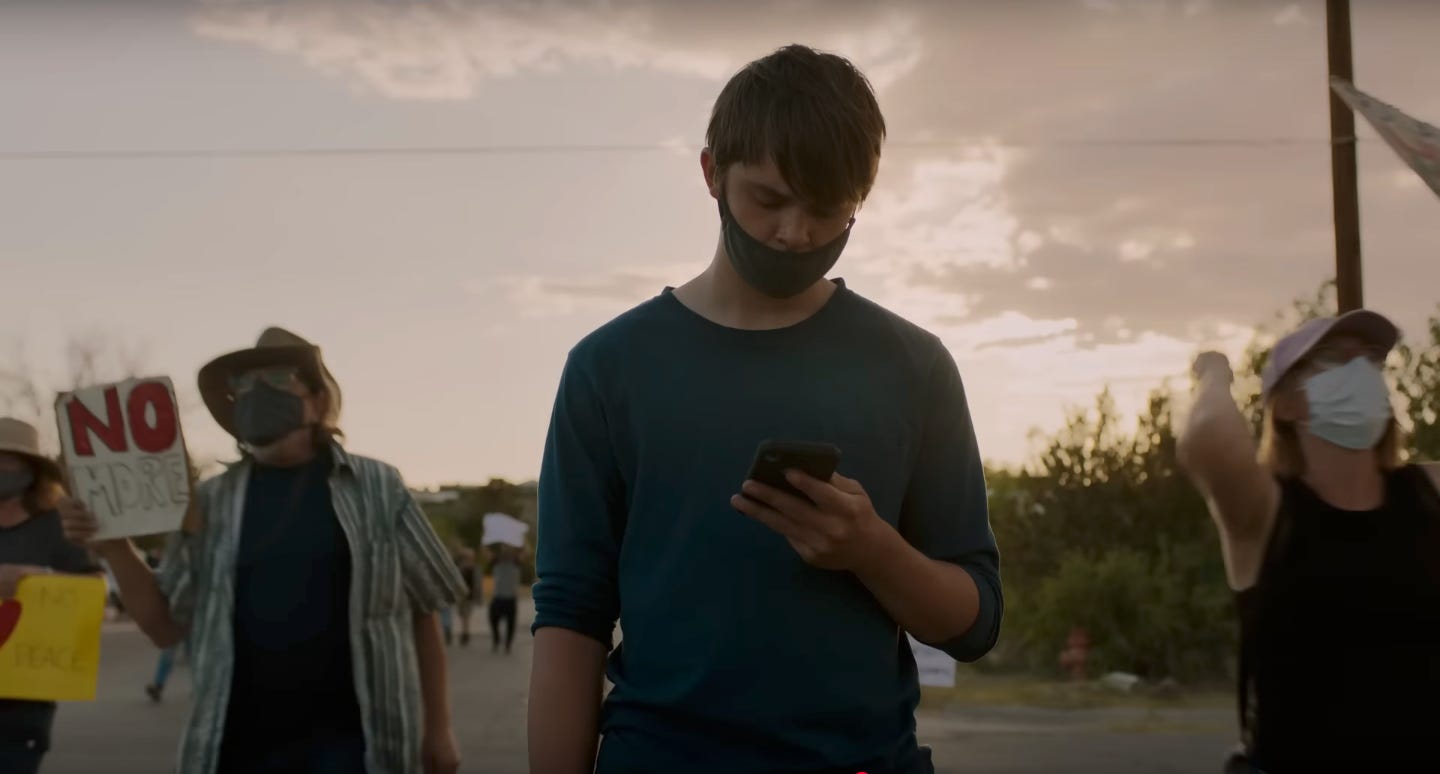
VIBIEST 2025 MOVIE (BAD): Eddington.
I think “vibes” as a cultural construct is pretty much made up by media companies and evidence that monoculture still exists - and like monocultures of the past, the current vibe-based one is reductive and prone toward erasure. The official vibe of 2025 is “bad” - which describes the state of some things but pretty actively ignores the many things that are perfectly OK or even great. But nuanced discourse isn’t the point: the general consensus, from NYT opinion writers to movie podcasters, is that “things” are “bad” and that this alone is what “we all can agree on.” No 2025 movie epitomized this trendy negativity better than Eddington. Supposedly a 2020 time capsule but much more a freeze frame of the quarter-centennial ashes of Twitter, Eddington identifies everything you’re supposed to feel bad about right now (guns, phones, data centers, teens) and undercuts everything that’s being done to make things better. The Ari Aster stans say anyone who doesn’t like this movie just can’t handle the truth, and if the truth is a particular brand of online cynicism that rejects the bravery of organizers, the originality of young people, and the beauty of the natural world, then yes, I suppose they’re right. Not very many people saw Eddington and, like all vibe indicators, I don’t think many people will see it past its 12/31 expiration date. I’ve been told by a few people that I’m being unfair, but I don’t care - as the vibiest kids say, this movie is buns. (Watch it, or don’t, on HBO Go.)
RUNNER-UP: Bugonia.
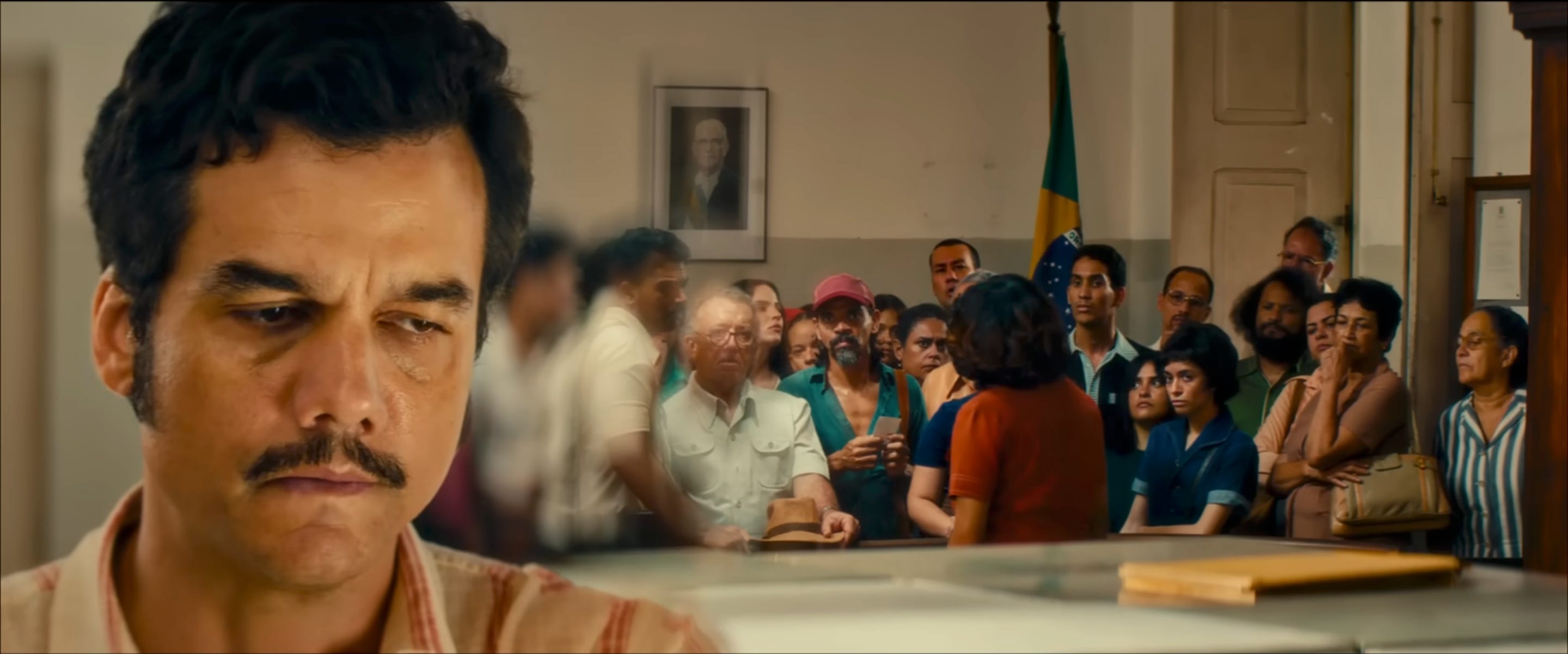
MOST IMPORTANT MOVIE OF THE YEAR (TRYING THINGS): The Secret Agent.
Despite being a dead art form, cinema explored a variety of exciting routes forward for narrative, cinematography, and the artist-viewer relationship in 2025. I’m particularly interested in what appears to be a peeling away from the overt symbolism that defined the past ten years - the A24 style in the mold of Jordan Peale - paired with a simultaneous interest in material analysis of how films get made (cameras, projection methods, finances, adaptation/IP histories). There has always been a certain kind of guy interested in the latter, but the mainstreaming of knowledge about delivery formats (epitomized by the explainer video Ryan Coogler made with Kodak) and industry processes speaks to rising awareness of the materiality of the artform and the limitations incurred by it. Conversations about cameras and financing defined the discourse around two of this year’s biggest movies (more on those later) and, on the opposite end, harsh limitations boosted the celebration of It Was Just an Accident. But the film that has me most excited about what’s to come is The Secret Agent, which transfers this material-focused analysis to the elements of plot. Filho limits his resources to a handful of explicit sources and lets their failings define the contours of his cinematography. The result is a referential film that feels a world apart from the post-scarcity exhaustion of Quentin Tarantino, a style where the boundaries are set but the combinations within them feel infinite. 2025 might have been the year Abundance came out (something I’d happily forgotten until I went Christmas shopping earlier this week) but I’m pretty sure the immediate future of art is restraint and groundedness, an exploration where the materials that go into creation are considered for their limitations and celebrated for their possibilities. (Still in theaters, including the Main in Minneapolis.)
RUNNER-UP: 28 Years Later (watch it on Netflix).
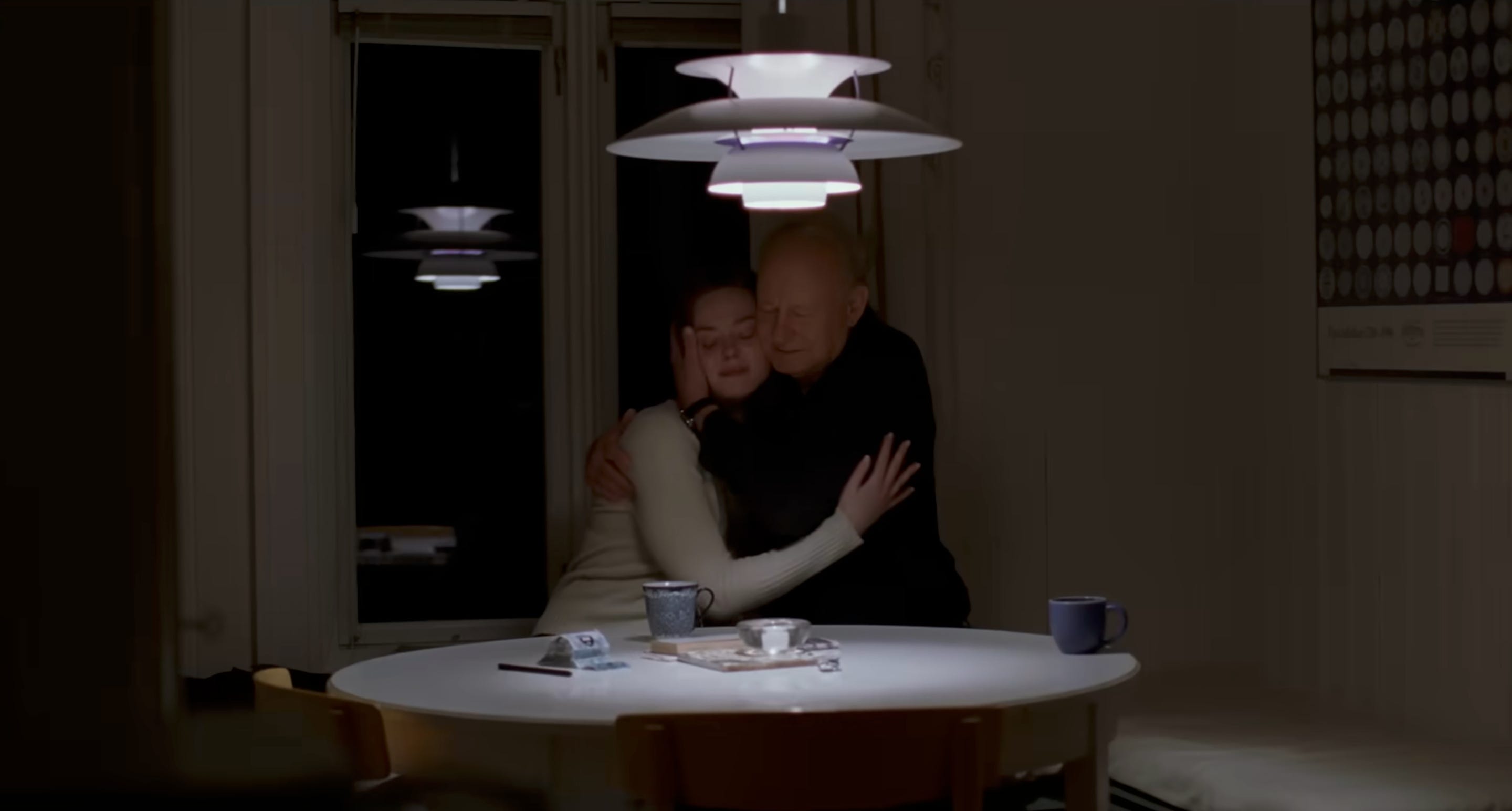
BEST HEAD-UP-ITS-OWN-ASS MOVIE (GOOD): Sentimental Value
2025 was a great year for indulgent self-reflection. Pavements interrogated the biopic and the reunion documentary, Hamnet took the more conventional approach, documentaries about late-career movie brats laid out artistic depravity with unprecedented access. On a more meta level, Caught by the Tides, Grand Tour, and Matthew Rankin’s lovely Universal Language interrogated the way movies influence and transform one another. But the obvious winner for me is Joachim Trier’s Senitmental Value. It’s easy for this sort of movie to become an omphalocentric waste of everybody’s time (see Jay Kelly), but Sentimental Value dwells in the space where creation spills into everyday life via the relationships that drive it. More than an artist’s journey, it’s a movie that reminds us how we use movies - and narrative art in general - to process our lives. Directors, actors, and viewers are all tied together in the collective experience of spilling our guts out and sweeping them back, still dripping, into tidy characters and plot devices. Does it do us any good? Like a true Northerner, Trier concludes that repression, while not exactly healthy, is a non-negotiable. It’s not how we overcome our inhibitions but what we do with it that counts. (Still in theaters, including the Main in Minneapolis.)
RUNNER-UP: Megadoc (watch it on the Criterion Channel).

MOST PROMISING NOT-ACTUALLY-DEBUT (GREAT): On Becoming a Guinea Fowl.
Part of me wants to use this category to celebrate The Phoenician Scheme, because it proves once again that Wes Anderson, despite being about as known a commodity as you can get, can continue to evolve within his characteristic style. But that would be rude to Rungano Nyoni’s On Becoming a Guinea Fowl, a basically perfect film that slid into about seven theaters in March and got even less recognition that it did on last year’s festival circuit. Nyoni gives great interviews, thinks about things most Western audiences have never heard of, and directs in a mode somewhere between derangement and intense restraint that could only be called Lynchian because we don’t have a better word for the cinematic transformation of the ordinary to the otherworldly. Her first film, I Am Not A Witch, is also basically perfect, which means her third film, whenever it comes, is bound to be undeniable. From the bizarre cinematography to the uneasy humor to the surprise sledgehammer emotionalism, this is the movie no one saw that’s most in need of some eyes. Learn these names and hope you keep seeing them. (Go watch it yesterday on HBO Go.)
RUNNER-UP: Carson Lund, Eephus (watch it on Mubi).
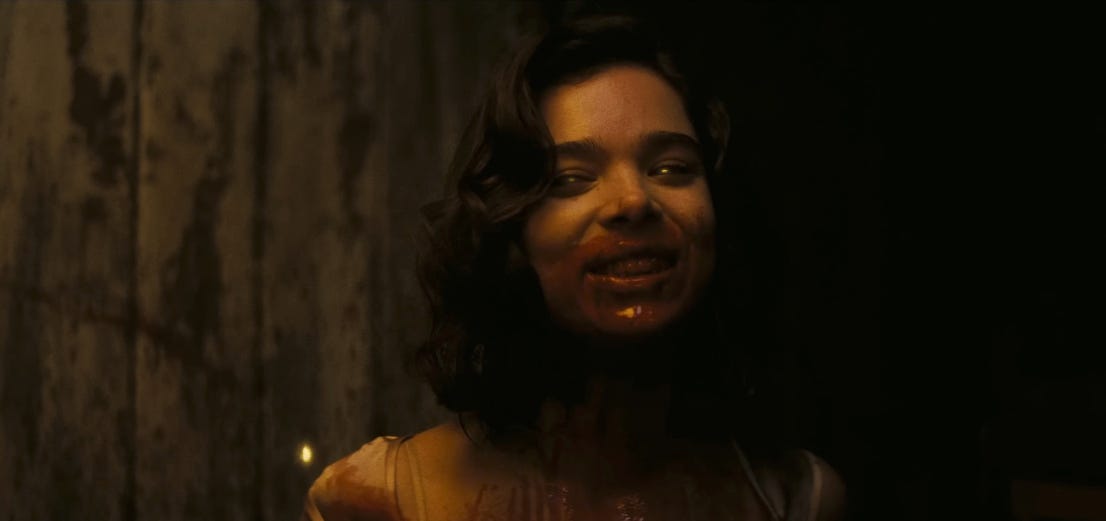
BEST EVIDENCE THAT WARNER BROS. SHOULD BE PRESERVED AS A THEATER-FOCUSED PROPERTY (MONEY): Sinners
I’m including this category to demonstrate that I can participate in the discourse. I don’t have a ton of artistic or intellectual interest in Ryan Coogler’s masterpiece, but it was still fun for a couple months when I could count on everybody to have at least heard that Sinners was a movie. We only really need one of these a year, and it was great to get an original, beautifully-made film that was at least reasonably capable of encouraging higher-level discourse about history, music, and otherworldly beings. I don’t really see why Netflix would be intent on abolishing this cultural experience if the Warner deal goes through: it’s hard to believe that The Electric State did better business than Sinners. But I don’t know what I’m talking about. If you want to listen to men who watch superhero movies for a living explain economics to you then you can head over to The Ringer. (Watch it on HBO Go, or wait for it to come back in theaters once it’s Oscar run kicks into full gear.)
RUNNER-UP: Weapons (watch it on HBO Go).
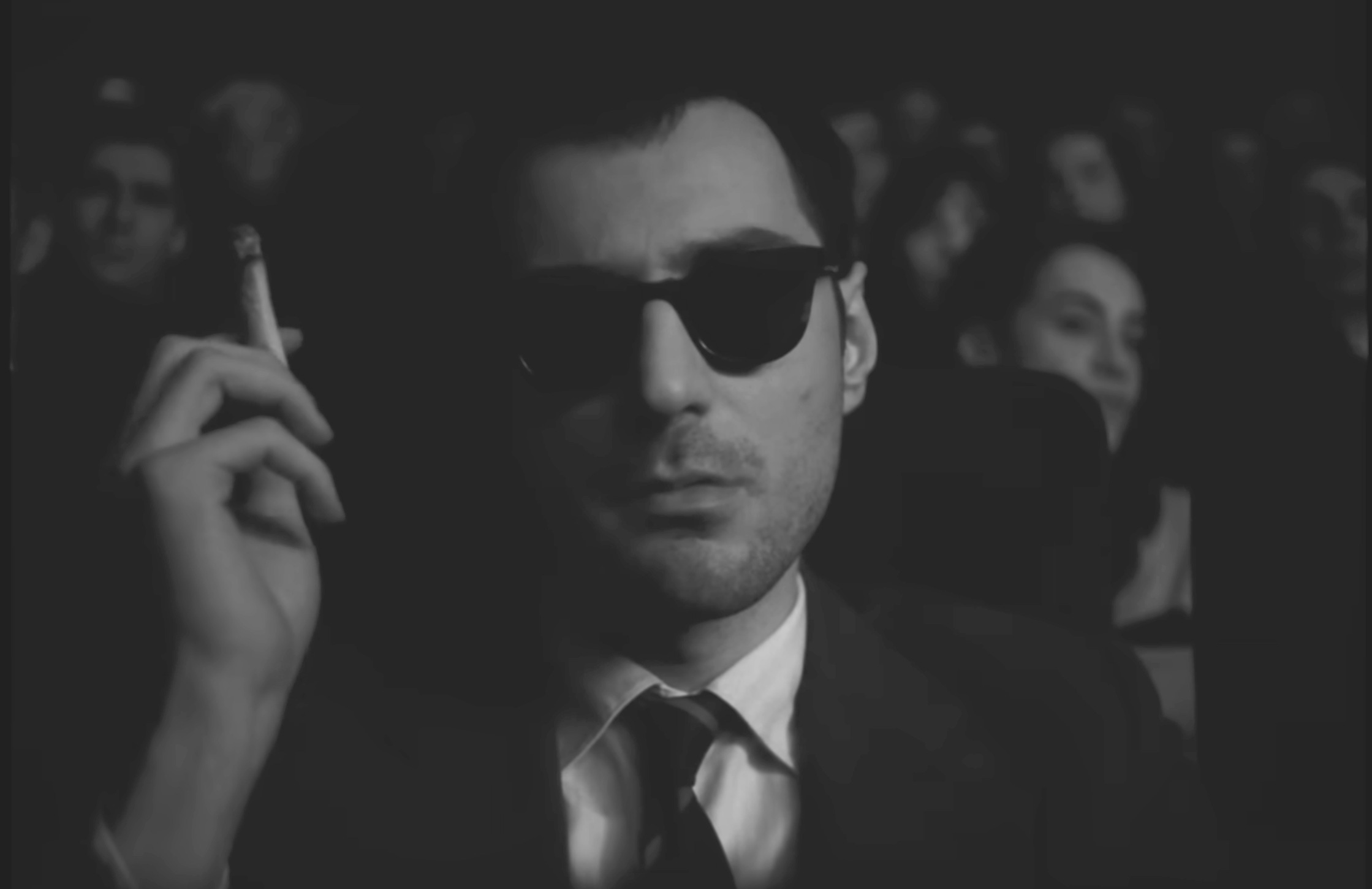
MOVIE THAT MOST AFFECTED HOW I WANT TO LIVE MY LIFE (YMMV): Nouvelle Vague
I got some new pants this fall and I was sort of self-conscious about them because they’re trim in a 2010/‘60s-revival way that communicates to the world that I am not a person who lives and works in a constant state of mess. But Nouvelle Vague convinced me that there’s no time like the present to become the best version of yourself. Movie critics can become directors, and Midwestern school teachers can become movie critics. I have nowhere near the confidence that Jean-Luc Godard had and at best two-fifths of his natural capacity for cool, but I think if I wear these pants I can gradually convince myself that I’m capable of producing the 21st century’s Breathless. Either that or I have to accept that 35 is the beginning of middle-age and I’m Llewyn Davis getting beat up in the alley as Bob Dylan takes the stage at the Gaslight. Anyone at the same crossroads would benefit from spending 90 minutes in Linkletter’s 1960 Paris, either the most inspiringly aspirational or discouragingly cool scene of the year. (Watch it on Netflix.)
RUNNER-UP: see below.
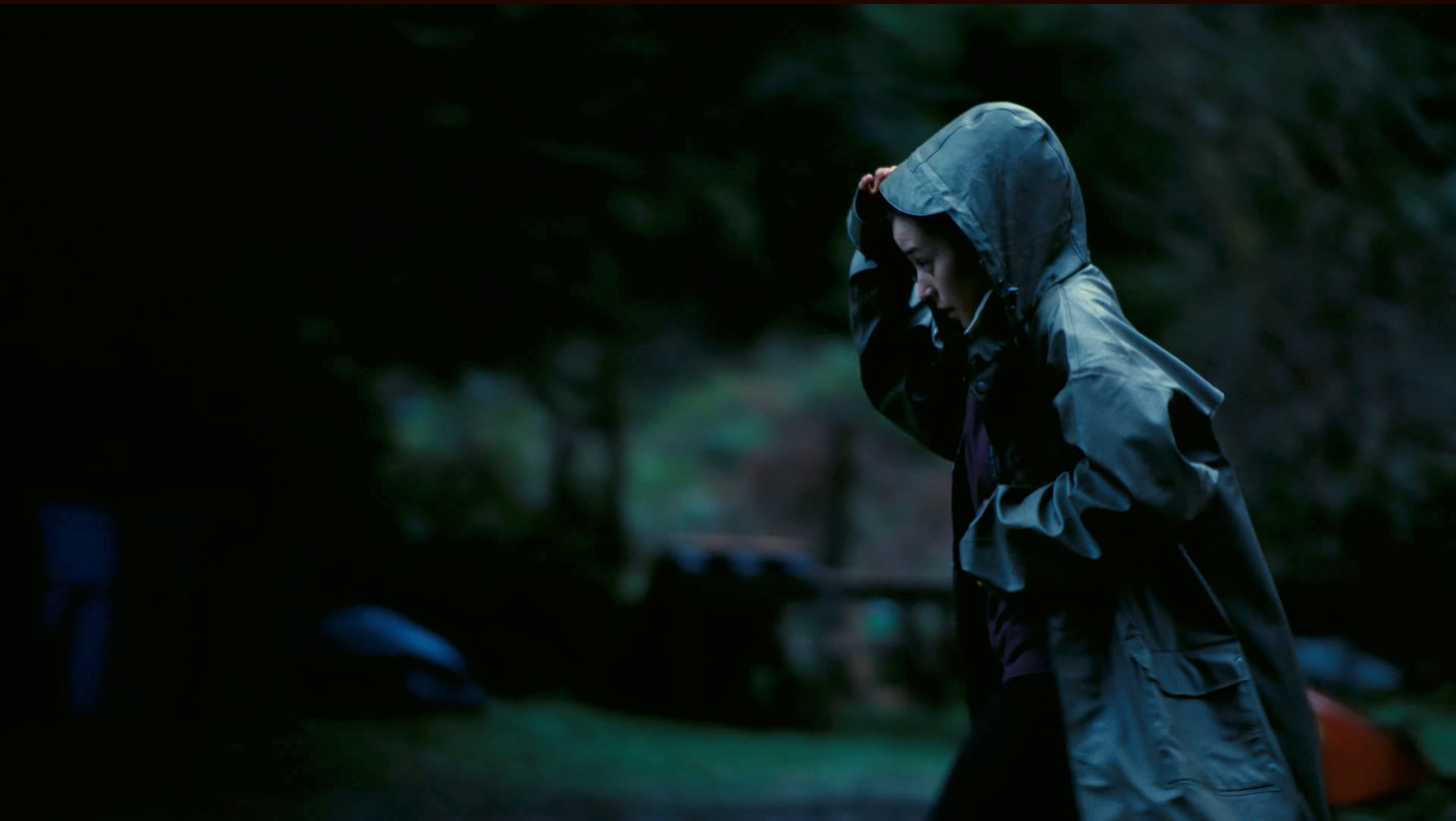
BEST NECK CRACK AT THE FUTURE (DUH): One Battle After Another
If the vibe is bad, you need a counter-vibe to tell it to shut up. Thankfully we got a three-part cinematic wave this summer to get things going. First came 28 Years Later, which argues that the epic drama of the hero’s journey, not collapse, is the only inevitable thing in life. Next came Weapons, which without cynicism or corniness comes to the conclusion that children are in fact the future. But obviously the film that defines not only this year but maybe the first quarter of this century, the film that gives a genuine portrait of how a person can survive in a world where meanness, stupidity, and abuse of power are evergreen, is One Battle After Another. It’s in the title, it’s in the “17 years later” jump, it’s in Leo screaming “fuck the police” at the beginning and in the “American Girl” drop at the end. I have edited the above sentence maybe 15 times and have teared up everytime I re-write it - this movie makes me cry just thinking about it, which is true of a lot of things but rarely does it get quite this oppressive. Paul Thomas Anderson has never been my guy, so I'm at a loss at how he managed to create something that so closely represents my politics, my concerns, and the things I need to hear to get out of head and hold onto hope. The anxieties, the realism, and the satire are spot on, but more than anything One Battle holds up the reverse mirror to Eddington, one that reflects without romanticism or evasions everything good about American society. My city has been overrun by government agents performing incoherently cruel immigration raids these past few weeks, and watching the overwhelming response of ordinary citizens who show up with whistles and snowballs every time there’s even the hint of a threat to their neighbors solidifies the truth of One Battle’s vision, that the world is made up of people and not the forces that alienate them. Look at this country full of Sensei Benicio del Toro’s, not really in control but responding in the only way that makes sense, with patience and kindness and straightforward practicality. You don’t need a movie to tell you how to do that, but sometimes you need one to remind you of the good of what’s around you - and to give you the kick in the face needed to acknowledge that you’re already a part of it. (Watch it on HBO Go, but really wait for it to come back in theaters, it’ll be better that way.)
Runner up: Weapons
And now for some lists because people like those:
TOP FIVE MOVIES I HAVEN’T SEEN YET BY ANTICIPATED RANK
5. No Other Choice
Die My Love
3. If I Had Legs, I’d Kick You
2. Blue Moon
1. The Testament of Anne Lee
TOP FIVE MOVIES BY TEARS SHED
5. Materialists (sometimes these things just happen)
4. Kill Bill: The Whole Bloody Affair (at the “Battle without Honor or Humanity” drop which I acknowledge is pathetic/deranged)
3. Hamnet (pretty much one-to-one with Jessie Buckley)
2. One Battle After Another (saw it twice, cried a lot both times, so probably highest by total water loss)
1. Sentimental Value (cried basically the whole time, so highest by tears per minute)
TOP FIVE MOVIES BY MINUTES SLEPT
5. Superman (2 minutes, wish it was more)
4. Hamnet (3-5 minute; started falling asleep every time Jessie Buckley wasn’t on screen)
3. The Smashing Machine (5-10 minutes in the middle, no clue what I missed)
2. The Mastermind (probably 10-12 minutes total, drifting in and out)
1. Misericordia (30+ minutes both times)
TOP FIVE THINGS THAT RUINED MOVIES THIS YEAR
5. Zoomers on their phones
4. People talking about Netflix buying Warner Bros.
3. People complaining about people laughing in movie theaters
2. a moldy piece of popcorn that got into my bucket during The Secret Agent
1. Boomers on their phones
BEST MOVIE THAT DIDN’T ACTUALLY COME OUT IN 2025
Rosalía, LUX
MY PREDICTIONS FOR THE OSCAR BEST PICTURE NOMINATIONS
One Battle After Another; Sinners; Marty Supreme; Hamnet; It Was Just an Accident; Sentimental Value; The Secret Agent; Avatar: Fire and Ash; Blue Moon; FI: The Movie.
MY TOP 10 BECAUSE PEOPLE LIKE THAT KIND OF THING
10. Ryan Coogler, Sinners
9. Danny Boyle, 28 Years Later
8. Kleber Mendonça Filho, The Secret Agent
7. Wes Anderson, The Phoenician Scheme
6. Josh Safdie, Marty Supreme
Rungano Nyoni, On Becoming a Guinea Fowl
4. Jafar Panahi, It Was Just an Accident
3. Zach Cregger, Weapons
2. Joachim Trier, Sentimental Value
1. Paul Thomas Anderson, One Battle After Another
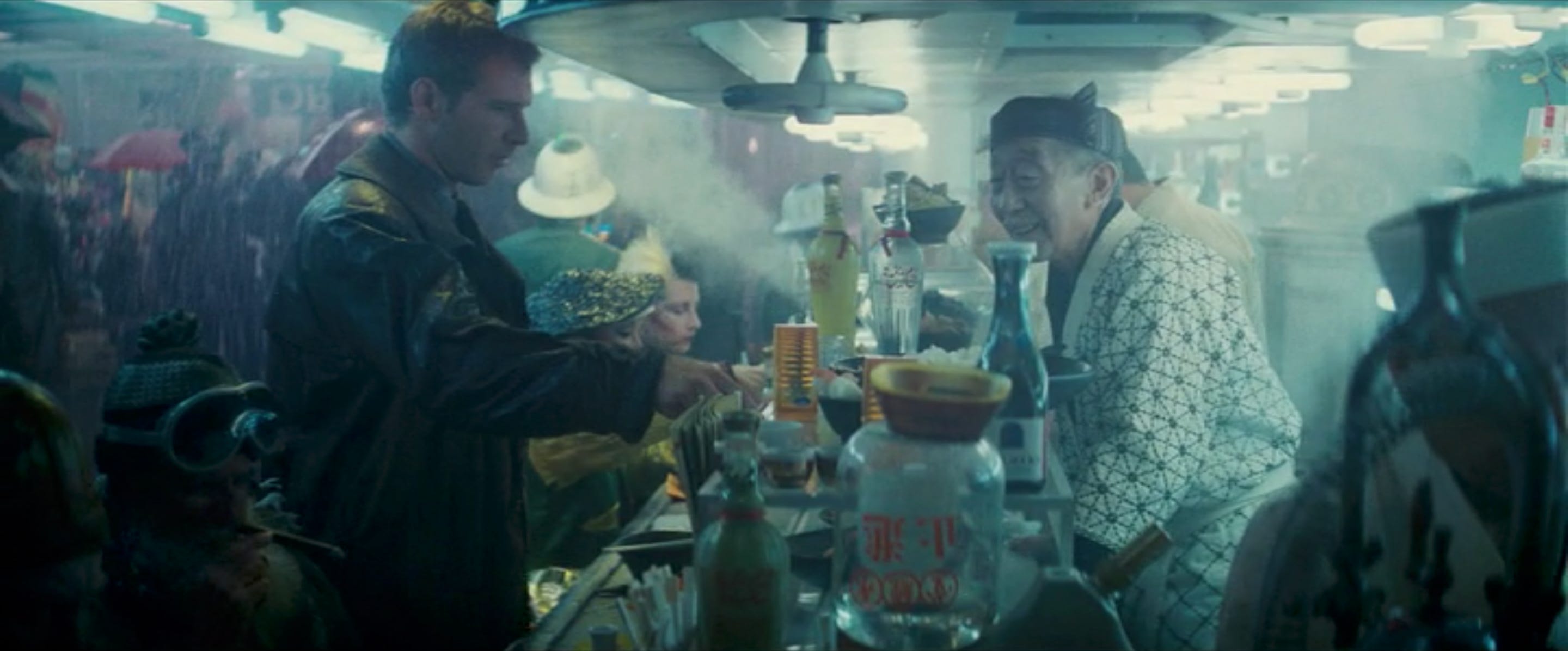
The votes are in, and the people have spoken: Ridley Scott’s BLADE RUNNER is the greatest MAN v. MACHINE movie of all time.
I got a really cool AI comment last week saying that my post was insightful and that I was right about everything I said. There were humanesque aspects to its style, but mostly it just repeated back what I had written and told me what I obviously wanted to hear. In so many ways I think this is what’s happening in Blade Runner. Harrison Ford’s Decker is an amalgamation of noir tropes, basically what a robot would churn out to create sympathy with a bunch of boys going to the movies. Rutger Hauer’s closing speech is a robot shouting out “Daisy Daisy” for its existence, hitting on at least one moving line (“tears in rain”) but mostly talking about things that sound good but don’t actually exist (c-beams, Tannhäuser Gates). Their efforts work on some people, but most of the actual humans in Blade Runner’s Los Angeles don’t have time for their crap because they’re busy living in the city, being humans.
It’s the humans, not the robots, that keep me coming back to Blade Runner. Every time I watch it I find the plot a little more dull, too tightly wrapped in noir tropes without mystery, romance, or even action. But I’m increasingly fascinated by everything that goes on in the background, from the little guys stealing cars to the passersby in traditional Japanese peasant outfits to what appears to be simultaneous St. Patrick’s Day and Hari Krisna parades in the scene when Decker chases down Darryl Hannah. It isn’t the trope-bound robots but the exuberant urbanity that makes this one of the greatest films of all time, the reimaginaing of 1980s Los Angeles as an actual city - obviously a disgusting one, but one where a dead downtown becomes a vibrant city center filled with a grimy and international spread of humanity.
If you reduce human experience to an ongoing series of tropes, then yes, robot language can perfectly imitate human intelligence and the questions Blade Runner poses about machine personhood are relevant. But that’s not the case, even if it can be demonstrably proven that language can be reduced to a finite number of inputs or whatever. To be human is to execute things with intent, to make yes/no decisions, to like some things and dislike others. There are all sorts of sophistical counterarguments you can make to this take, and either you’re someone who likes to get caught up in that or you’re someone who says fuck you, I am human, I do things and I like things and that’s all the time I have for this lame-ass argument. People live outside of tropes, outside of expectations, outside of narrative frameworks. Whether by intent or by the inevitable result of creating a coherent universe, humanity seeps outside Blade Runner’s trope-y plot and into a background that ultimately overwhelms the central narrative. The MAN isn’t Decker who defeats the Batty MACHINE. It’s the messy humanity of the city that lives on in spite of either of them.
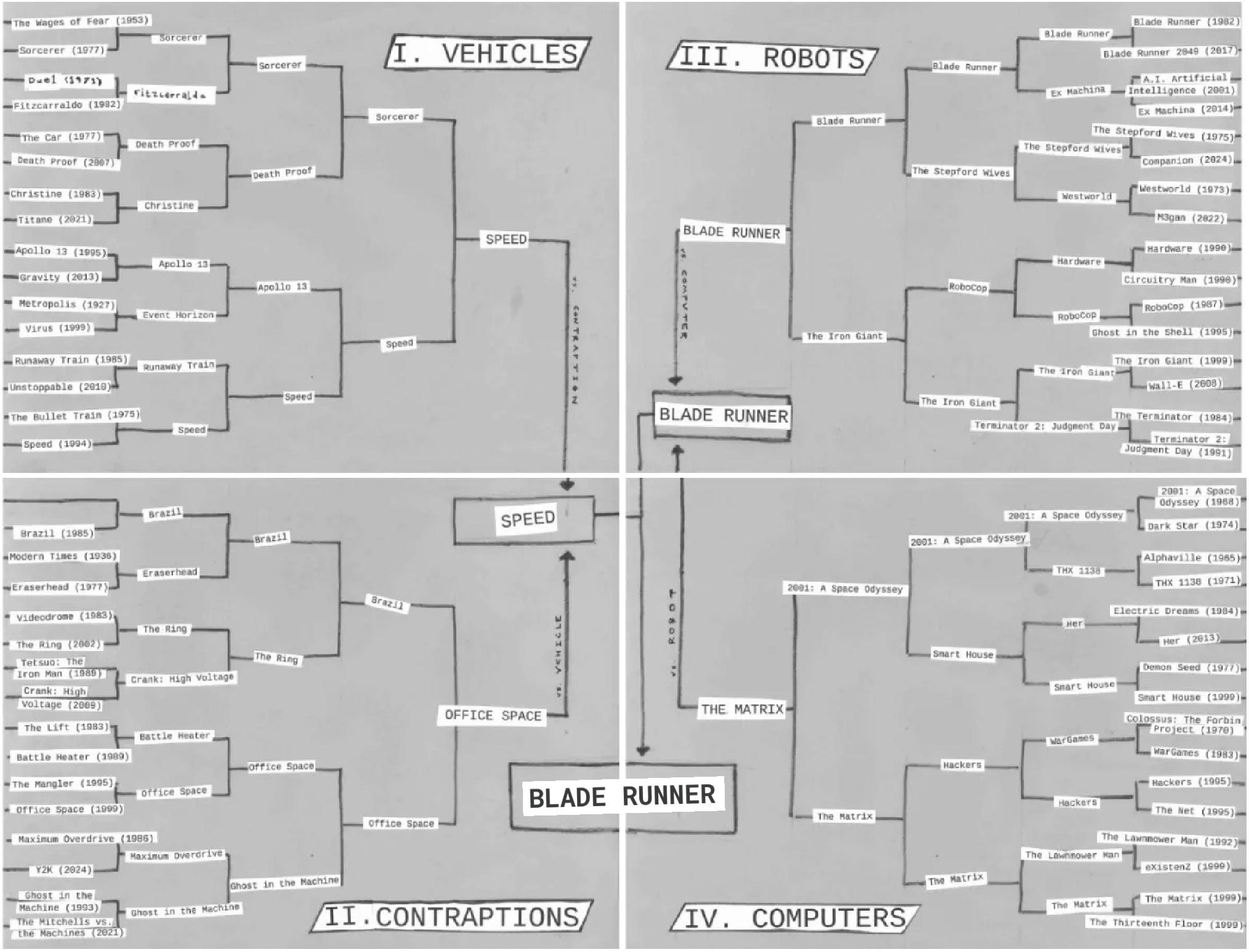
BRACKET CHAMPION: SAM Z. SMITH. Finally the trophy comes back home to St. Paul! Sam is pitching a novel right now. I’ve read it and it’s awesome. If you’re an editor or agent you should express interest in it. He’ll be celebrating his victory with a fresh bottle of good but reasonably priced bourbon.
That’s all for 2025 from *life is disappointing*. It’s been a fun year, and I’m really grateful to everyone who has subscribed, shared, clicked on heart icons, sent me money, and said nice things in person and on the internet. It all really helps and makes it less crazy-making to write. I’m taking next week off but will be back 9 January with some New Year’s plans for this newsletter and a review of Marty Supreme. I hope everyone continues to have a Merry Christmas and a glorious New Year. Here’s to riding ocean waves into 2026.
Way to lasso the scintillating herd of wild ideas that you have stampeded across the movie plains all year long, bringing them into the final pen ... uh-oh, 'scuse me, metaphor breakdown.
Your take on the Secret Agent is incomprehensible - and you and I were in the same literary theory classes in college! I am stoked for Sam and his novel, though, good luck to him.