
a father is a necessary evil (pt 1)
joachim trier gets bergman-y in sentimental value // 2025 MOVIE BRACKET SWEET 16

My goal with this newsletter is to write about new films as they reach general release, along with seasonally appropriate commentary on other cinematic events and interests. I was planning to write about both Sentimental Value and Jay Kelly, but I found Jay Kelly too stupid to share space with a movie as beautiful as Sentimental Value. We’ve also got results from MAN // MACHINE ROUND TWO and match-ups for the SWEET SIXTEEN. Sort of spoilers for Sentimental Value - it’s not really a spoilable movie and I’ve tried to be coy about anything that might count as a reveal, but if you like to go into movies blind then maybe hold off reading until you’ve seen it.
If you’re here just to vote for M//M ROUND 3, go down about halfway for more information. Or if you think you know what you need to do, press this button and vote:
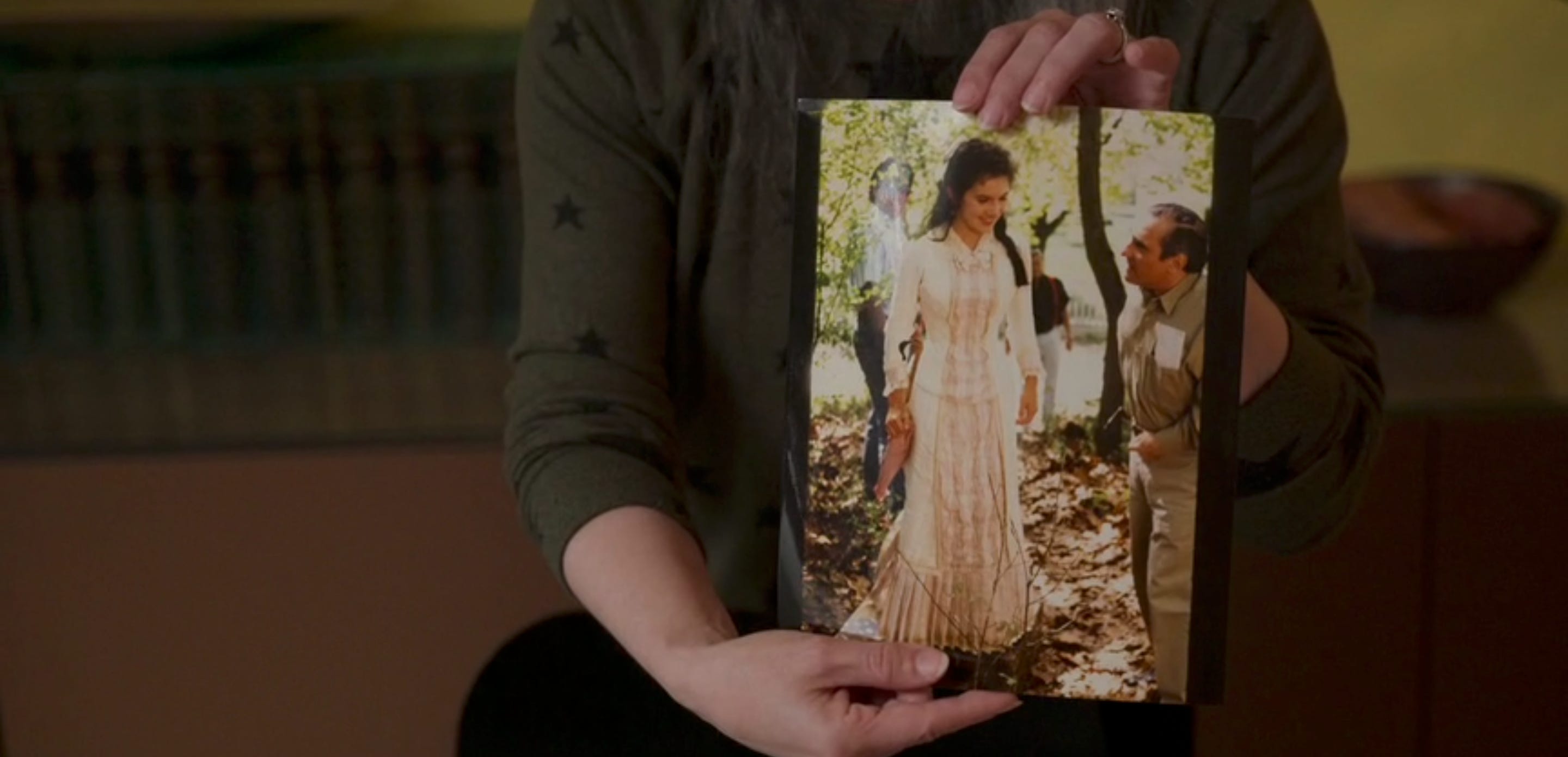
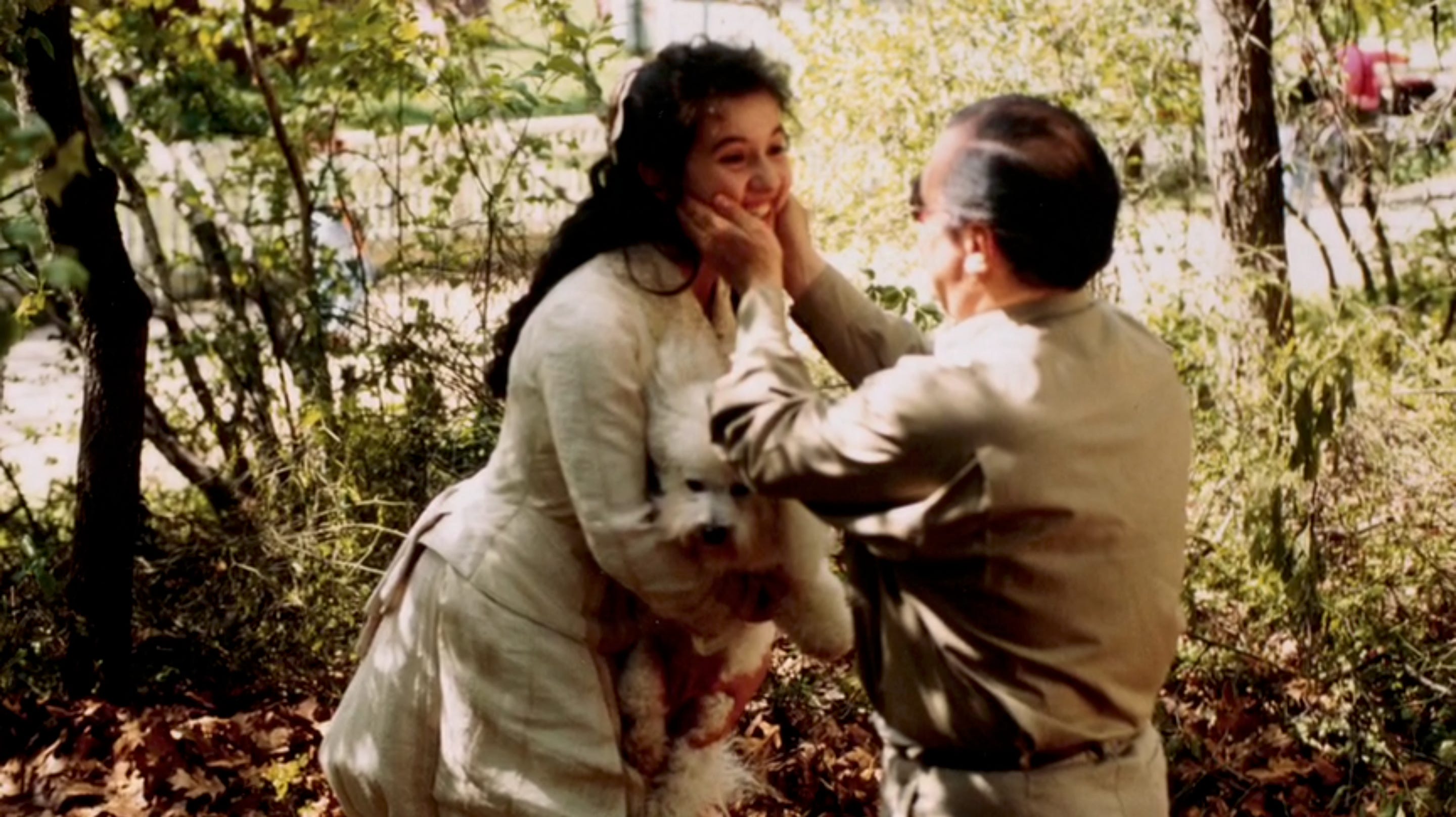
In part four of Rebecca Miller’s Mr. Scorsese, Martin Scorsese’s second daughter Domenica talks about acting in a small role in The Age of Innocence. Holding up a photograph of what she calls “one of her happiest memories,” Domenica says, “Dad, he loves his actors. And, in a way, that was a really incredible experience, to walk into and feel that . . . In between takes he would come away from the monitor and would get kind of quiet, and he would be like, yes, that was really great, OK . . . You’d feel the love and the care.” Scorsese was estranged from Domenica’s mother after an accrimonious divorce in the late 1970s; Domenica rarely saw him growing up. “His focus and intensity and brightness, it’s like that incredible beam from a lighthouse,” she says as a montage of father-daughter photos roll across the screen. “If he’s working on the film then he’s right there, he’s on the film, and then, if you’re not in the sphere of that light, it’s, it’s - sometimes, you can feel it’s absence.”
A parallel scene, every bit as gutting, plays out halfway through Joachim Trier’s Sentimental Value. Director Gustav Borg’s daughter Agnes recounts the experience of acting in her father’s most acclaimed film, a semi-autobiographical account of his experience as a child during the Nazi invasion of Norway. Agnes is indifferent to the art of acting or the noteriety it brings her (she all but rolls her eyes when an A-list actress asks to take a selfie). But when Gustav asks her what was special about the experience, she shakes her head incredulously: “I got to spend it with you!” The specifics are foreign, but the sentiment - existing in a parent’s orbit only when you’re showing interest in their real vocation - is universal. It’s devastating to learn that, biology and cultural conditioning be damned, you aren’t your father’s most precious work. And it’s even more devastating to think that someday you might have a child that’s every bit as secondary.
Of course, not everybody’s father is a famous director. Most people aren’t artists or the children of artists, and the toxicity of creative expression has nothing to do with the communication problems of the average happy family. Most people have dreams, though, and family is usually a sub-component of those dreams at best, either content to be exploited or ready-at-hand labor to be taken advantage of. Writing this makes it seem like I’m antagonistic to dreams and family, and I swear I’m not. But I think Lorraine Hansberry got it right: our dreams are about ourselves, and we use up the patience and the resources of our loved ones when we strive to achieve them. When things work out, those dreams can create love/beauty (romantic version) or money/resources (materialist version) for the entire family to share. But first and foremost, they serve the dreamer. I think this is especially true about art. Which sucks, because art is supposed to be the best thing there is.
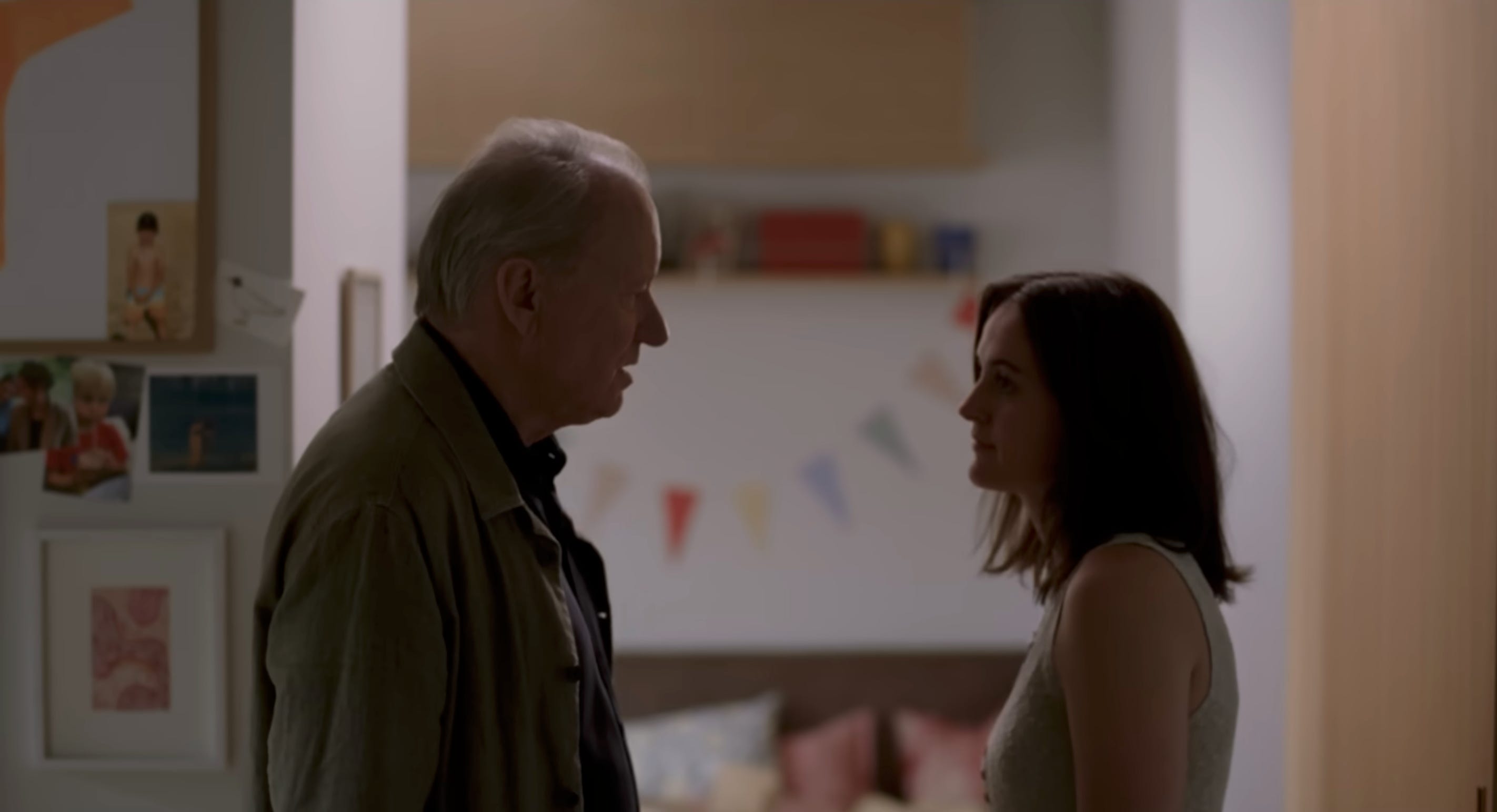
Sentimental Value is a film about art first and family second. Its central agony and its concluding magic trick is that it manages to make this OK. The plot centers mostly around the making of a film, written and directed by legendary director Gustav Borg (Stellan Skarsgård), about the suicide of his mother, written for his estranged daughter Nora (Renate Reinsve), to be filmed in the house where the suicide happened and where Nora grew up. Gustav’s hope is that Nora will play his mother and that her nephew Erik will play himself. When Nora refuses, Gustav brings on American actress Rachel Kemp (Elle Fanning), who all but moves into the house, studying both Nora and Gustav’s mother and gradually shifting her appearance and mannerisms to immitate them both.
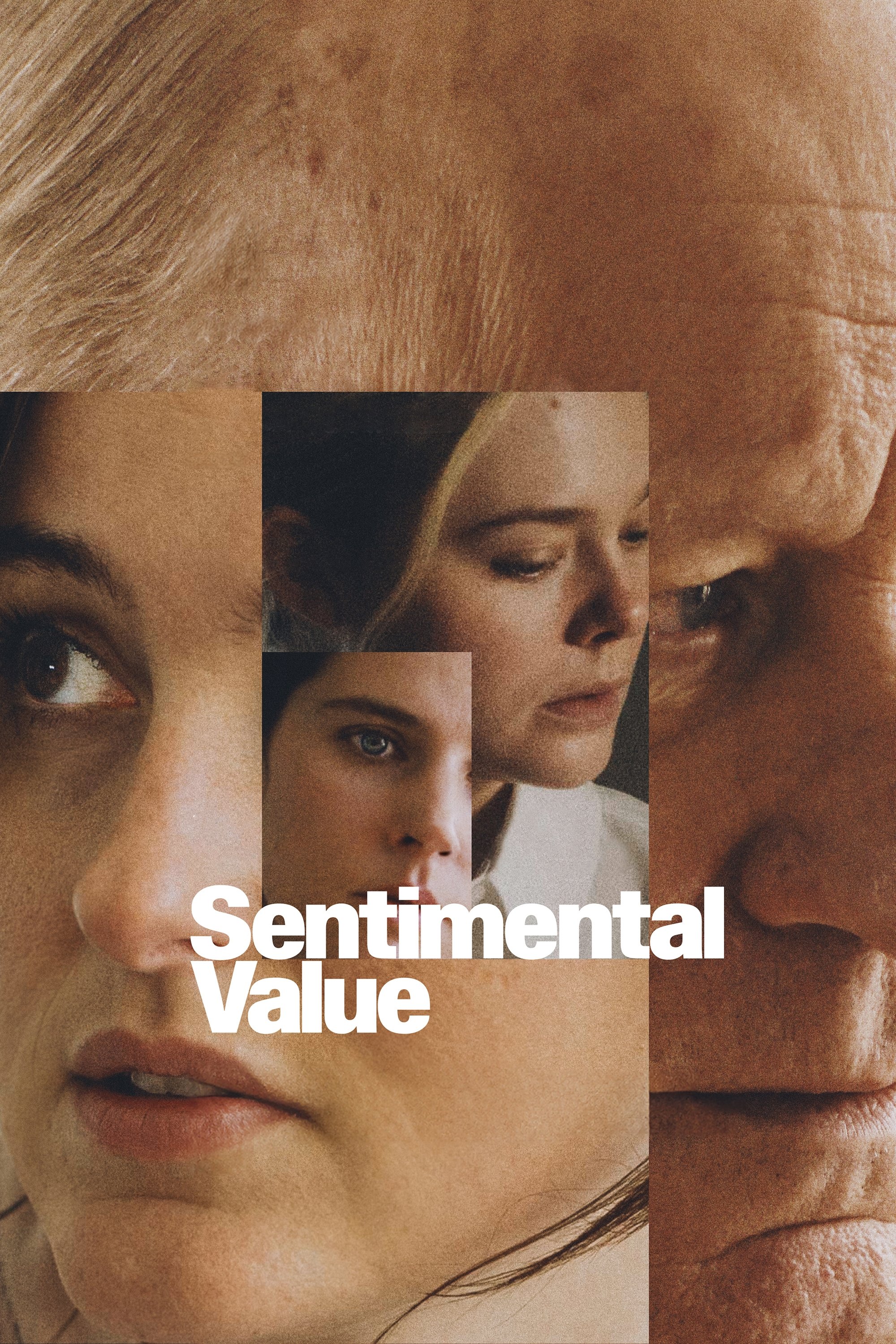
This sounds like the set-up for a neo-Gothic thriller, but the tone is much more quotidian. Like Trier’s previous films, there are layers buried in the everyday naturalism of Sentimental Value: house stuff, Nazi stuff, age stuff, father-daughter stuff. It’s a lot to parse through, and without some grounding it can start to feel overly expansive. Thankfully, Trier gives us some cinematic handholds to tether us to what he’s trying to do. One of the most explicit is a shot, largely without context, in which Gustav’s face merges in rapid succession into Nora’s, Rachel’s, and Agnes’s. The implication is obvious enough in itself. But it’s also a clear allusion to the famous scene in Ingmar Bergman’s Persona where Bibi Andersson and Liv Ullmann’s faces suddenly merge into one.
At the risk of getting in over my head, I think Trier is Doing Something with that allusion. Let’s dig into it.
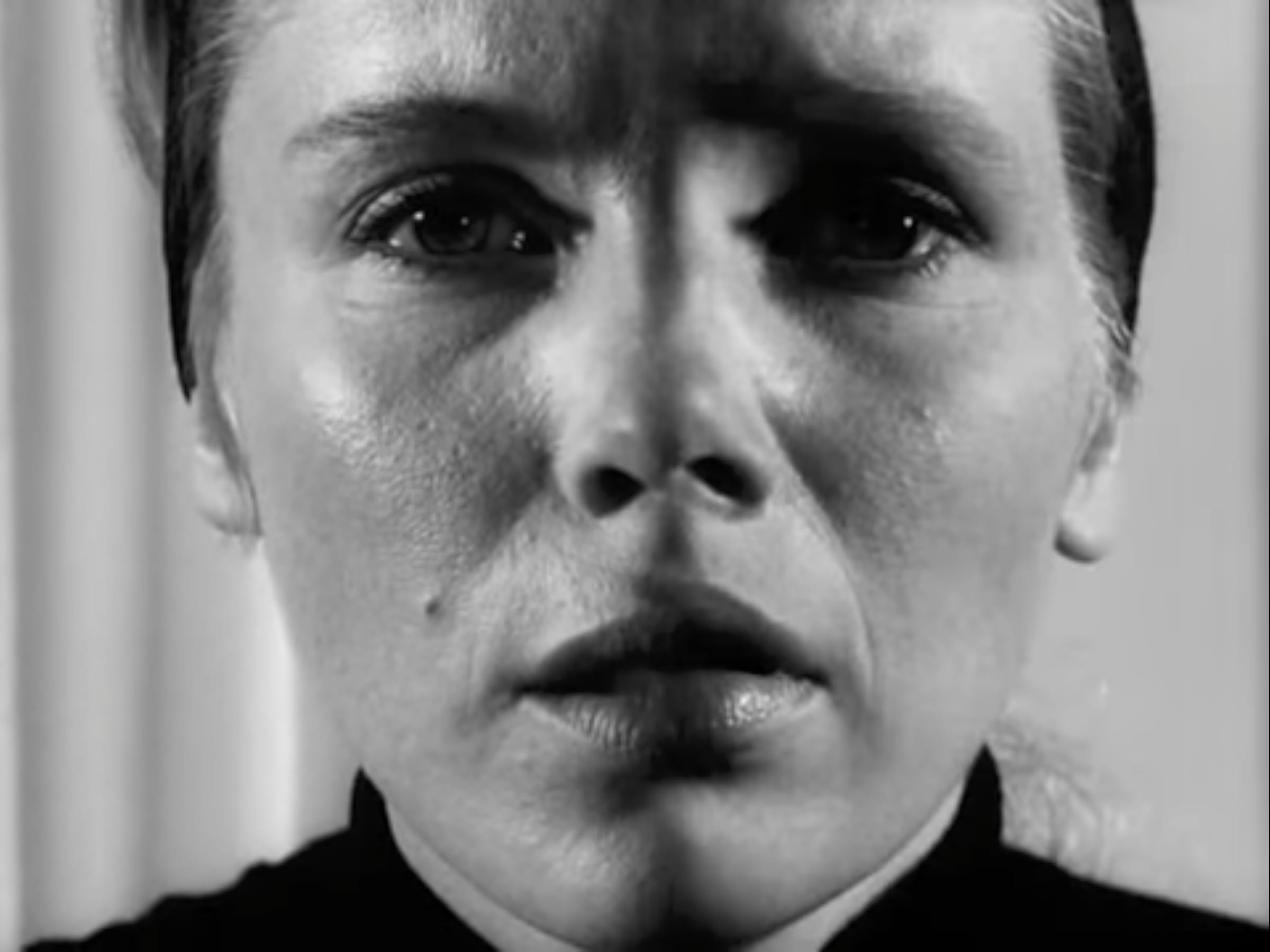
Persona is a mid-career film by Ingmar Bergman created at a time of intense introspection and competitive curiosity with the metatextual experimentation of the French New Wave. There are a million things that Persona might be doing, but it’s universally agreed to be about two women, a selectively mute actress and her chatty nurse, who gradually start to become one another on an isolated island off the coast of Sweden. Bergman films their story in a way that makes his presence inescapable, both via self-aware cinematography but also by a seven-minute introductory montage that begins with the ignition of a film projector and ends with a child pressing his hands against a screen projection of the two actresses. Read this as you will, but it seems clear to me that, at the very least, Persona is a movie about Bergman-as-director processing something via the performance of two actressees. Which is what every movie is - but Persona makes the exploration itself the entire point.
Trier performs a similar exploration via actresses in Sentimental Value, but instead he plays it out through straightforward narrative. Like Persona, we have a nervous-wreck actress who refuses to be both daughter and mother and an enthusiastic surrogate who gradually transforms herself into her co-star, led by an aging director who refuses to make himself emotionally present by any means other than his art (and will only depict himself on screen in the form of a child). The setting is everyday, the tone is gentle, and the explicit metatextuality isn’t there, but the core anxiety - what is art except an exploitation of fellow humans as a means of self-expression? - is all Bergman.
The Persona hint tips us off to a parallel story in what can easily be read as a movie about women crying.1 Sentimental Value is all about family feelings, but at the core of those feelings is an inability to express oneself through any means but art. Like so many films about the north, it’s an exploration of the depths people will go to avoid talking to each other. Trier proposes that art is yet another method of avoidance. Gustav has turned so far inward that the only way he can process his grief for his mother and his alienation from his daughter is to write a film for the daughter in which she plays the mother - just as he could only process his wartime abandonment by casting his other daughter in a part rather obviously written about himself. When Nora refuses the role, the only thing he can do is create a surrogate. Rachel tries as best she can, studying biographies, changing her hair, changing her accent - but everyone, including her, knows it will never work, because the art was never the film but the casting.
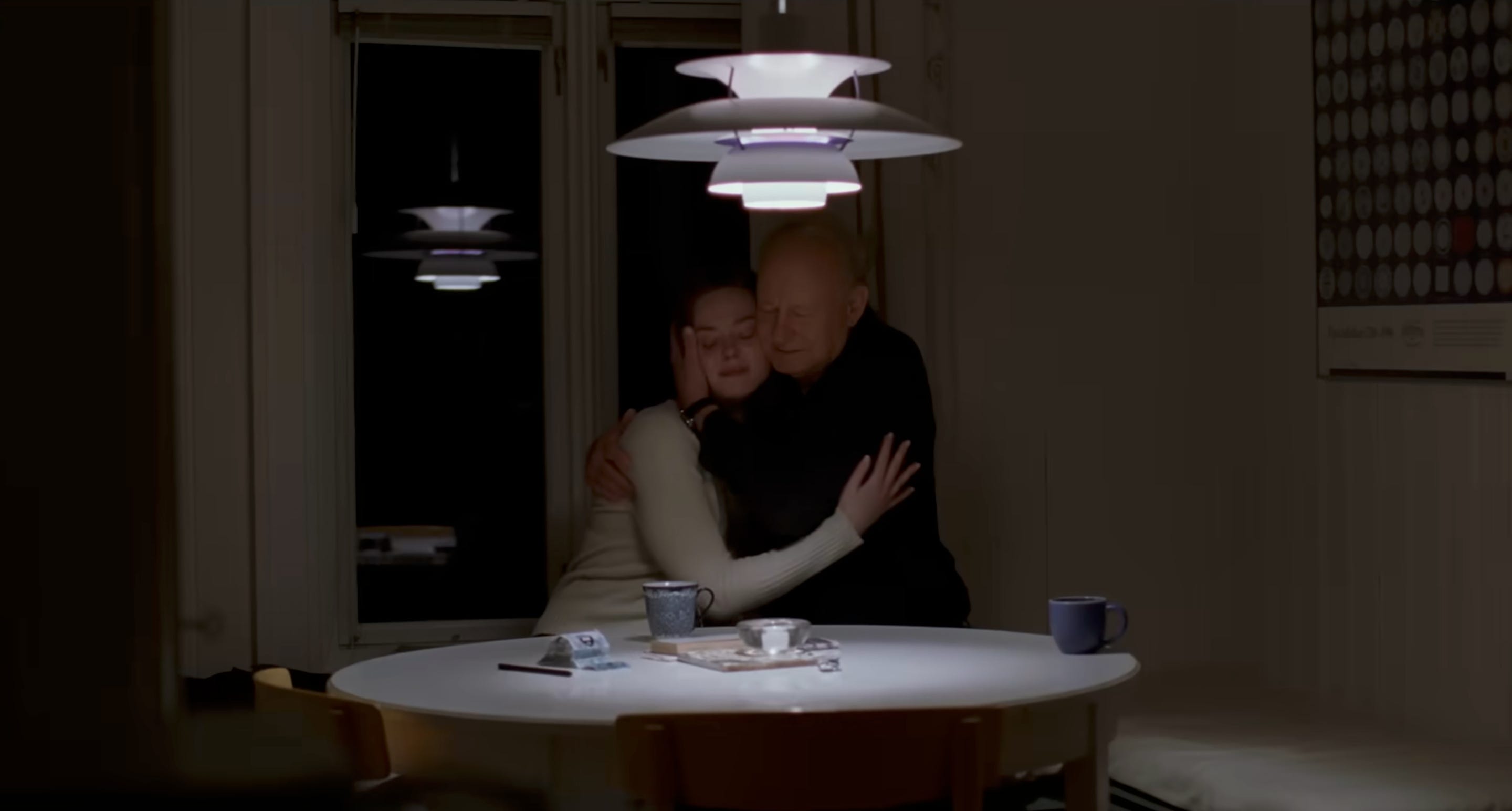
Trier plays this out through a repeated monologue (again - Persona) from Gustav’s film, first read by Rachel in English and later by Nora in Norwegian. Trier frames Rachel’s reading as if we're watching a stunning performance. This is a doomed setup that has worked exactly once, and, naturally, it flops: Rachel gives a conventionally teary performance that plays exactly like a scene a young star would submit for her first Best Actress bid. Trier leans into the discomfort and frames it like we’re supposed to love it. Rachel laughs self-consciously after she’s finished, dabbing her cheeks and shaking her head as if she’s too humble to acknowledge she’s done something incredible. Gustav tries to convince himself that he’s equally impressed, but it’s clear that he, like his audience, is underwhelmed. We’ve just witnessed Acting, sure - but who hasn’t?
Later, Nora reads the same scene at the demand of her sister. She starts off flat and rushed, but she starts to choke up as it becomes apparent that the scene was written for and about her. She breaks down at the same point that Rachel started crying, but it’s internalized rather than performative, the tears of someone who’s just been kicked in the gut and doesn’t want anybody to know about it. Gustav isn’t physically present, but his gaze hangs over the performance via Trier’s camera,2 and it’s obvious that this is the scene he wanted to see. The monologue wasn’t written to be peformed - it was written to be read by his daughter, with intent to devastate, and to make that devastation into art. Nora is the only one who can peform it. “This is the girl.”
This connection between writing and reading, directing and acting, is all we’ll ever get from these two. Even in the final scene, when Trier pulls all his threads into a tangle that somehow comes out like a bow, we never get a verbal or physical indicator that anything is OK. It’s not that those traditional signs of care are inaccessible: we get the healing and familial love we want to see in what will probably be remembered as the film’s iconic scene, the climactic tear-jerker embrace between sister and sister. But Trier reveals, in his denouement, an attempt at that same love between father and daughter. Nora and Gustav will never hug, never cry together on the couch, never even really speak to one other. We want an ending that cuts through the alienation of the script, that steps out from behind the monitor and finally puts father and daughter face to face. But that would be dishonest. Unmediated words just don’t belong in some people’s mouths. This is why art exists - and thank God for it, because without it the clammed up people of the world would be fucked.3 There’s a sociopathy to chewing up the good will of your family and spitting it back out as a work of art. But also somewhere in there is a supreme act of love.
Is it enough? I think only the people who get to participate in it can answer that.
We’ve got ourselves a SWEET 16. It came down to two gnarly fights in the top of the VEHICLES division, but the higher seeds panned out. I was hoping for some big upsets from Battle Heater and Event Horizon, but the only real Cinderella story left is Lavar Burton’s Smart House punching well above its weight class into the finals.
(I had a bit of a PC-load-letter situation with the scanner at and had to take pictures on Florine’s ipod phone, sorry this looks like crud.)
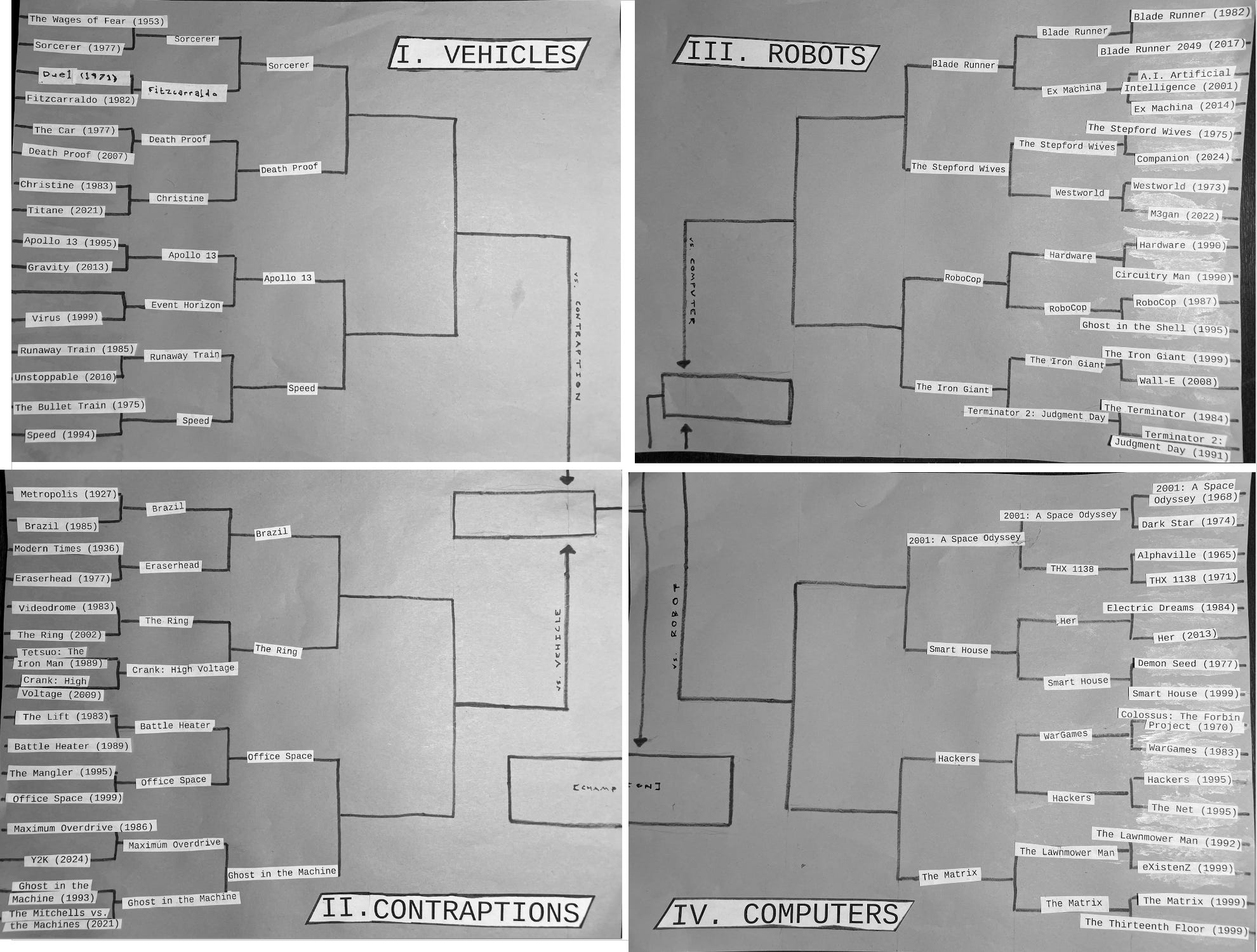
BRACKET LEADERS
Katie F. (46 pts)
(tie) Nick “The Brick” / HOUSE (45 pts)
(tie) David B. / Max / Kory (44 pts)
SWEET 16 MATCH-UPS
Sorcerer v. Death Proof: Sorcerer is sort of like the Steeley Dan of movies, something that a white man in your life (maybe you!) started talking about in 2021 for some reason as if it was universally known as one of greatest films of all time. Death Proof is more like The The Black Lips, something a white man in your life (maybe me!) loved in 2008 and mostly forgot about but every once in a while will put on and say, hey, this was pretty good.
Apollo 13 v. Speed: A pretty tidy ‘90s double feature, two races against time focused on the practical skills of the people stuck inside a machine with assistance from outside experts. Apollo 13 is obviously the better movie in the prestige sense, but Speed has a visceral premise and a handful of iconic stunts that will make it a tough one to beat.
Brazil v. The Ring: The Ring has made it a long way on name-recognition and millennial nostalgia. Is it actually a great MAN // MACHINE movie? Other than the car and the computer, the TV is maybe the machine we interact with most. The only competition is the HVAC system, a horror Brazil explores with unparalleled insight.
Office Space v. Ghost in the Machine: Two films built around a central conflict that could easily be solved by unplugging things.
Blade Runner v. The Stepford Wives: I’m really uncurious about the sentience of androids as a technological/philosophical exploration, but I’m curious what they can represent in the more mythic sense as near-human deceivers. The Stepford Wives isn’t an incredibly well-delivered film, but there’s a fascinating metaphor in there for the gradual replacement of the self through acts of labor - how a person becomes a scab of their former self as they assimilate to dehumanizing capitalism in the form of unpaid women’s work (housekeeping, sex, suburban appearances). Blade Runner is similarly less interesting to me as a meditation on consciousness than it is an exploration of what work means in a world overloaded with commercial semiotics. The central question of the movie isn’t the “is he or isn’t he?” ambiguity game but a wondering about what purpose could mean in a world where we’re just as inclined to clap at bullshit about C-beams glittering in the dark as we are about genuine acts of love.
RoboCop v. The Iron Giant - I’m thrilled about this match-up mostly because it means I don’t have to think about James Cameron anymore. There’s really not a whole lot of similarities between these two movies - it mostly just comes down to if robots make you angry or if robots make you cry.
2001: A Space Odyssey v. Smart House - Two movies about helpful systems overextending their boundaries and tormenting the people who live within them. One is generally regarded as a crowning achievement of the 20th century. The other is a Disney Channel Original Movie directed by the guy who hosted Reading Rainbow. You don’t need to be a snob though, vote with your heart.
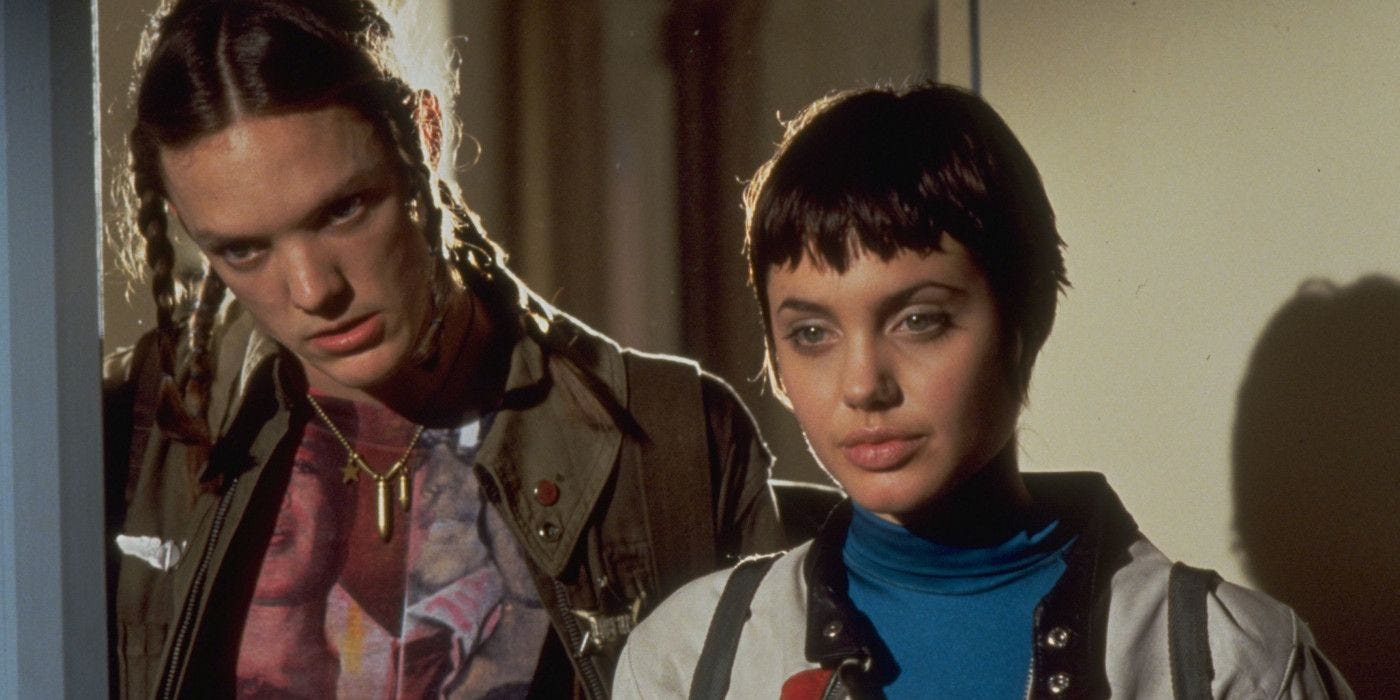
Hackers v. The Matrix - Definitely the queerest match-up we could have asked for. Lots of leather, lots of unnecessary straps, lots of interesting hair decisions. I’d love to see a crossover universe where Neo follows the white rabbit to the teen hangout lair and does tricks on the halfpipe with Angelina Jolie instead of dancing at a BDSM club with Trinity. Watching these head-to-head is the closest we’ll get to that reality, so revel in the synergies while you can.
Enjoy the rest of your holiday weekend if you have one. Lots coming up in the next month with awards-race releases, MAN // MACHINE finals, year-end lists, schemes for the new year. I’ll try to stick to a Friday 8am schedule but there might be some lapses. Please leave an excoriating comment if you’re upset about it.
Thanks for reading *life is disappointing.* If you found this newsletter slightly less disappointing than the rest of your life, consider liking, commenting, sending me money (thanks!) or subscribing. Subscribing will get you exactly what you get here but sent to your email inbox. We’ll be back next week with ROUND 4 of MAN // MACHINE voting, plus part two on this exploration of fatherhood and art, this time with some help from Chloé Zhao and Shakespeare.
To add another layer of metatextuality, we’re told, via a conversation with Gustav’s cinematographer, that Sentimental Value’s handheld, free-flowing cinematography is Gustav’s cinematography. We are very much watching Gustav’s film about making his film, and his perspective (which is, of course, Trier’s) is the one that hangs over every scene.
See also: baseball.