
a father is a necessary evil (pt 2) // 2025 MOVIE BRACKET ROUND 4
chloé zhao goes toe-to-toe with james joyce // MAN v. MACHINE enters the ELITE EIGHT

My goal with this newsletter is to write about new films as they reach general release, along with seasonally appropriate commentary on other cinematic events and interests. This week we’re looking at Chloé Zhao’s Hamnet as a continuation of the themes Joachim Trier introduced in Sentimental Value. We’ve also got results from MAN // MACHINE ROUND THREE and match-ups for the ELITE EIGHT. Sort of spoilers for Hamnet and Sentimental Value - you know what will happen in both of them, but maybe you want to try them out for yourself first.
If you’re here just to vote for M//M ROUND 4, go down about halfway for more information. Or if you think you know what you need to do, press this button and vote:
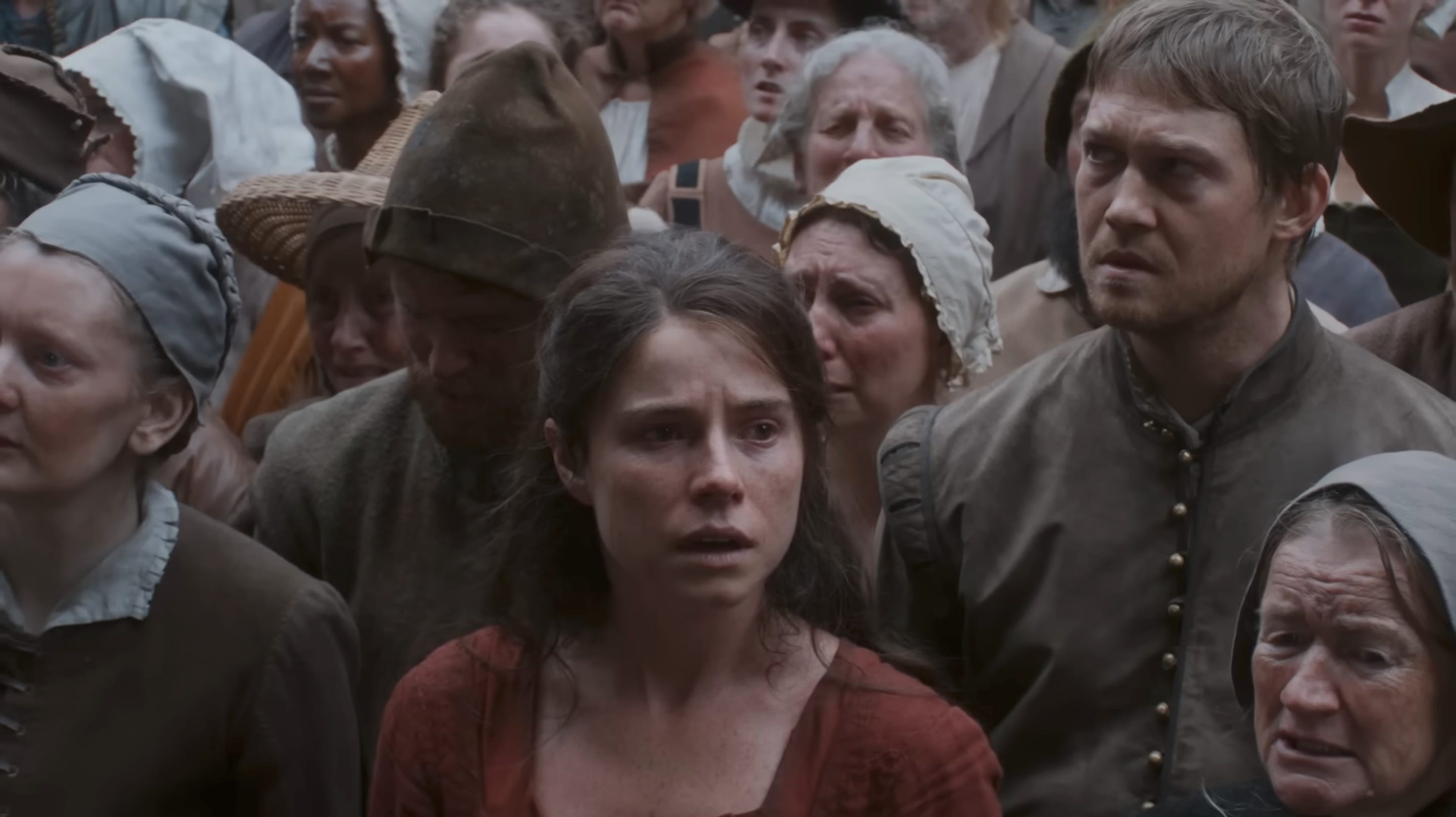
I want to take another shot at what I was trying to get at last week with Sentimental Value. My read is that Joachim Trier’s film is pretty much a reworking of Ingmar Bergman’s Persona, a story about self-exposure through characterization. In Persona, the artist is Bergman himself, hiding in plain sight behind his camera and using his actresses as tools for psychotherapy. In Sentimental Value, it’s Stellan Skarsgård, mining his family for material and coughing it back up for his daughters to (re)act to. Both films expose enormous acts of narcissism that, somehow, result in something beautiful.
I’ve always been haunted by the idea that even the best fiction is nothing but an appropriation of everything an artist experiences processed through his own bullshit into a work of art. We love the metaphor of artist as deity or artist as parent, but really he’s more of a filtration system, someone who sucks in the world around him and blasts it back out in a form that’s mostly unrecognizable but undeniably contaminated with himself. James Joyce is the master of this process, a guy who spent his entire life tearing himself and everyone around him to pieces as fodder for the perfect novel. Joyce went through every artist metaphor he could find, from God to parent to ember to furnace, eventually settling in Finnegans Wake on a “squidself” that tattoos its autobiography into its skin with ink made from its own excrement.
Joyce loved thinking about himself, but when he needed an extra layer of distancing he turned to William Shakespeare. His Shakespeare obsession pops up throughout his work, but it’s made most explicit in the “Scylla and Charybdis” episode of Ulysses. Framed as an argument between the pseudo-intellectuals of Dublin, “Scylla and Charybdis” presents a variety of gossip-based arguments about Shakespeare’s biography, all swirling around a radical theory, posited by Joyce’s surrogate character Stephen Dedalus, that Shakespeare based Hamlet not on himself but on his dead son Hamnet.
Stephen’s theory is stupid; when asked if he believes it, he promptly answers “no.” He begins by arguing that the ghost at the start of Hamlet is Shakespeare and that the ghost’s living son Hamlet is the artist’s dead son Hamnet.1 By the end he’s arguing that every character in every play is everyone in Shakespeare’s life, the playwright manifesting his brothers, his rivals, his unfaithful wife, and his dead children into his writing via a central encounter with himself. It’s all a set up for an elaborate masturbation joke, but underneath the flippancy and the deliberate inanity is Joyce’s genuine attempt at ironing out his anxieties about artistic creation.
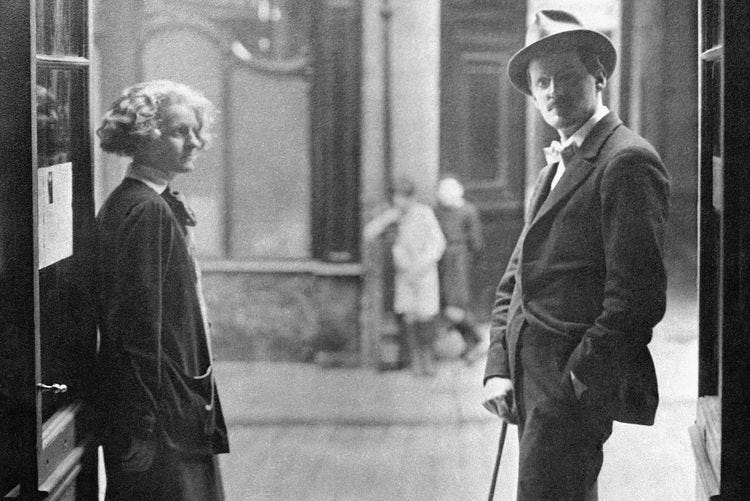
One of the most coherent points in Stephen’s argument is his binary theory of parenthood. Stephen (who, like Joyce, has very active daddy issues) finds fatherhood to be a great mystery and suggests that this is why Christianity identifies God with the Father and not the Mother:
“Fatherhood, in the sense of conscious begetting, is unknown to man. It is a mystical estate, an apostolic succession, from only begetter to only begotten. On that mystery . . . the church is founded and founded irremovably because founded, like the world, macro and microcosm, upon the void. Upon incertitude, upon unlikelihood.
Like Christian creation, fatherhood begins with absence, the inability for the father to be consistently available - emotionally and otherwise - to the child. Stephen contrasts this with motherhood, a love so undeniable that it lacks the mystery necessary to bring about religion, much less art:
Amor matris, subjective and objective genitive, may be the only true thing in life.
Mothers necessarily love their children, and children necessarily love their mothers. As such, motherhood lacks the distance required for the mystical creation of the father. Only an inherently absentee parent could commit as depraved an act as writing a play called Hamlet about his dead son Hamnet.
Hamnet’s mother’s didn’t get her fair day in court until Maggie O’Farrell’s 2020 novel Hamnet, which brings to life the “Scylla and Charybdis” argument from the perspective of Shakespeare’s wife, known to Joyce and history as Anne Hathaway but rebranded by O’Farrell as “Agnes.” O’Farrell tells the story of Hamnet’s death and the diverging grieving strategies of his parents. Like Joyce, O’Farrell presents the intellectual, absent father against the illiterate, almost animalistically present mother. When Hamnet dies, the father responds by retreating into himself and translating his grief into Hamlet. The mother, in turn, responds in the more typical way (crying, tears, depression, etc.) and can’t understand her husband’s silence. The father can hide behind the violence of writing and reduce his son to abstract representation; the mother can hardly recognize the written son because those empty letters will never resemble the full physicality of her child.
I find this dichotomy compelling, even if it boils down to gender essentialism and stereotypes. O’Farrell isn’t particularly interested in theory, but her novel presents, via a simple dialectic, an easy metaphor for creation. What it lacks is the sensational physicality required to land the metaphor. You can write about how writing can’t conjure reality until kingdom come, but you’re sort of inherently going to miss the point. You need something physical to work as a counter. Thankfully we have cinema to solve this problem, and we have an Oscar-contending adaptation to bring it into being. So what does Chloé Zhao bring to the table as she translates Hamnet into film?
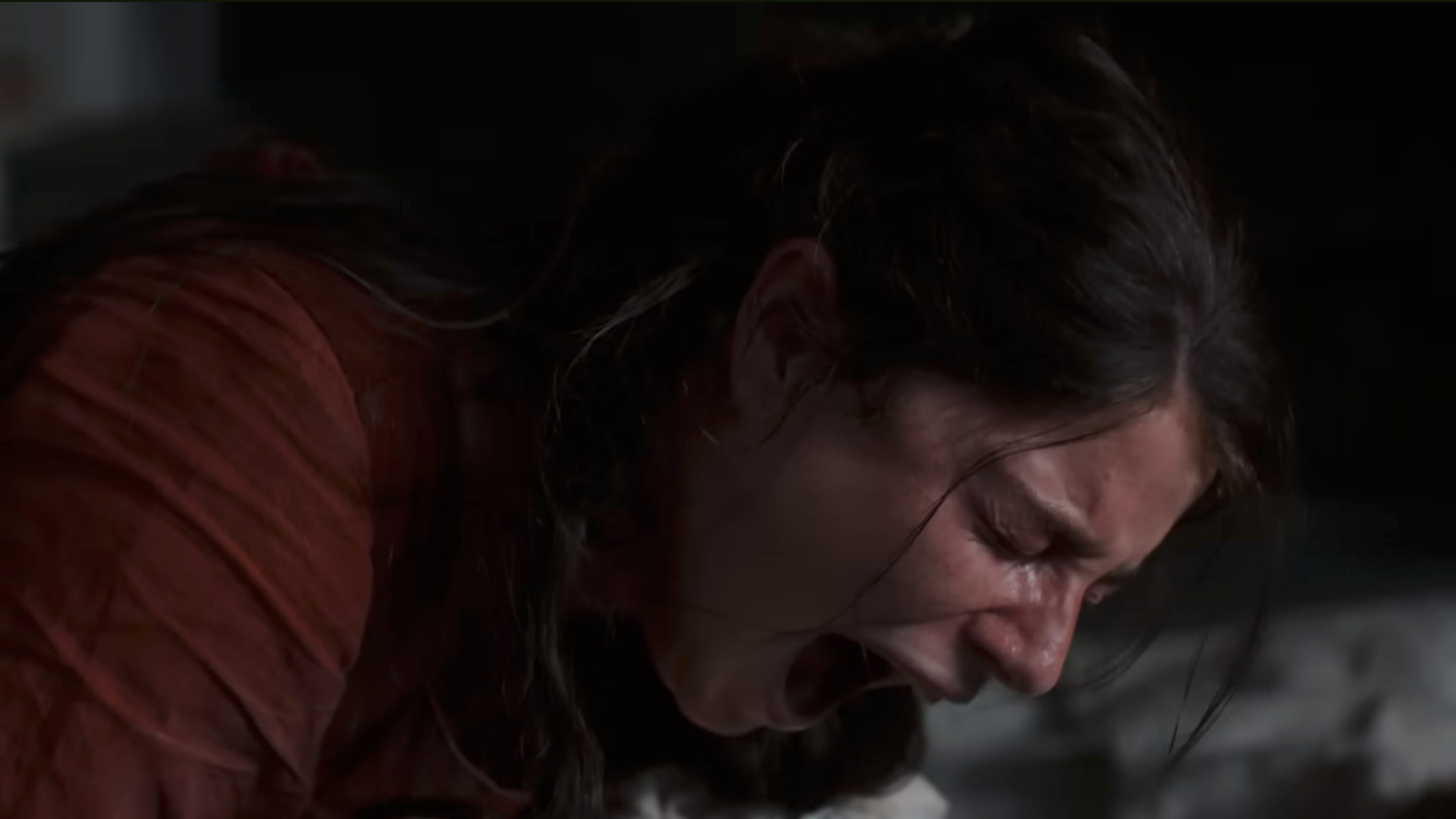
First things first, she brings Jessie Buckley. You could be the best writer in the world and get nowhere close to the gut punch of watching this woman scream. Guttural thrashing is what’s going to get her the Oscar, but everything on Buckley’s face, from her embarrassed half-smile to her wide-mouthed confusion to her absent-eyed moments of astral projection, renders a generic historical character unbearably, undeniably real. Even if you find nothing compelling about this movie, you probably have to give it to Buckley on the grounds of tear extraction alone. The sniffling in my theater was deafening.
Beyond that, Zhao adds very little to the novel, which is unsurprising given that O’Farrell co-wrote the screenplay. Cinematographer Łukasz Żal has a handful of cool shots and an interesting habit of shooting his most primal scenes from above, which results in an almost Animal Channel-esque conception and subsequent birth scene. Oddly, this works: director and cinematographer stay out of the way of their actors, which is crucial, because without the performances there’s not a whole lot here. I don’t exactly mean that as a criticism - I think it’s sort of the whole point. This is a film where direction needs to back off and let eye twitches, chest heaves, and flailing limbs do the work.
What the film adds in physicality, it sacrifices in literariness. For an hour in the middle, it’s easy to forget that this is a story about Shakespeare. Paul Mescal doesn’t do much other than pound his fists on his desk when his quills aren’t sharp enough and mumble the “To be or not to be” soliloquy to himself while he’s strolling along the quay contemplating suicide. Zhao cuts out any references to Agnes illiteracy, and as a result we lose the contrast between her witchy maternalism and William’s tongue-tied melancholy. The only game in town is active expression, and though Mescal does his best there’s no man alive who’s a match for the things happening on Buckley’s face.
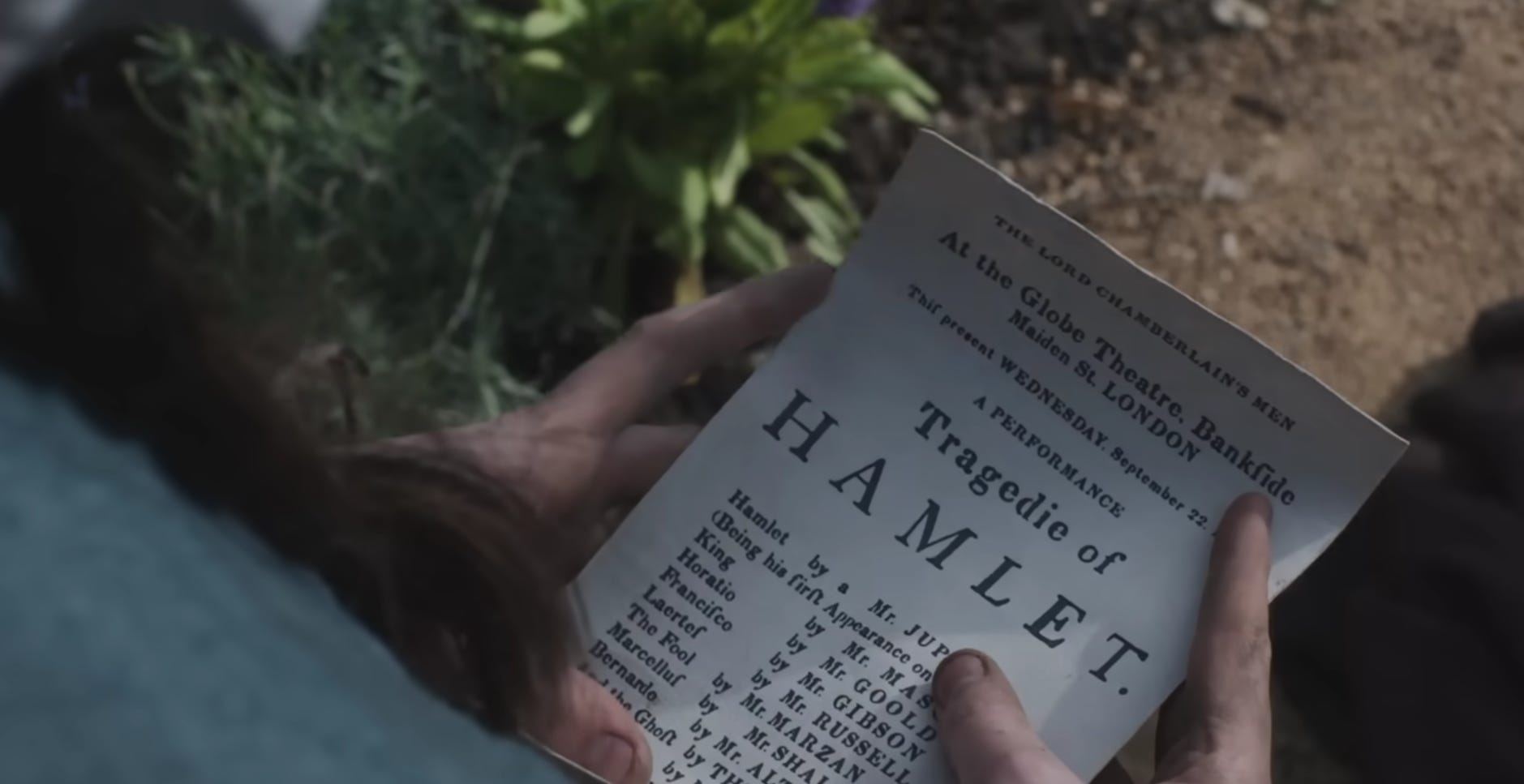
The Hamnet=Hamlet idea doesn’t really come together until the final section, when Agnes receives a playbill with her dead son’s name on it and carts herself off to London to see what her deadbeat husband has been doing over at the Globe. The novel ends stageside with the revelation that the father has written himself into death and his son into life, a death-cheating swap that concludes with a septum-shattering allusion to the ghost’s exiting speech.
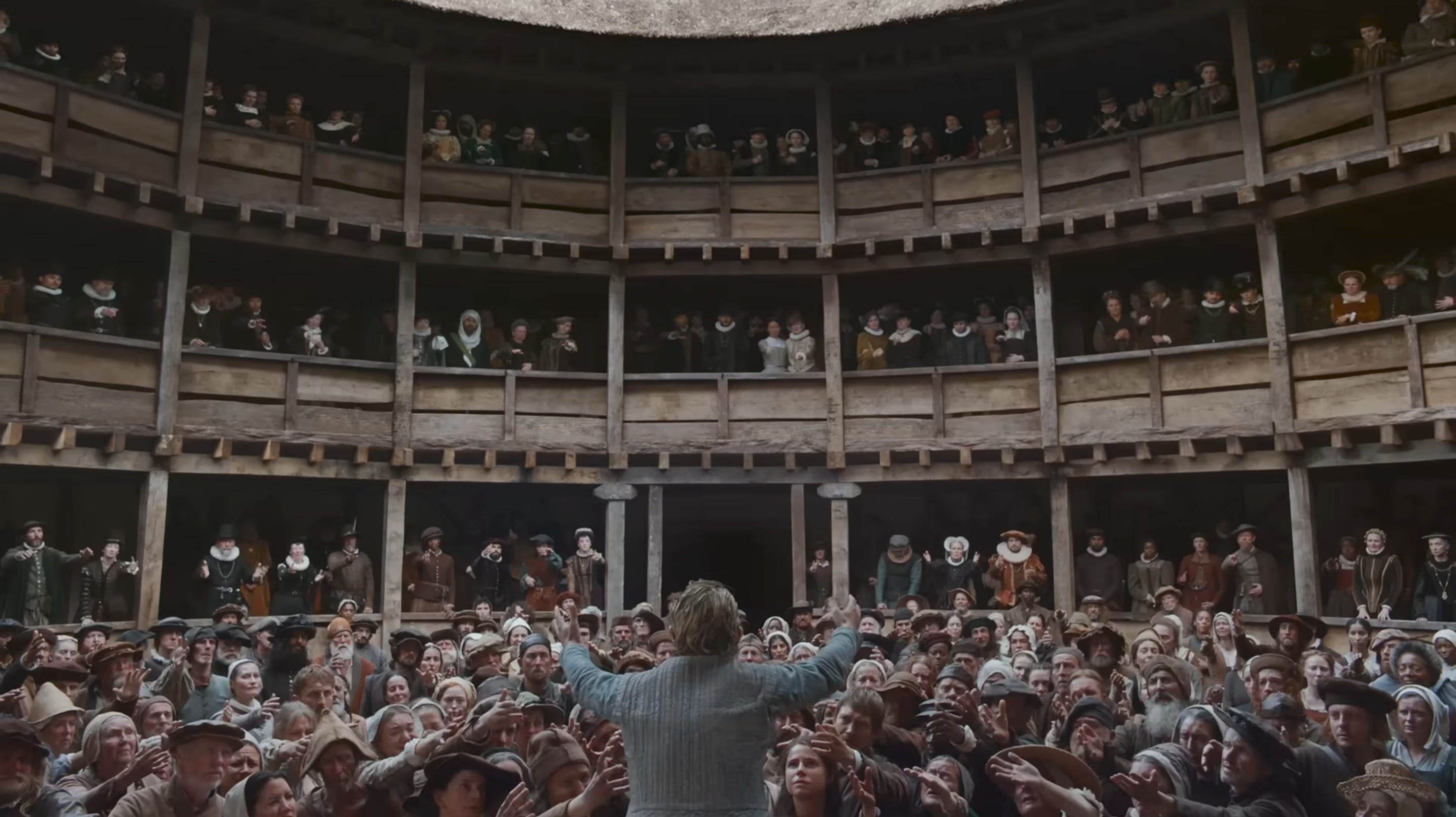
The film gets there and then keeps going, running out the play until the end. These final ten minutes will probably make or break most people’s sentiments on this movie. Zhao seems to suggest is that Shakespeare wrote Hamlet not to so-long-lives-this-and-this-gives-life-to-thee his son, but to provide Agnes - and, of course, himself - the opportunity to suitably mourn a child who was taken away too fast. Where the novel seems to forget that Hamlet dies at the end, the film makes his death the entire point. Agnes reaches out, grabs the actor’s hand, does all sorts of indescribable things with her face, and inspires the groundling audience to do the same. Shakespeare hasn’t just appropriated his son into material for a play - he’s appropriated his family’s grief, and he’s gifted this out to his audience so they can mourn alongside them, honoring his son but also the grief that is all in all in all of us, the originary and inexpressible sadness that preconceives the need for tragedy.
I really don’t know if it works for me. Justin Chang wonders if it’s “inherent kitsch” to reduce one of the most “intellectually prismatic works in English literature to an instrument of healing.” That’s a bit of a brush-off, but there’s a banality to Hamnet’s thesis that doesn’t quite strike me as worthwhile. If it wasn’t Shakespeare, we’d have no time for it. Zhao seems to imply that this particular grief, expressed this particular way, is uniquely meaningful to all of us, as if there aren’t a million stories about someone dying - as if the primary reason for watching Hamlet is to get out there and have a good cry.
A good cry is certainly the point of HamNET, but it’s hard to imagine very many people getting weepy when the prince dies at the end of HamLET. There’s crowd-pleasing potency to Zhao’s final images, but I wonder how much more compelling it would be if it was only Jessie Buckley with her hands stretched while all the rest of the theater was laughing and smooching and wrestling and all the other things we’ve always told people were up to at Shakespeare performances. No one at the Globe is cued by Buckley’s weepy face on a giant screen - they’re just watching a wordy play that ends in a totally sick sword fight. But instead of acknowledging the alienation of being the only person in the room who knows what’s going on, Zhao suggests that Agnes’s emotionalism unites us, and that William can only communicate when he taps into those feelings and lets them flow through his art.
That’s nice, but I can’t help but contrast it with the final scene of Sentimental Value. All of those same feelings - grief, alienation, familial love, the need for connection - are on display in Trier’s film, but they’re hidden within a nod that quietly confesses that the only way they can possibly be expressed is art. Hamnet in contrast suggests that art is a means for communication that could just as easily happen if we loosened up a bit and cried together, an optional vehicle and not the only possible end. Oddly, I think this diminishes the necessity of art, because if talk therapy can produce these breakthroughs then I don’t see a justification for the abuse to one’s self and to one’s loved ones required to produce a narrative.
Where would Joyce stand? The “Scylla and Charybdis” episode ends with Stephen’s enemy, Buck Mulligan, presenting a play called “Everyman His Own Wife, or A Honeymoon in the Hand” starring Toby Tostoff (a ruined Pole).” This is top-tier humor, and the joke is obvious: in the end, theater, and art in general, is masturbatory, only there to serve the artist’s self. Stephen tells himself to “cease to strive" as he steps “out of the vaulted cell into the shattering daylight of no thought,” but he isn’t fooling anyone: he will never escape the prison of his own head. It’s a vanity on display in Bergman, in Skarsgård’s Borg, in Mescal’s Shakespeare: a longing for the freedom from having to think, the freedom just to feel, the freedom to never again have to waste your time with art. Wouldn’t it be pretty if we could just hug our living daughters and cry for our dead sons?
Some people can do that. For everyone else, there’s the theater.
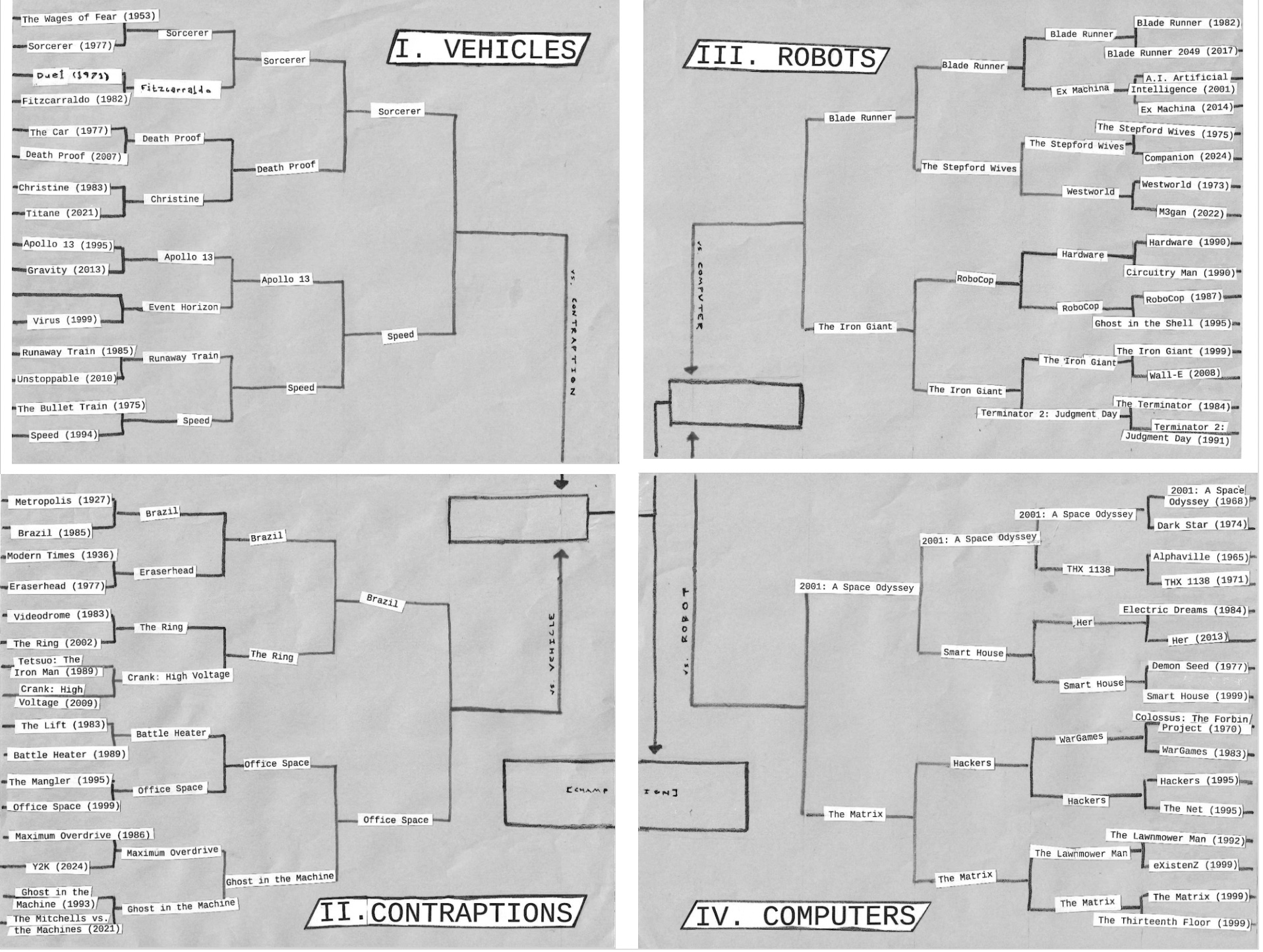
This has probably been the most predictable bracket in history - all the frontrunners have made it to the ELITE EIGHT. We’ve got a film-dude favorite, a surrealist masterpiece, a comedy classic, a nostalgic children’s movie, the official greatest sci-fi film of all time, its close runner-up, and two iconic contributions from the Keanu Reeves canon.
BRACKET LEADERS
HOUSE (73 pts)
Nick “The Brick” (69 pts)
“Mad” Max (68 pts)
ROUND 4 MATCH-UPS
SORCERER v. SPEED. There are two types of trapped-in-exploding-truck movies: the truck explodes if you move at all, or the truck explodes if you move slower than 55 mph. In other words, we have a simulation of how I feel every time I try to park vs. how I feel when I merge onto the highway. It’s cliché to pause and consider the absurdity of zooming around the city in one-ton piles of metal and glass, but I think it’s still a worthwhile practice. No film has made the vehicular impact of twitch reflexes and momentary inattention more visceral than Sorcerer. No film has . . . honestly it’s pretty hard to offer up a comparable absolute to Speed, which we all know is a stupid movie that has no concern for the laws of Los Angeles traffic or physics. But both films have contributed to my sense that, in the battle of MAN v. VEHICLE, we absolutely do need another hero, and it won’t be me. The streets of the Twin Cities are safer for it.
BRAZIL v. OFFICE SPACE. It was a tight one, but justice prevailed in the end. It would be hard to endorse a democracy that decided The Ring was a better MAN // MACHINE film than Metropolis, Modern Times, Eraserhead, Tetsuo: The Iron Man, and Videodrome. But there’s an argument to be made that Brazil is the best of the bunch. Terry Gilliam doesn’t present an explicit conflict between a man and a machine other than whatever Robert De Niro is doing inside the walls with all those tubes, but it’s clear that, even (especially?) when it’s not working, technology is on the side of the fascists. Office Space presents a similar grim outlook on our interactions with machines and a comparable route for escape. Is one iconic scene enough to crown it the champion of the CONTRAPTIONS division? It’s probably the one that replayed most in my head while printing and scanning this stupid bracket.
BLADE RUNNER v. THE IRON GIANT. Are robots an opportunity to explore artificial intelligence and verisimilitude, or are they killer machines from space that are actually sort of cute? Blade Runner and The Iron Giant couldn’t present less similar responses to the ROBOTS prompt, but both are worthy finalists. Vote for tears in the rain or tears on your actual cheeks and pray that neither will short circuit your hardware.
2001: A SPACE ODYSSEY v. THE MATRIX. 1999 to 2001 was probably the biggest two-year vibe shift of my lifetime, and there was a moronic computer doomsday event right in the middle of it. So it’s fitting that these two films are the final match-up in the COMPUTERS division. 2001 obviously has nothing to do with actual 2001 and instead conjures a previous generation’s hopes and anxieties for a future that, unsurprisingly, haven’t really changed. The Matrix turns its anxiety to the present and makes the at-the-time mindblowing suggestion that the optimism of 1999 was a front for a much more devastated future. Neither film presents a philosophical argument that belongs outside Reddit, and neither could have predicted ho bone-erodingly stupid computers would become by 2025. But both take a central premise - computer is bad - and transform it into an unprecedented visual spectacle in which man, and all the Star Baby multitudes he contains, triumphs.

Thanks for reading *life is disappointing.* If you found this newsletter slightly less disappointing than the rest of your life, consider liking, commenting, sending me money (thanks!) or subscribing. Subscribing will get you exactly what you get here but sent to your email inbox. I have no idea what I’m writing about next week, the heaviest stuff ain’t quite at it’s heaviest by the time it gets out to suburban Minneapolis, and the prestige release schedules aren’t much better. But we’ll defintely be back with the MAN // MACHINE FINAL FOUR, so stay tuned at the very least for that.
“Hamlet” and “Hamnet” are pronounced identically in Shakespearean English. If this seems stupid to you, say “Hamnet Hamlet” ten times fast in an Irish accent. The voiced alveolar lateral approximate (“l” sound) and the voiced alveolar nasal (“n” sound) are basically the same thing after a voiced bilabial nasal (“m” sound). This is one thing that Chloé Zhao’s Hamnet absolutely nails. Otherwise I found the historical accent work pretty uncompelling.