
a24 goes to art therapy
three centuries of realist/symbolist warfare lead to eva victor's sorry, baby // sloppy discs takes on streaming

My goal with this newsletter is to write about new films as they reach general release and to feature seasonally appropriate commentary on other cinematic events and interests. This week we’ve got roundabout thoughts on Eva Victor’s Sorry, Baby, plus a plug for Twin Cities local business Sloppy Discs. This newsletter comes out every Friday, which this week get technical difficulties-ed to Saturday.
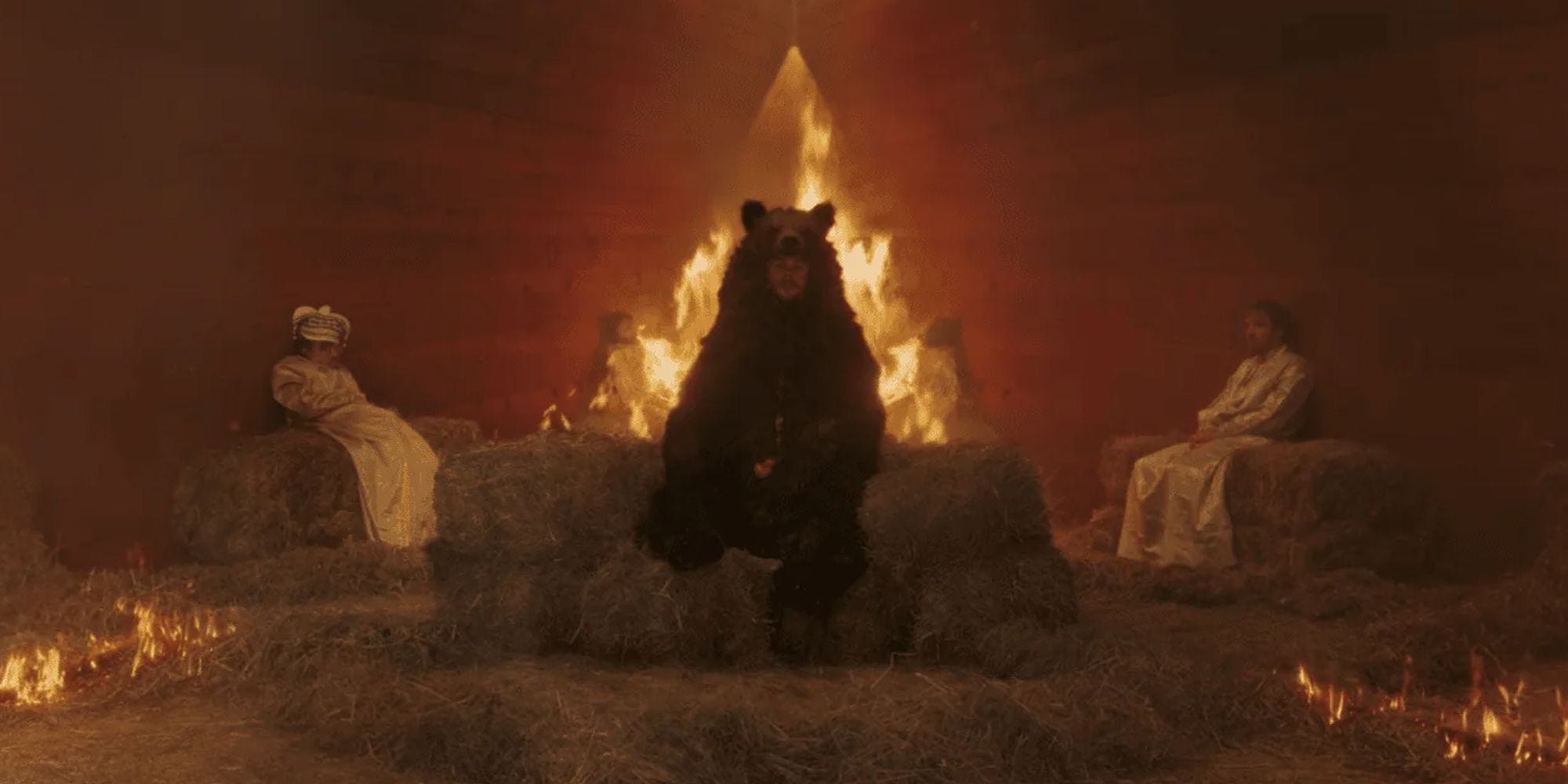
Are we living in a neo-symbolist moment? Symbolism, as I’m sure everyone remembers, is the late 19th-century art movement built around vivid, difficult-to-define metaphors, brought on in reaction to the mushy Romanticism and realist Naturalism that dominated mid-19th-century European art.1 Symbolist artists deployed otherworldly symbols to convey ideas that reach outside the tangible boundaries of everyday life. Angels, stacks of skulls, kings at the beach. . . if it looks sort of like a tarot card, it's probably Symbolism. The movement was replaced by the formal abstractions of early 20th-century modernism, but its Medievalist spirit comes back from time to time, often in reaction to advances in technology that bring about renewed fervor for realism.
If the dominant technological innovation in early 21st-century art is reality television and social media, the current decade has been primed for a symbolist backlash. The contemporary landscape is obviously diverse, but it’s easy to identify a dominant strain in cinema that leans on glaring tropes to make its points. Emilia Perez; The Substance; Poor Things; Barbie; Everything, Everywhere, All at Once; the vast Marvel/DC archive; the even vaster slate of mass-market horror movies - the past ten years have been defined by trope-heavy films that manifest abstract ideas without delving too far into their material-world impact.
Neo-symbolism shows up everywhere, but nowhere is it more obvious than the A24 roster. There isn’t such thing as an “A24 style,” but a feature of many of their most prominent films is the sense that whatever you're watching might break from reality at in an opaque but ripe-for-analysis way. I'm thinking especially of the films of Ari Aster, but the same could be said for Jane Schoenbrun, Rungano Nyoni, Robert Eggers, Yorgos Lanthamos, David Lowry, Julio Torres - any of the (relatively) young directors who aspire to be the subject of graduate theses in the next ten to twenty years.
Beyond reactionary cycles, there are a few possible causes for our neo-symbolist moment. To name a few:
The long shadow of David Lynch. The cinematic language of transfigured tropes is arguably Lynch's greatest contribution to cinema, and the A24 roster couldn't be more beholden to it.
The elevation of genre fiction. Genre fiction works in big, obvious tropes, and the deconstructionist condition has shifted that from a cause for derision to a point of intellectual interest.
The internet. The ratcheting up of volume, explicitness, and hyperbolic clarity has transformed our aesthetic preferences - Have you noticed?
All of this - and probably more - has created an aesthetic market enamored with image and metaphor. To be clear, this isn’t a bad thing: It’s OK to be symbolist, and it's OK to say that the worst slop of the past few years (i.e. Red One, Cats) lands on the same side of the symbolist coin as some of the best (i.e. The Lobster, The Lighthouse). And it's important to note that symbolism doesn’t mean that the imagery present in these films is necessarily obvious. Sometimes a metaphor grasps at an idea that can only be expressed through that metaphor. Symbolism exists because sometimes the only way to say something is to throw out an image that doesn't make sense.2
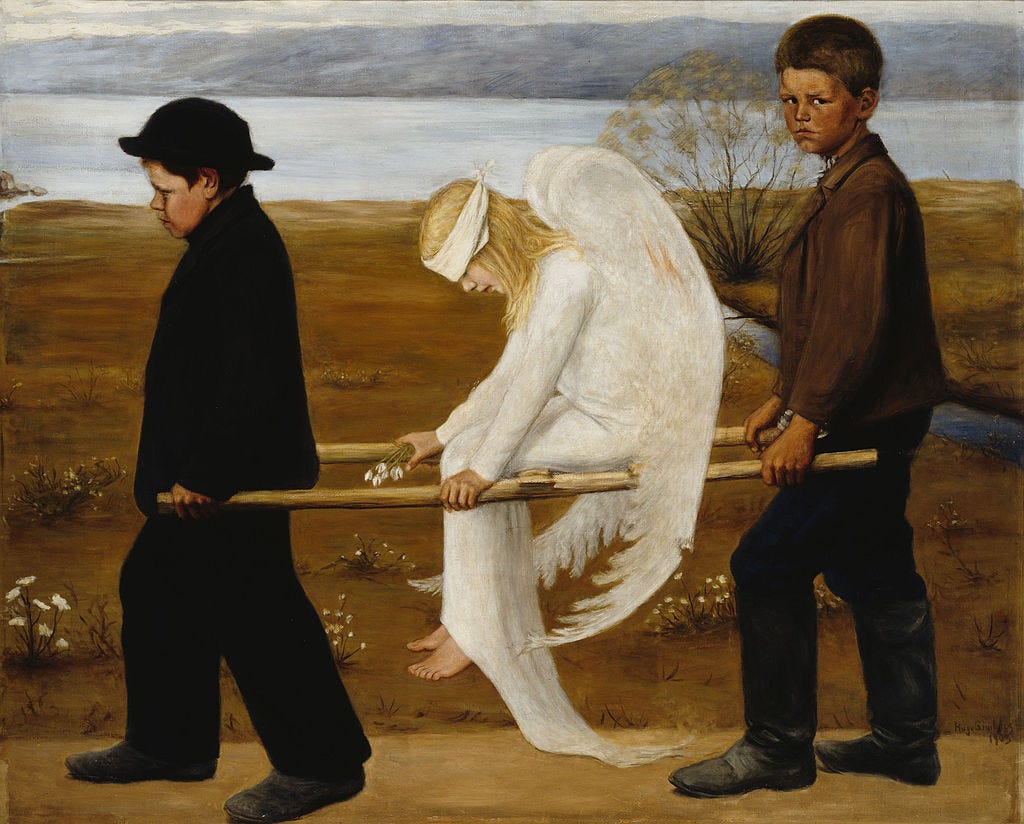
Symbolist art falls apart when the the artist gets nervous with ambiguity and indulges the urge to slap on an explainer. When a metaphor comes accompanied by a caption, we shift from symbolism to allegory, a category of art that most people who aren’t Mel Gibson agree was best left to the 17th century. Unfortunately, the studio-notes nature of our current symbolism is susceptible to this cautious sensibility, which leads to the obviousness that inspired that New Yorker literalism article everyone was chattering about in March.
Maybe the clearest example of this explainer-symbolism is the current obsession - especially in horror, and especially in horror films that would like to give the impression that they've been released by A24 - with anxiety and PTSD. The relationship isn’t surprising: anxiety and PTSD create the sensation of an experience that is not physically present, so both are ripe for artistic exploration via symbolic manifestation. To experience PTSD is to relive past experiences that are not currently happening in a physically present way. To experience anxiety is to over-focus on threats that are not physically present. Horror films provide the opportunity to transform bad feelings into bad realities that don’t abide by the rules of the physical world surrounding them. In doing so, they serve as phenomenal simulations of a mental health crisis. Zombies, death cults, Antifa supersoldiers, guys who suddenly stop being your friend . . . you name the ineffable threat, there’s probably a 21st-century horror movie that’s got it.
Horror used to be comfortable with manifesting anxieties and letting them run rampant - maybe not the best therapeutic practice, but definitely a popular way for filmmakers and audiences to work out their problems. Recently, though, we’ve started to name the psychological origin as we manifest it. I don't know if we can identify exactly where this started, but The Babadook is an easy turning point: a movie that doesn't exactly say "the monster is grief!" but - it's pretty clear that the monster is grief. I don't watch many of these movies so I can't give a flash history of the mental health/horror explosion, but it's common enough to garner frequent criticism from professional and amateur film critics alike. I’m not here to litigate whether this is a good or bad thing; either way, it works against the principles of successful symbolism, which, again, relies on ineffability, not identification.
When an artistic movement starts working against its original principles, it usually invites a backlash. This could pose a problem to our still-growing interest in mental health. We’re not ready to stop talking about anxiety and trauma, and we shouldn’t: they’re both core and probably biologically necessary components of being alive, and it’s great that we now have words for them. But how do we deal with them in cinema if the symbolist approach is kaput?
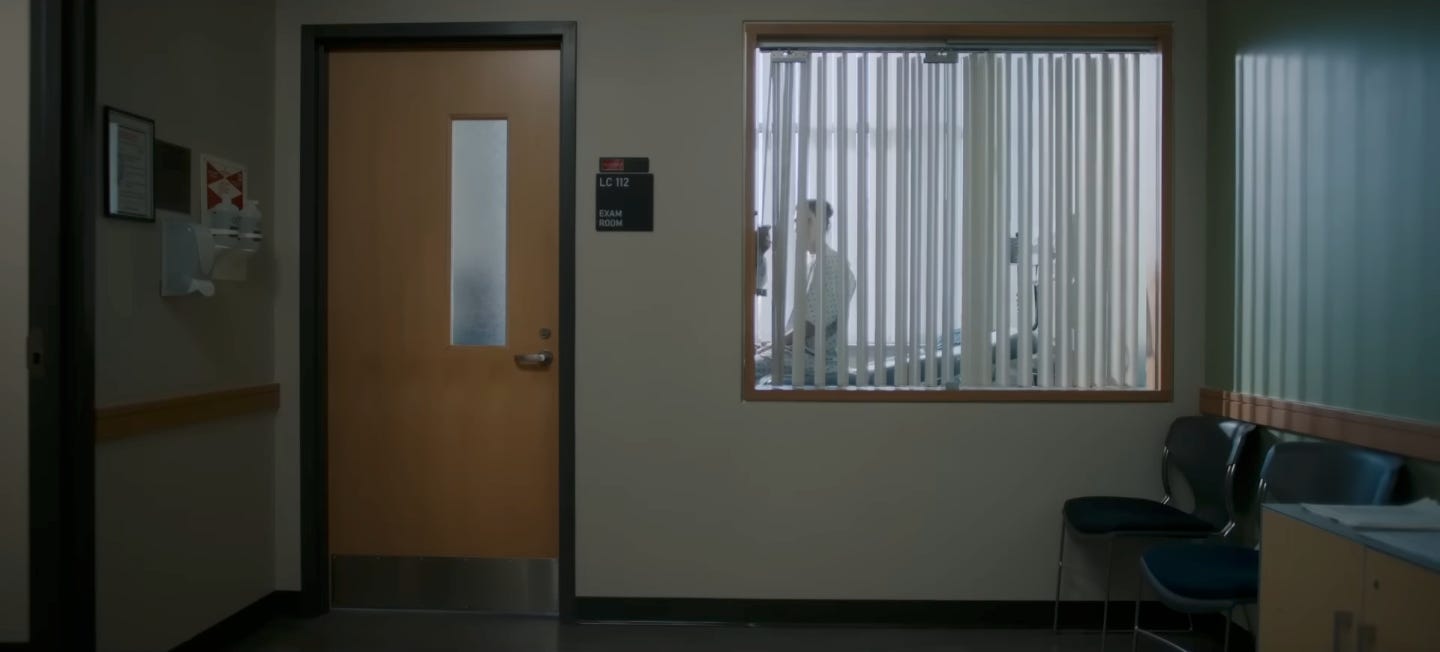
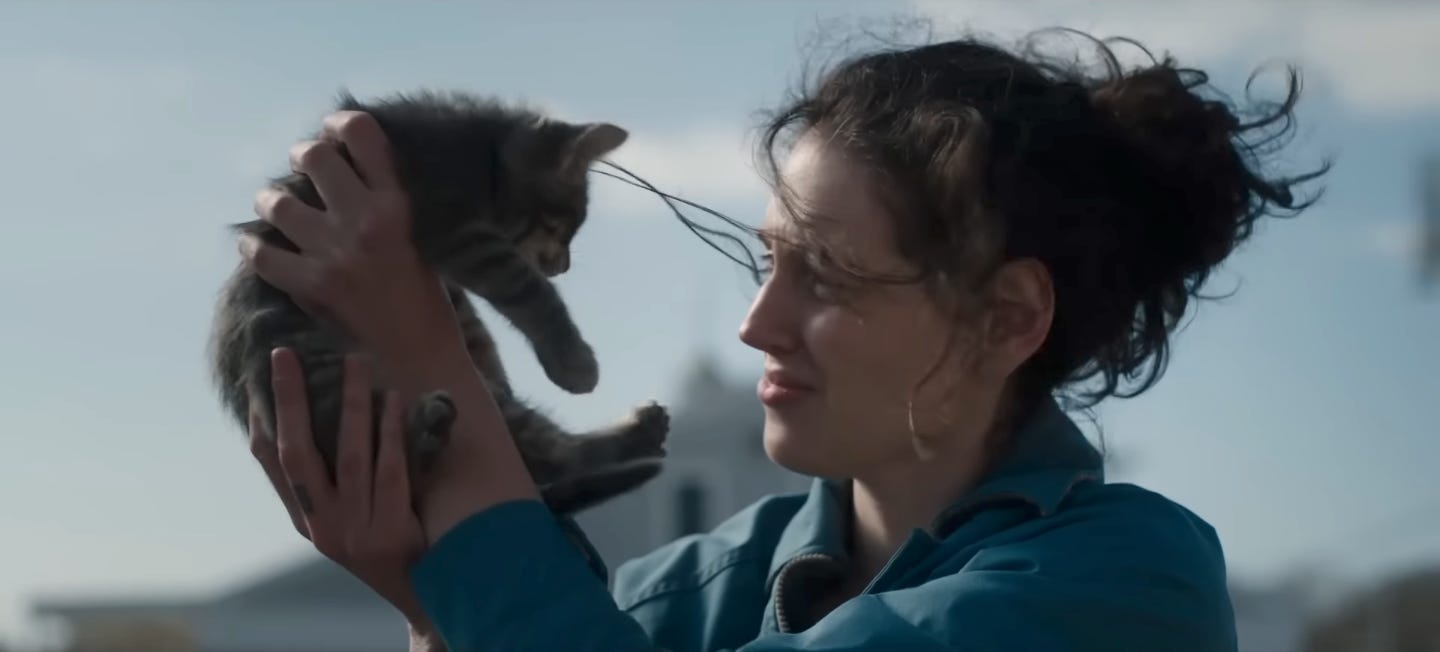
One path is to approach them like Eva Victor does in her debut film Sorry, Baby, a straight-down-the-middle realist film about living with PTSD and anxiety - and also about a whole bunch of other things because survivors, like all real people, contain multitudes. Victor stars as Agnes, an English professor at a New England liberal arts school who, during her Ph.D. program, experiences something awful and lives out her career in the wake of it. Sorry, Baby presents a series of vignettes as she goes about her life and work, navigating promotion, romance, adult friendship, jury duty, pet ownership, and, when it comes up, the long-term effects of sexual assault.
Sorry, Baby presents such an annoying premise that it's a small miracle it works at all. That it completely triumphs as a celebration of the enduring existence of humanity - in spite of anxiety, PTSD, their origins, and their effects - is a testament to Eva Victor's weirdo energy and worldview. She works in the neurotic milieu of Noah Baumbach, Celine Song, and Greta Gerwig but falls into self-indulgences that are uniquely her own. I laughed in Sorry, Baby so many more times than I laughed during Materialists, and when I cried it wasn't because I was suckered into romcom tropes but because Victor seems to have a genuine understanding of the heart-grabbing impact of friendship, the human spirit, and cats.
If Sorry, Baby makes a nod to the A24 aesthetic, it’s when cinematographer Mia Cioffi Henry shifts from her typical flat camera work into horror-movie lighting, creating scenes that, in a typical symbolist film, would feature tonal transfers into anxiety manifestations. Instead, Sorry, Baby’s horror moments lead to pretty much nothing, suggesting that life sometimes feels like a horror movie but, ultimately, isn’t. Rooms are dark, sounds are weird, and anxiety goes crazy at two in the morning - but, usually - I’d go so far as to say statistically always - we all make it through the night.
This is significant, because Victor in no way denies the origins or the lived experience of trauma: she just refuses to cinematically manifest it. The result is a realistic depiction of PTSD that neither leans into the exploitation of the event nor transforms it into something inescapable. There’s never any ambiguity about what happened or what’s happening, but it’s presented just sideways enough that it never falls into exploitation or heavy-handedness. Victor thrives in discomfort but somehow lands in a space that isn't edgy, sentimental, or oblivious. It’s usually funny, it’s rarely corny, and even when it’s annoying, it still manages to work.
This all leads to a bravura final scene in which Agnes engages in a one-sided conversation with a newly introduced character that suggests accepting uncertainty in an uncertain world is maybe the entire point. It’s the polar opposite of Eddington, a presentation of a mental health crisis that acknowledges all of the realities of a panic attack - especially the part when you slow down your breathing a bit and remember that things are going to be a lot more OK than they feel in the moment.3 Not because the cause of the panic doesn't exist, but because the possibility of panic is always going to exist. This is what it means to be human, and that's actually more than OK, because dealing with it - and helping the people you love deal with it - is the entire point of being alive.
Sorry, Baby isn’t a hit and isn't trying to be, so I don’t think it’s going to be a big factor in moving the symbolist/realist needle. But I'm curious if it's a harbinger of things to come, especially as critics and the public get increasingly vocal about their exhaustion with hamfisted symbolism. We'll see what clicks as we head toward fall: A24's most anticipated upcoming feature is Josh Safdie's Timothy Chalalmet ping-pong movie, so who knows where we’re going. Right now we’ve got Sorry, Baby, and we’re better for it.
I don't think there's much local Fox news / *life is disappointing* audience crossover, so I doubt many readers got to see local hero Emmet Kowler of Sloppy Discs on local Fox 9 Good Day last week. If that’s you, check it out:
I generally find the Physical Media obsession of the Letterboxd-adjacent community to be strange and wasteful (who re-watches that many movies?) - but I also hate streaming, SAS, and arguing over unlimited possibilities. A relatively curated rental option at a reasonable price is a beautiful thing, and Emmet Kowler is doing the Lord’s work by making that available to the people of Minneapolis/St. Paul with his Blue-ray rental business Sloppy Discs.
I'd love to see more of these systems pop up as SAS-fatigue and awareness of the energy inefficiency of streaming increases.4 Shared libraries are such an obvious alternative to wasteful capital, and low-overhead operations like Sloppy Discs could easily improve the lives of millions. I hope this is the start of a model and not a one-off romantic attempt to nowhere. At the very least its getting a Wong Kar-wai t-shirt onto Fox morning news, so something must be working.
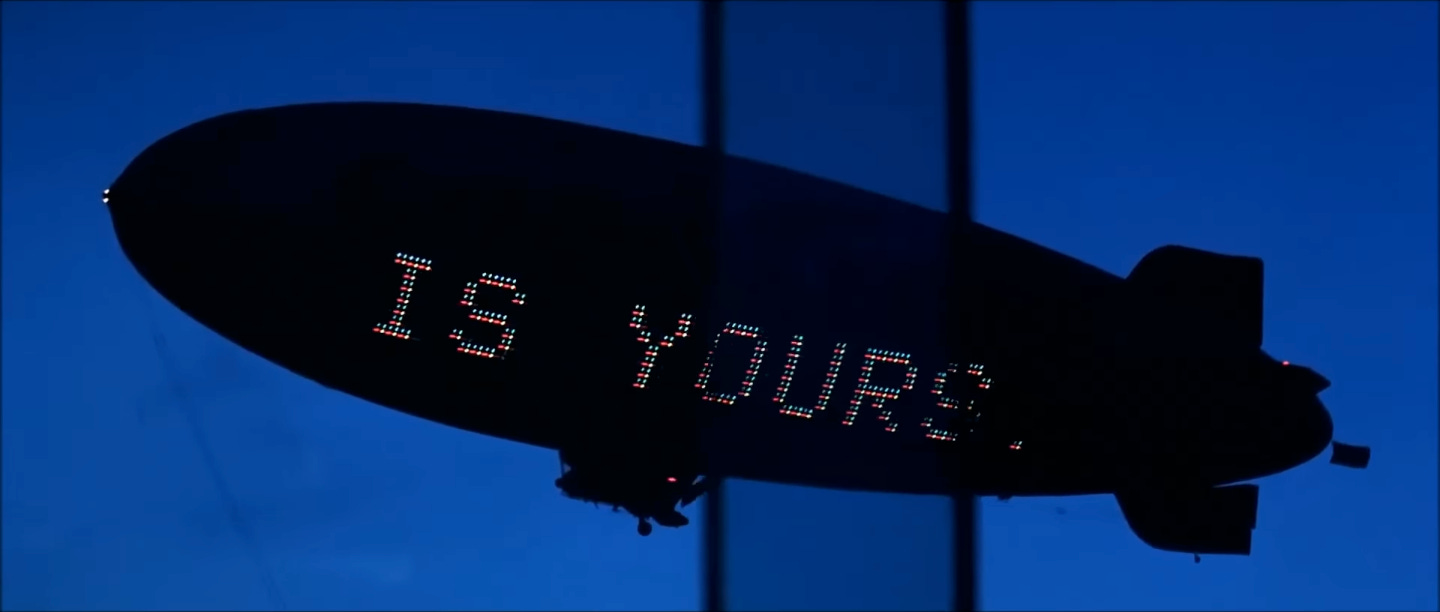
If you live in the Twin Cities and have a Blu-ray player, consider connecting with Sloppy Discs for your next cinematic experience ($15 deposit and $5 rental)5. If you live somewhere else, look around to see if there’s another maniac doing something similar in your city. If there isn’t, consider starting it up yourself. The World Is Yours.
Thanks for reading *life is disappointing.* If you found this newsletter slightly less disappointing than the rest of your life, consider liking, commenting, sending me money (thanks!) or subscribing. Subscribing will get you exactly what you get here but sent to your email inbox. We’ll be back next week with something or other, I’m not sure yet.
Charles Baudelaire, Arthur Rimbaud, Paul Verlaine, and Edgar Allan Poe are the household names of Symbolist literature. You'll have to dig a little deeper in visual art - a quick skim of the Wikipedia page will make you about as much an expert as I am.
The 1886 Symbolist Manifesto by poet Jean Moréas puts it best: “The essential character of symbolic art consists in never approaching the concentrated kernel of the Idea in itself.” To put it in terms that both a 19th-century and a 21st-century symbolist can maybe understand: Laura Palmer doesn’t represent something that we can actually talk about; that’s why she’s an angel.
As a person licensed by the state of Minnesota to administer mental-health interventions in non-specialist scenarios, it is my duty to inform you that the immediate jump to deep breathing depicted in Sorry, Baby is not the current recommended procedure for panic attacks. A multi-step process that shifts from gross-motor movement to fine-motor movement to mental exercise more effectively re-programs the nervous system and gives the dysregulated person a better opportunity to re-set themselves. This shit is magic and I have seen it work in a variety of situations - if you or someone you know deals with panic attacks (or feelings in general), check it out.
I’m excited to see what happens as slop gradually destroys search engines and more and more people jump ship to physical media and its accompanying limitations. I recently purchased Tags & Threads Press’s Crafted with Pride, a 375-page guide to Made in USA clothing, simply to escape the misery of scrolling through psychotic Reddit subs every time I need new socks. Is it worth $40 to order a shopping guide that will, by its nature, be irrelevant in a year or two? An annual subscription to Vogue is $72/year, so I’m going to say yes.
This is not spon, though that would be hilarious if either this newsletter or this company had a large enough audience for that to happen.