
birthday blowout two for one
life has been disappointing for one whole year // IF I HAD LEGS I'D KICK YOU is pretty good // FRANKENSTEIN is pretty bad

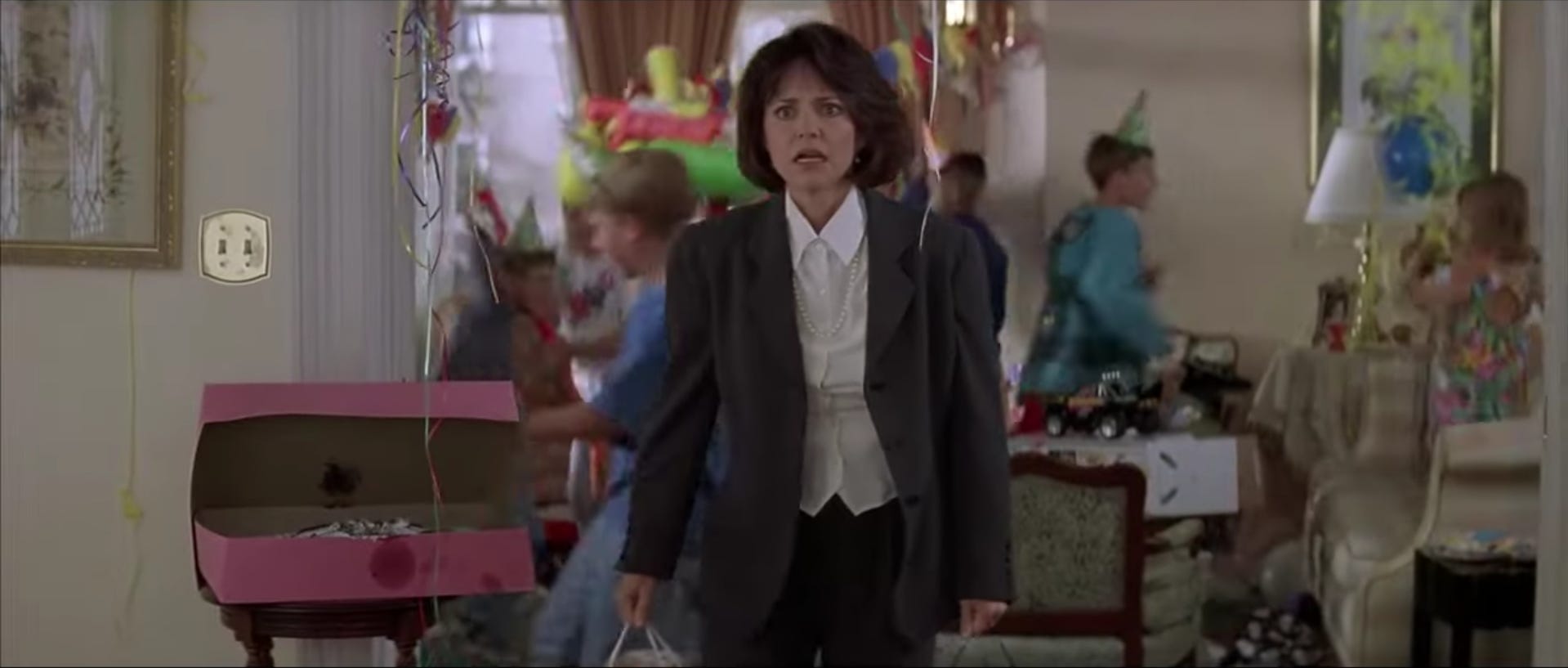
Oh my goodness, *life is disappointing* is one year old! I’ve observed a slew of first birthdays in the past year, and it seems like prominent trends include the recently developed ability to walk, a handful of monosyllabic words that feature only bilabial consonants, and uncertainty about what to do with cake. I’m proud to say that *lid* can do all of those things and more. It feels good to know that your newsletter is more capable than the average human baby.
My first post was about a months-old Oscar-nominated film that I didn’t see in theaters, so to honor that tradition I’m playing clean-up on three future losers at the upcoming Academy Awards that I finally watched this week: Mary Bronstein’s If I Had Legs I’d Kick You, Guillermo del Toro’s Frankenstein, and Craig Brewer’s Sing Song Blue nevermind I don’t have Peacock - sorry Kate Hudson, I’ve heard you were great.
It goes without saying, but I’m really grateful for all the support over the past year, whether it’s obligatory likes, subscriptions (paid and otherwise), nice emails, recommendations to friends, or even confrontational comments. I’d probably keep writing this even if no one was reading, but it’s much more fun to know that at least a couple people are getting something out of it. Keep reading, I’ll keep writing, and so long as Hollywood holds up their end of the bargain we’ll stay in business.
SPOILERS for If I Had Legs I’d Kick You! And Marty Supreme. And for Frankenstein, I guess? but you probably know the plot of that one.
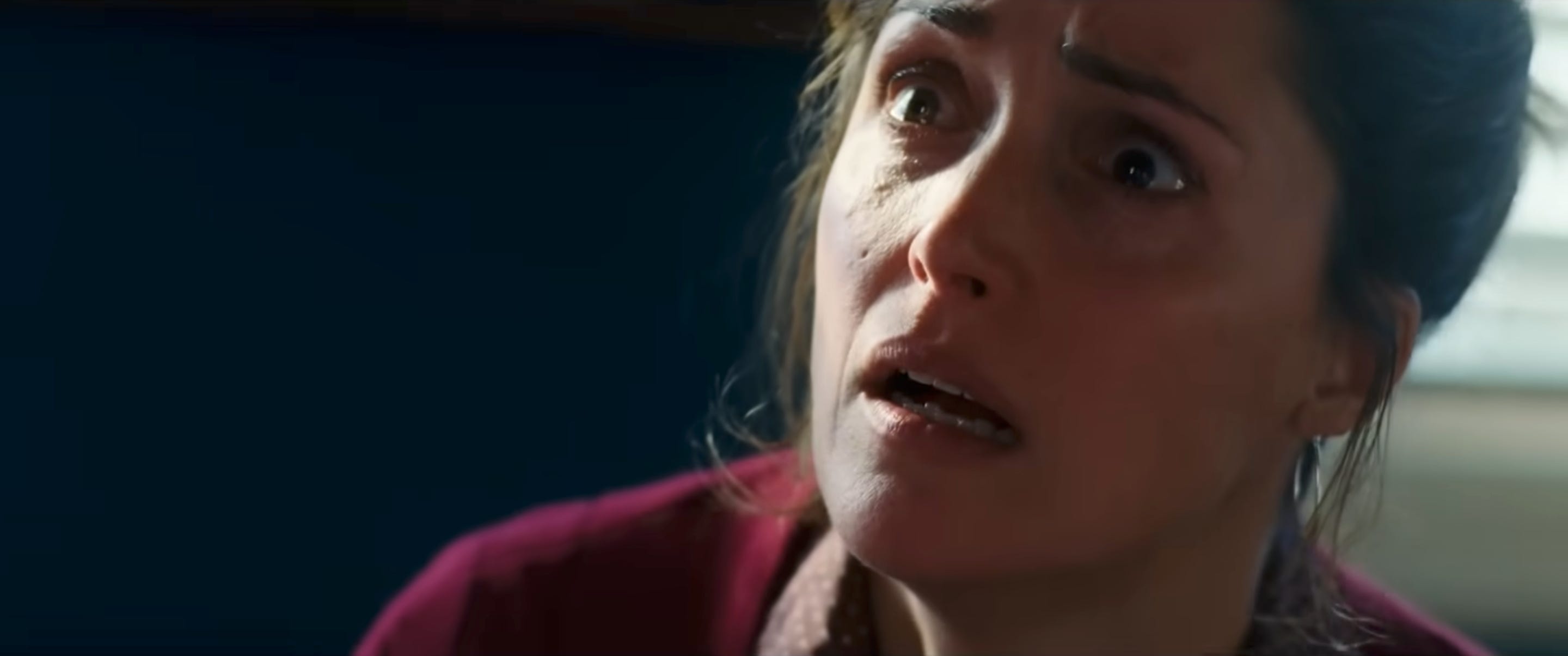
If I Had Legs I’d Kick You is a movie about self-obsessed anxiety so on the nose that at one point the camera nearly gets shoved up Rose Byrne’s nose. If I praised Celine Song for refusing to back down from Dakota Johnson’s mustache hairs, Mary Bronstein deserves at least as much credit for closing in on Rose Byrne’s boogers.
Bronstein’s camera is attached to her lead’s face for nearly all 113 minutes of If I Had Legs. It only cuts away to zoom in on her feet, which are constantly shifting in and out of uncomfortable shoes, or the immediate object of her attention, which is more often than not a gaping hole in her ceiling accessorized by DMT hallucinations. Things we don’t see: her asshole ship’s captain husband; her daughter suffering from an unnamed illness that somehow involves a tube; the nature and anatomical location of said tube; anything resembling an establishing shot. Instead we get close-ups of brow wrinkles, bloodshot eyes, crumbs of weeks-old marijuana, and a very moist nasal passage. Subtlety is not the name of the game: this is a movie about how your world shrinks down to nothing when all that’s left are the immediate disasters of your day-to-day life.
I didn’t find If I Had Legs to be an astonishingly insightful movie, but it’s such useful shorthand for a particular experience of stress that I have to hand it to everyone involved. Fran Hoepfner said it makes essential counter-viewing to Marty Supreme, and I think she’s spot on, not least because they both feature water-related ceiling collapses. Marty (written, notably, by Ronald Bronstein, Mary Bronstein’s husband) is about a man who creates a hurricane of stress and rides it out on the wings of his egomaniacal confidence. If I Had Legs is about a woman with crippled agency who experiences one problem after another and drowns because of it. Everything that happens to Marty is almost 100% the result of his own bullshit, but he’ll never take the blame for it. For Rose Byrne’s Linda, it’s the exact opposite - at one point she stands up at a group therapy for mothers of dying children and screams, “Of course it’s our fault!”
The most simplistic reading of these two films is that they depict the fundamental difference between men and women under the crush of patriarchy, capitalism, etc. It’s unsurprising that most of the critical champions of If I Had Legs are women. As a not-woman, I found myself regularly thinking, “Well that’s not realistic,” which is a stupid thing to think during a movie and is only worth sharing as an example of a certain brain-brokenness that comes out most reliably when men view women’s art. Of course this movie isn’t realistic: very rarely does a person experience a plumbing disaster, a car accident, the near third-degree murder of A$AP Rocky, an abandoned baby, pizza with the cheese torn off, and being married to Christian Slater in a single week. But I couldn’t count the number of times I clocked the expressions of the very stressed-out mothers in my life reflected on Rose Byrne’s face. It’s exaggerated to comedic (I guess?) effect, but the feeling - paired with the undeniable material reality - of being solely responsible for far too many things and then getting blamed when they aren’t all fixed by bedtime is something that my informal survey finds to be a pretty much gendered phenomenon.1
Like Marty Supreme, the most affecting image of If I Had Legs is its final shot. Marty ends with a father’s realization upon meeting his first born that there’s something out there that far exceeds his individualistic obsessions. If I Had Legs ends with the our first revelation of Linda’s sick child looking down at her sick mother’s face, smiling and saying, “I’ll be better, I promise.” A classic affective shot of the father (image reflecting you how the viewer should feel) vs. a close perspective shot of the child (image revealing the visual perspective of the mother). Marty’s expansive cinematography reduces down to the title character’s broken face while If I Had Legs’s handheld myopia turns for the first time toward the child who has spent the entire film as an out-of-frame nuisance. It’s a quick injection of unconditional love at the point of narcissistic collapse - from the father out to his child in Marty, from the child down to the mother in If I Had Legs. For the former, it’s the first time Marty has expressed genuine care for another person.2 For the latter, it’s the first time anyone has reached out in an act of care for Linda.
There’s a selfishness in both conclusions - fathers only think of their children as devices in their own legacy, mothers only think of their children as means of support - and I guess I’d accept that cynicism if I believed in self-reliance and respected the need for people to figure out their shit for themselves. But I think both Bronsteins believe that the point of having family, children or otherwise, is to admit that we are incapable of existing in this world without the love of other people. It goes both ways: family exists to make you cry, to be taken advantage of, to suck up your resources, to solve your problems for you when the world is too much to deal with. We should try to be nicer to these people who opted (or didn’t) into this life of unconditional love, but we all know that’s impossible: we’re too fallen to give adequate thanks to the enormous degree of love that’s been given to us. Thank god we live in a world where people who are so programmed for selfishness get the opportunity once in a while to be pushed out of themselves by the people who care for them - in other words, a world where parents as shitty as Marty and Rose are capable of receiving grace. Who knows if they accept it long term, but they’re willing to hear it out when it enters and, for at least a moment, to let themselves bawl their eyes out because of it.

Frankenstein is a movie about the basic themes of Frankenstein so on the nose that shortly after someone says “you are the real monster” The Creature tries to rip off Dr. Frankenstein’s nose. He doesn’t succeed, which is a real surprise, because he regularly bends steel, survives explosions, withstands Arctic plunges, and throws people though hardwood doors like they’re bowling pins. You’d think he could at least get a hold on some cartilage and pull.
Oscar Isaac makes Rose Byrne look like parent of the year in Guillermo Del Toro’s Netflix adaptation of Mary Shelley’s classic. The pedagogical part of my brain was on fire through the first-act depictions of Dr. Frankenstein’s attempts to teach Jacob Elordi basic pro-social behaviors. His failure is remarkable, because Elordi is an astonishingly efficient learner. By the end of his first winter he’s capable of not only speaking in full sentences but demonstrating advanced comprehension of the classics of pre-19th-century English literature. If only we could teach all nonverbal kids to read Paradise Lost in three quarters - the Minnesota READ Act would almost seem viable (This is the quality education-policy crossover content you come here to see.) You simply cannot start hitting even your brightest students with a large piece of metal when they don’t show literacy growth or self-regulation gains. Mia Goth is no better, and her strategy of jumping immediately to explanations of the nature of vocal cords is a classic demonstration of new teacher naïvité. Meet your students where they’re at, guys! But I’ve never educated a child cobbled together from the corpses of public execution victims and casualties of the Napoleonic Wars, so who am I to judge?
I have so many questions about the logistics of Frankenstein. Where did The Creature earn the ability to Wolverine-style instant heal? What happens if his head is cut off? What does he do about bathroom stuff? Maybe these aren’t the right questions, but the most successful parts of Frankenstein come when Del Toro explores the gnarly physiology of building a human from scrap. I was enraptured for about twenty minutes as I watched Oscar Isaac piece together body parts and perform inexplicable experiments with electricity. The best part of clunky thrillers are the logistics segments, and I wonder how much more successful Frankenstein would have been if it stuck with the set-up and never turned itself over to the Marvel-y action sequences that Del Toro has never effectively grasped.
Like so many of Del Toro’s big-budget features, Frankenstein is over-indulgent, waterlogged, and unnecessarily dependent on stupid special effects. This sucks, because Del Toro’s eye for set decoration and shot composition overwhelms his need for CGI or Netflix money. When he’s leaning into his native grotesqueries I could almost forget his failures. But it’s not enough. Frankenstein looks for the most part like a 2005 My Chemical Romance video, made to be watched on the smallest screen possible, colors blaring in tandem with its middle school thematics to drown out whatever other slop screen might try to out-stream it.
I was ready to hate this movie for all these reasons, but I can’t go all in, because in the end I think Del Toro isn’t an evil person. He fundamentally believes in lovely things like celebrating life despite its pains, living out your weirdness, listening to nature, and rejecting one’s base impulse toward cruelty. This leads to extraordinary corniness, but in the struggle between cringe and edge I’m going to have to side with the former. I’d love for Del Toro to break his deal with Netflix and go back to the practical creepiness that made him famous, but there’s a lot more to be mad at in this world than a guy trying his maximalist hand at the story that inspired him to devote his life to art. At the very least, making Frankenstein might have gotten something out of his system. If it means he can finally return to the comparatively minimalist wizardry that brought us Pan’s Labyrinth and The Devil’s Backbone, then good riddance. That magic is still present in the best moments of Frankenstein. There’s a tender physicality here between the explosions and the body tossing. Netflix might be the real monster, but it’s creatures still have heart.

That pretty much wraps up my Oscars season. If you need some reading material as you prepare your personal ballot, I think this link will lead you to everything I’ve written about the 2025 nominees. I don’t deal with documentaries, animated films, or shorts. I’ll watch Sing Song Blue if Fandango at Home Formerly Known as Vudu drops the price below $9.99 or if I accidentally get some late FYC screeners, which used to happen when I first moved into this house. Sirat hasn’t come out in Minnesota yet - my Euro-edgelord patience has been long depleted, but I’ll probably suck it up and see it in the next couple weeks. My IRL child-in-distress capacity is way too full to see The Voice of Hind Rajab, I refuse to break my James Cameron embargo, The Ugly Stepsister looks miserable, and
I’m politically opposed to watching straight-to-streaming movies about bus disasters. I’d like to see Kokuho if the opportunity arises. Other than that, I've written about pretty much everything. Check it out as you prepare yourself for this very important event that everyone definitely still cares about.
I’ll be back next week with something or other. It seems like Pillion and Wuthering Heights are still the only movies playing in the Twin Cities, so I guess it might be that.
One of the funnier parts of If I Had Legs is Christian Slater’s near deus-ex-machina appearance that immediately solves the problem of the busted ceiling. “You just have to know how to talk to these people,” he says to a flabbergasted Linda. There’s nothing wrong with one person being better equipped to solve a problem than another - this is the point of community, family, marriage - but Slater’s lack of awareness of the social elements that work to his advantage is - relatable.
But notably, not in any material way: Marty’s baby is held up to him by a nurse behind glass. Marty’s tears tell us nothing about how he’s going to tangibly contribute as a father. Similarly, Linda’s daughter’s promise of recovery from a disease beyond her control has nothing to do with what she can actually do to support her mother - if anything, her sweetness is a Let The Right One In revelation that she’s locked into the same life of impossible promises and self-blame as her mother.
the idea of you sitting in a theater watching Wuthering Heights actually boggles the imagination. pls keep a running mental tally of your various psychosomatic reactions and also that would be a lot of jacob elordi back to back so just be careful
I am a huge fan of the start of Frankenstein (book) where they stumble upon the monster just booking it across the Arctic and was pumped to see that in the trailer. Is that part at least cool? Or ruined by too much Elrodi/Marvel action?