
children are the best humans
honey don't! continues ethan coen's wife-guy trilogy // zach cregger's weapons is a 21st-century grimm's fairy tale

Welcome back to *life is disappointing*. I’m back from summer vacation and catching up on everything August has to offer. First we’ve got Ethan Coen and Tricia Cooke’s latest lesbian b-movie Honey Don’t! (in theaters now). Then we’ve got initial thoughts on what is almost definitely the Film of the Summer, Zach Cregger’s Weapons. Spoilers for Weapons, so if you’re planning on seeing that (and you should) don’t read through to the end. This newsletter comes out every Friday, which this week means Saturday.
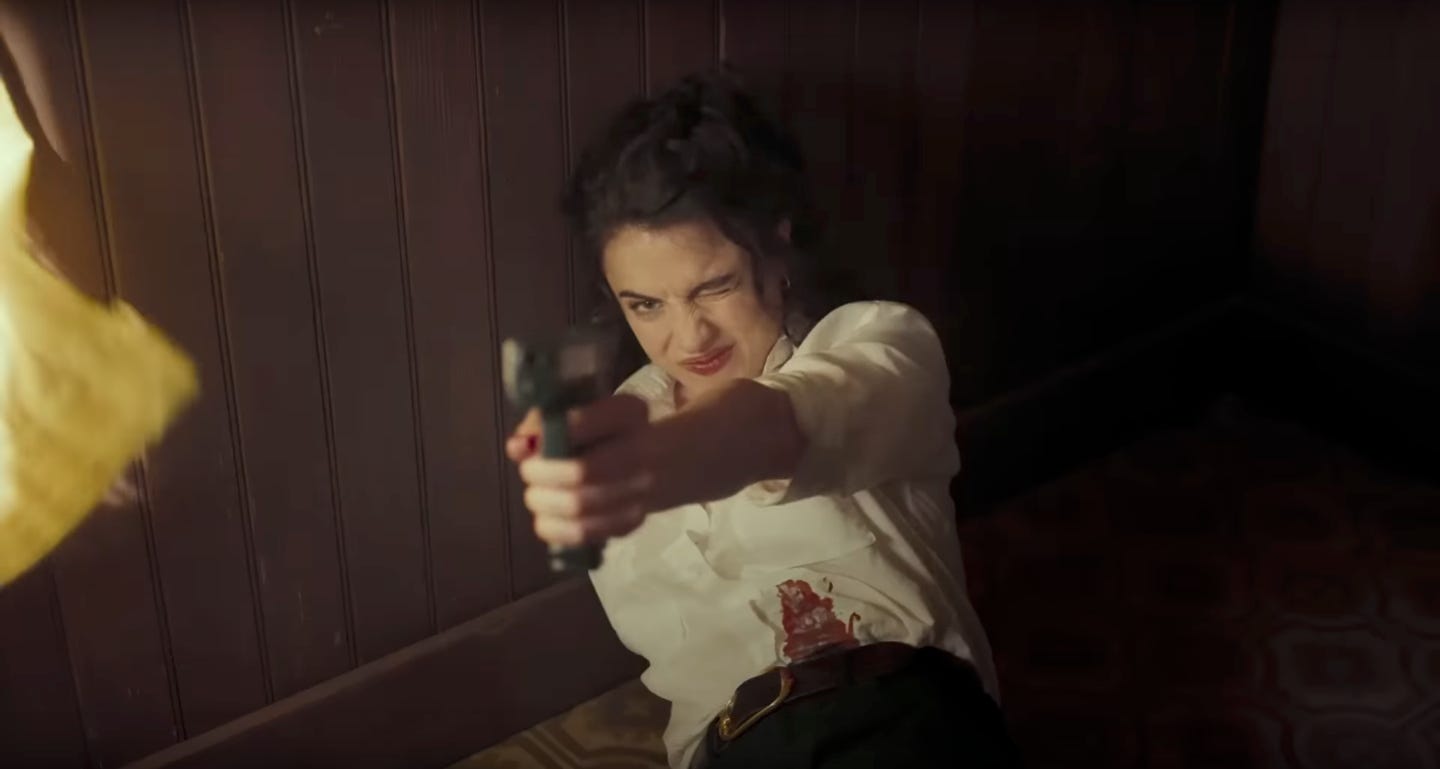
Ethan Coen and Tricia Cooke’s Honey Don't! is not very good. This probably won't surprise anyone because Coen and Cooke’s Drive-Away Dolls was not very good either, and Honey Don't! is pretty much the same movie. Neither of these movies are not very good in a way that bothers me much, and I bear no ill will toward either of them. Ethan Coen has done enough for my upbringing that he'd pretty much have to come out as full fascist for me to turn against him. In Honey Don't! he has Margaret Qualley slap an "I Have a Vagina and I Vote" sticker over a MAGA bumper sticker, so I think it’s safe to say he’s a lib.
There's something sort of sweet about making bad art with your wife, and even though I can't endorse Honey Don’t! on artistic merits, I'm forced to celebrate it as a testament to love. Credited to Coen but co-directed with his wife and longtime editor Tricia Cooke, Honey Don’t! is the second in the “lesbian b-movie trilogy” to which Ethan has devoted himself since his artistic split with his brother Joel in 2019. Cooke and Coen say the omission of Cooke’s director credit is a result of union rules (the same ones that named Joel as sole director of the first ten Coen Brothers movies), and I hope it’s true. I can imagine reading the absence of a Tricia Cooke directing credit as patriarchal erasure, the same way you could read Honey Don't! and Drive-Away Dolls as weirdly exploitative of queer culture if you didn’t know that Cooke is an out lesbian. As it is, I think it's sort of cool for a straight director to use his Oscars and DGA membership to get a queer story largely written by his lesbian wife into an A-list wide release. I think this is what they call "being an ally." At the very least it’s called "being a wife guy.”
I guess you could also call it “self-indulgent.” It's hard to say that anything in this movie needs to be seen: it’s a mishmash of styles, tones, and plots that doesn’t really say much and isn’t quite a good enough time to justify the loss of an evening. Margaret Qualley is a private investigator looking into the murder of a young woman that can't be solved by idiot police detective Charlie Day. Aubrey Plaza is another cop who Qualley has a crush on. Chris Evans is a horny preacher who might be at the center of the crime. There's a French drug dealer who wears all leopard print and swims in the nude. There's a frightening old man. There's briefly a parrot. I'm not exactly sure what any of these elements have to do with one another, and I'm not positive Coen and Cooke do either. The Coens have said they approach screenwriting by skipping over any scenes they don’t want to write, and Ethan seems to have taken this philosophy to his current partnership. Every scene is snappy and genuinely compelling, but what's missing is sufficient exposition or plot development to ground them in anything coherent.
Time will tell, but for now the the most interesting elements of the three independent Coen films - Ethan’s lesbian romps and Joel’s The Tragedy of Macbeth - are what they reveal about the previously obscure components of the united Coen partnership. The Coens Brothers' filmography walked a delicate balance that shouldn’t have worked, absurdist humor against horrific violence that somehow ends with pathos. Honey Don't! seems to reinforce what Drive-Away Dolls suggested: balance is the key, and the full team needs to be there to make it happen. I don’t want to play armchair psychologist on my countrymen, but I'd say Macbeth outs Joel as the bummer while Honey Don't! and Drive-Away Dolls expose Ethan as the funny one. Pre-autopsy, I would have guessed that the warm heart of the Coens was in the humor, but I found Honey Don't! to be more callous and less heartfelt than Macbeth or any of the eighteen united Coen features. Respect for life demands a certain seriousness, and when everything is a joke I tend to leave the theater feeling a little worse about the world.
The redemption for Honey Don’t! is the love on display between its co-directors. Ethan and Tricia are clearly having a great time, and they put enough of their inscrutable selves into their films that you can sense the beating heart pulsing through the bloodbath. There are elements of bodily realism in Honey Don't that speak to a self-knowledge I assume can only be achieved through thirty years of marriage. And there are displays of unvarnished vitality that could only be captured by this particular creative partnership. The film ends with Margaret Qualley flirting in traffic with a beautiful woman on a Vespa. The lopsided smirk is all Qualley. The opportunistic flirtation is all Cooke. And the podunk, pseudo-nonsense dialogue is all Coen. I'm not sure what the scene has to do with the rest of the movie, but I'll be darned if isn’t made by a bunch of people enamored with one another’s humanity.
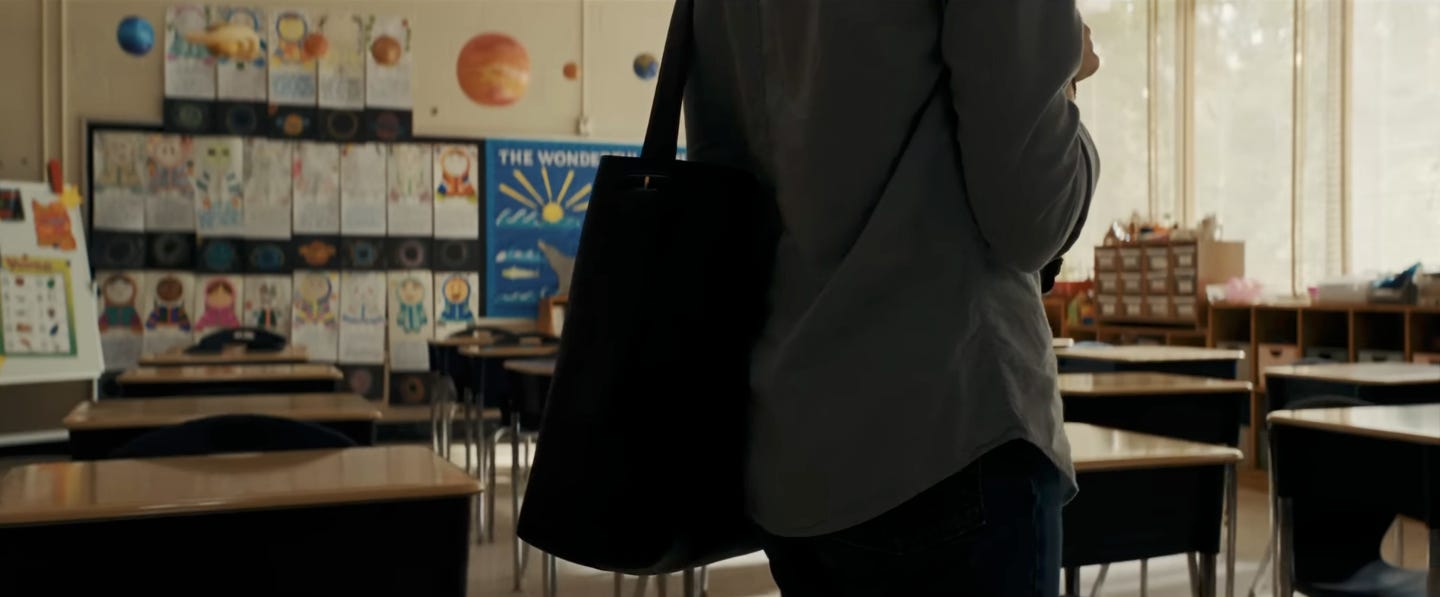
I knew my plans to hate Weapons were dashed the second “Beware of Darkness” dropped and I realized I was watching what is sure to be one of the iconic opening sequences of 2020s cinema. I had no faith in Zach Cregger, and I had no faith in a film about the kidnapping and presumed abuse/murder of an entire third-grade class. But it turns out tiny children Naruto-running through the dark to George Harrison is heart-stopping stuff: haunting, unsettling - and somehow wildly uplifting. It lands somewhere between E.T., Gummo, and that video of turkeys marching in a circle around a dead cat. I found my ill-will swooning out my throat, and like those seventeen Maybrook school children, it never came back.
It’s a testament to the creativity of Weapons that it isn’t the abusive nightmare that its premise suggests. Cregger has managed to create a genuinely scary, appallingly gory horror film that begins with the abduction of nine-year-olds and spins into a symphony for the triumph of the human spirit. I left the theater with the kind of ecstasy that I've only seen described in trailers for movies like Seabiscuit. It’s the first movie I’ve seen this year that I’d feel reasonable describing as exultant. It made me believe in children and the capacity of adults to love them.
SPOILERS SPOILERS SPOILERS: I’m going to get right into What This Movie Is About, and I’m going to classify that as spoiler territory because going in blind is pretty crucial to this film’s success. If you have any capacity for getting scared and watching horrible things happen to people’s faces, stop reading and go see Weapons.
There are a lot of tortured attempts to determine the meaning of Weapons and its political/psychological themes: it's about school shootings, it's about Kregger's trauma/grief, it's about COVID, ICE detentions, trans sports . . . The only take I have to offer is a pretty cold one: it’s about the ways adults try to do things with children - and how that doesn't work out because children are an unstoppable and uncontrollable force.
Matt Patches hit on this for a second before David Ehrlich shut him down on Fighting In The War Room, but I think Weapons pretty clearly equates Julia Garner’s Justine, the teacher of the missing children and the dominant audience surrogate, with Amy Madigan’s Gladys, the wicked witch who zombifies children in order to drain their adrenochrome, or something. Justine reads as sympathetic, but she’s a classic weak-boundaries savior teacher who’s correctly marked by her principal as a candidate for imminent burnout. She’s not in the job because she cares about children - she’s there because she likes how teaching makes her feel. Benedict Wong’s Principal Marcus drives this home when Justine asks to end her distress leave early because she “needs to work.” “That’s exactly it,” he says. “You need it.” Justine uses her students so that she can feel like a whole person, the same way that Gladys uses them to literally become a whole person.
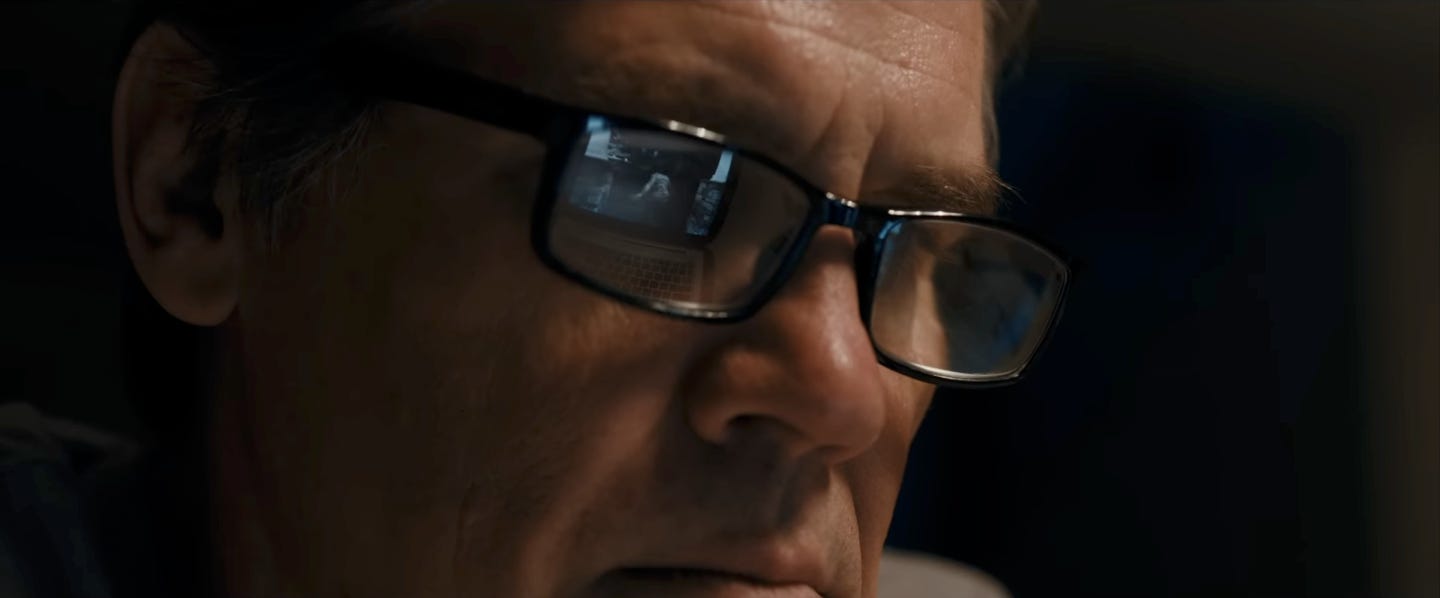
The same can be said for Josh Brolin’s character, who uses the children (and especially their disappearance) as grounds for a stable political identity, or Wong’s character, who uses them as a means of asserting order and control. The loss of the children is an opportunity for everyone in Maybrook to create identity out of care. None of them seem to realize that their use of children as identity tools isn’t much different than Gladys’s uses of them as identity sustainance.
This would all make for a mildly interesting metaphor at the heart of an A24-ish horror film, but Weapons doesn’t rest as commentary on the political exploitation of young people: it swings as a celebration of the unhinged and antisocietal power of childhood. This is where the magic happens, and this is how Creggers escapes from the basement of unwatchable prestige torture porn and emerges with a life-affirming triumph.
There’s an irony in identifying the freedom of childhood as a central theme of a film where nearly all the children spend most of the runtime as victims of mind control. But zombification is a horror-genre expression of a certain kind of anti-societal freedom, an id-takeover so contrary to (adult) human experience that it can only be captured through symbolism. Any attempt at narrative rationalization loses the incomprehensible character of the freedom. Only the zombie can capture that otherness.
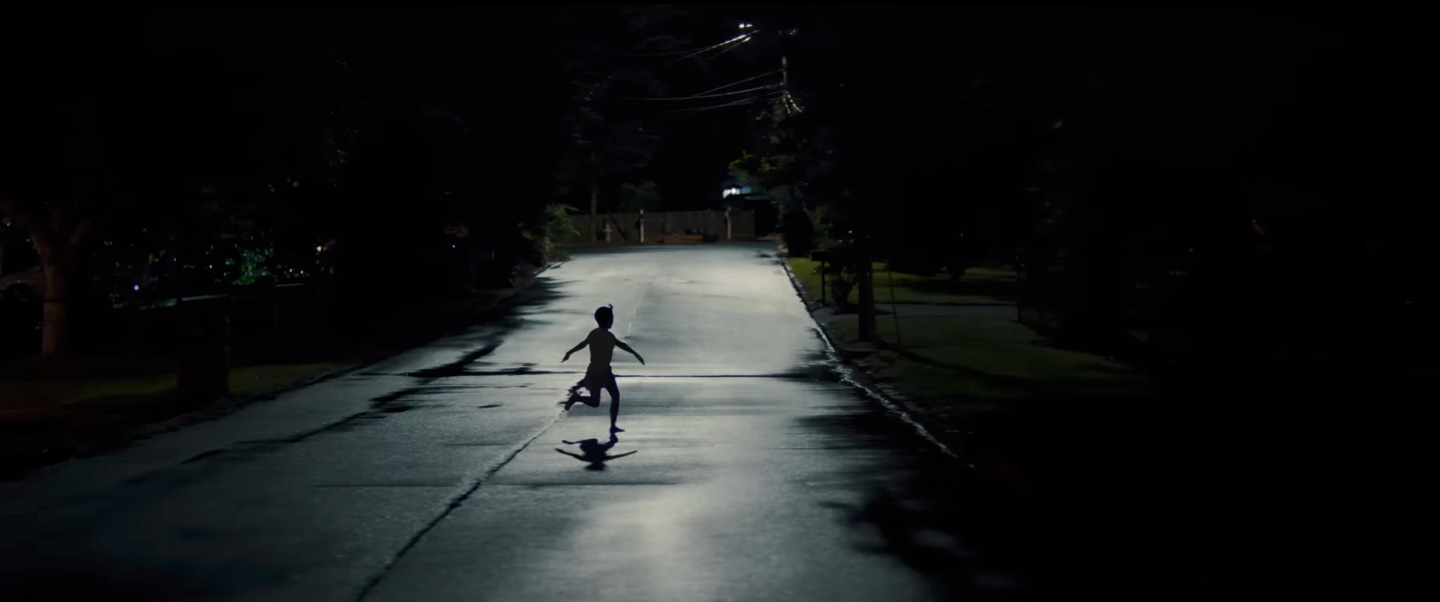
That otherness is obvious to anyone who spends too much time with children. Something is going on in their heads that has close to nothing to do with adult experience - especially when you put them together and they start to experience it collectively. They pick up on currents that we can't perceive, and they act on impulses that we've long since beaten out of ourselves. You see it when an entire playground simultaneously understands the rules to a made-up game, or when one kid’s gobbledygook slang suddenly becomes intelligible to all his classmates. I first noticed it when I walked into a middle school science class to find 25 twelve-year-olds standing at their desks, flossing in perfect unison. You can attribute this to TikTok or Fortnite or whatever, but it’s been happening long before the internet, cross-cultural children's slang, jokes, and songs passed through channels that only children can access.1 The opening running sequence of Weapons captures that childlore experience, even if, in the context of a horror film, we assume what’s happening is definitionally horrific. It doesn’t matter, because the children in the moment don’t experience the horror - they’re communing with a transcendental path toward a novel and and unpredictable future, running in a way that nobody has ever run, off to who knows what, all in perfect and seemingly oblivious unison.
As Weapons goes on, we realize that their destination is dark and gory and upsetting, but we never quite lose sight of the magic of the opening. Cregger keeps us on a knife’s edge between the freedom of running through the dark and the exploitation that waits in the basement. Because this is a horror movie - the possibility of falling into something abominable is the entire point. Kids locked up in a basement is bad! But, unlike Barbarian, we don’t end up stuck down there. Instead, we bust out in a tidal wave of child-led mass hysteria.
A classroom of screaming children rampaging through house after suburban house, chasing a fairy-tale witch, and then animalistically tearing her to shreds in the goriest way possible speaks to a primal, Grimm-style sense of justice that can only safely exist in childhood. When adult zombies do the same thing in 28 Days Later, it's appalling. When children do it - I don't know how else to describe it, it's transcendent. It’s sort of like the scene in My Neighbor Totoro where the girls run around the house screaming at ghosts times the end of Inglorious Basterds. I laughed, I cried, I wanted to stand up and cheer. People in my theater were choking with laughter. I’ve never seen anything like it.
I’ve been trying to identify what feels so exultant about Weapons’s conclusion, and I’m pretty sure it’s functioning along the long-forgotten feeling you experience the first time you hear the gory climax of a fairy tale: the hunstman chopping open the wolf, Hansel and Gretel pushing the witch in the oven. Fairy tales continue to capture our collective imagination because they celebrate children’s power within the cruel world of adult gore without reducing that power via rationalization or explaination. What is a witch? I don’t know, something bad. Why can children defeat her? I don’t know, because they are insane and they are hopeful and they are powerful. Fairy tales are in awe of the terrifying power of children. They’re inspiring to the child, and they’re a reminder to the adult that they’d better be careful because the babe in their arms is - get it? - a weapon.
We’ve lost that terrible adoration in our political and adult-lensed Y.A. climate. Weapons (along with 28 Years Later, the other best film of the summer) strike me as active rejections of contemporary children’s storytelling - bloody, maniac narratives about children tearing the adult world to pieces and finding the future in the process. Two modern fairy tales, neither for children but both very much about them - both reminders that we can’t get anywhere in this world unless we allow kids some space to destroy us.
Thanks for reading *life is disappointing.* If you found this newsletter slightly less disappointing than the rest of your life, consider liking, commenting, sending me money (thanks!) or subscribing. Subscribing will get you exactly what you get here but sent to your email inbox. I’ll be back next week with some Highest 2 Lowest thoughts and maybe something else too.
Most of my basic knowledge of Batman lore came initially through the song “Jingle Bells, Batman smells,” which has existed since the 1960s and has no clear origin. Someone recited it to me at daycare when I was four or five - I’m pretty sure he didn’t know what he was talking about either. Later he taught me “Joy to the world / the teacher’s dead,” even though neither of us had ever been to school. When I recited it to my parents they seemed to be familiar with it and told me it was mean.