
david lowery stole my graduate thesis
MOTHER MARY is literally a movie about lana del rey/taylor swift and transubstantiation, wtf i am going to secret window your ass

Sorry but I have to do this. My goal with this newsletter is to write about new films as they reach general release, along with seasonally appropriate commentary on other cinematic events and interests. This week I’m writing about Mother Mary, a movie that directly indulges a topic I have obsessed over since I was seven. This will be boring but I have to get it on the record. SPOILERS for Mother Mary probably. But whatever, you can just skip this one and come back next Friday, when this newsletter is usually released.
In a universe not very far from ours, Mother Mary is the title of my doctoral thesis on 21st-century pop stardom and not an A24 movie starring Anne Hathaway. If only I hadn’t blown my grad school interview by mentioning how I’d spent most of undergrad doing crosswords in class - I might be doing a podcast circuit right now about how Thomas Aquinas is the key to understanding Lana Del Rey. Instead I’m writing an analysis nobody is going to read about a movie nobody is going to see.
Oh well. You can get into fights about which pop star inspired Mother Mary and whether or not it’s a lesbian story, but all of this is moot - what matters is that David Lowery’s seventh studio feature is the most Catholic movie since Silence. David Lowery is an atheist vegetarian who paints his nails, but he can’t hide the “eldest of nine” stat that kicks off his Wikipedia bio or the fact that his father was a moral theology professor at the University of Dallas. This guy is a textbook Lapsed Catholic, and Mother Mary is what happens when you spend your entire life thinking too much about transubstantiation.
Here’s how you can tell Mother Mary is about transubstantiation: about 20 minutes in, Michaela Coel says, “The transubstantiation of feeling - that’s what we’re doing here.”1 David Lowery is dealing with sacramental relationships - in other words, the coming into physical contact with something that is absolutely beyond you but nevertheless personal. What if God, who is literally everything/nothing/the entire universe/etc., is a real, historical person who loves you so much that he’ll die for you, but also he’s a tangible thing that you can consume every day of the week if you’d like, and also “you” is every single person in the world? What I’m describing is the Catholic Eucharist, but also Taylor Swift’s entire business model. Eventually someone had to notice the similarities and make a movie about it.
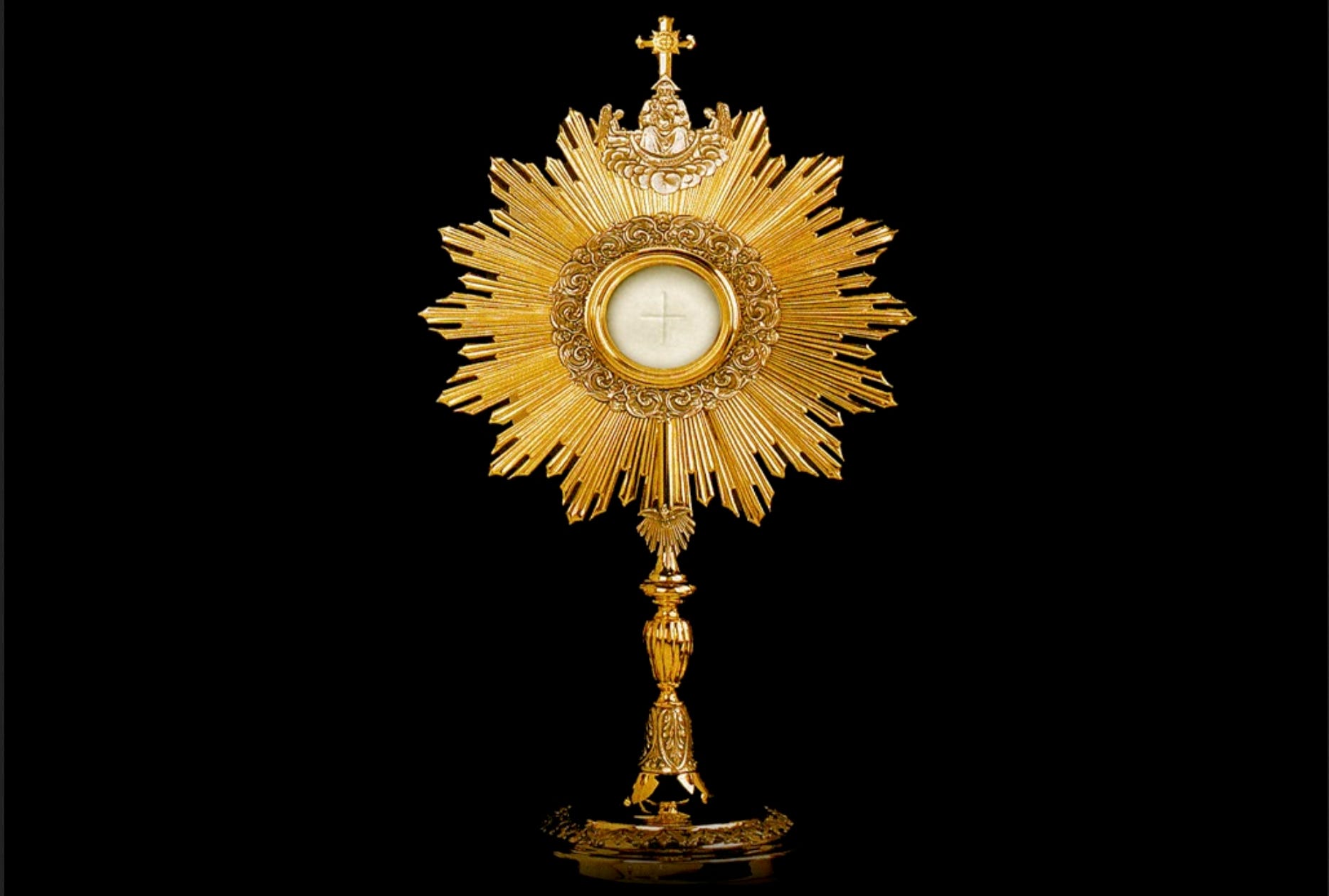
In case you need some catch-up: Mother Mary is a film by David Lowery (The Green Knight; the Pete’s Dragon remake) about a liturgically-themed pop star named Mother Mary (played by Anne Hathaway, in her first of two films this month) who needs a new dress from her ex best friend Sam (played by Michaela Coel, in her second of two films this month).2 It’s a YMMV picture with strong performances, some solid Best Original Song submissions, and at least one breathtaking bit of physical acting that convinces me that Florine was right when she wrote “Anne Hathaway is an actress to watch” in a review of Rachel Getting Married in middle school. Transubstantiation is the process by which an unleavened wafer and/or a cup of wine becomes literally the same thing as Jesus Christ, a formerly dead but currently alive human who the Catholic Church believes to be one-in-being with God. It’s a YMMV concept that convinces many people that Catholicism is for insane people, but it also provides us with a powerful metaphor for conceptualizing the relationship between art and artist in the 21st century.
It would be useful and probably fascinating to maybe three people to get into the specifics of anamnesis and epiclesis and whether impanation or transignification are better metaphors for artistic creation than transubstantiation, but for now I’ll stick to the relatively straightforward idea that God becoming an edible piece of bread is comparable to the idea of an artist becoming a consumable piece of media.3 This has been true since artists started signing their work during the Renaissance, but it’s especially true of contemporary performance art in which the audience’s relationship with the artist is a significant component of the artwork itself. There are a handful of people out there who like Taylor Swift’s music and leave it at that, but the vast majority of Swifties love *Taylor Swift.* There’s an increasingly large handful of artists who actively play with this relationship (Lana Del Rey, Charli XCX, Sophy Romvari!) but mostly it’s an inherent part of being an artist on the internet. You can’t consume a work of 21st-century art without coming into contact with its creator any more than a Catholic can receive communion without coming into contact with Jesus.
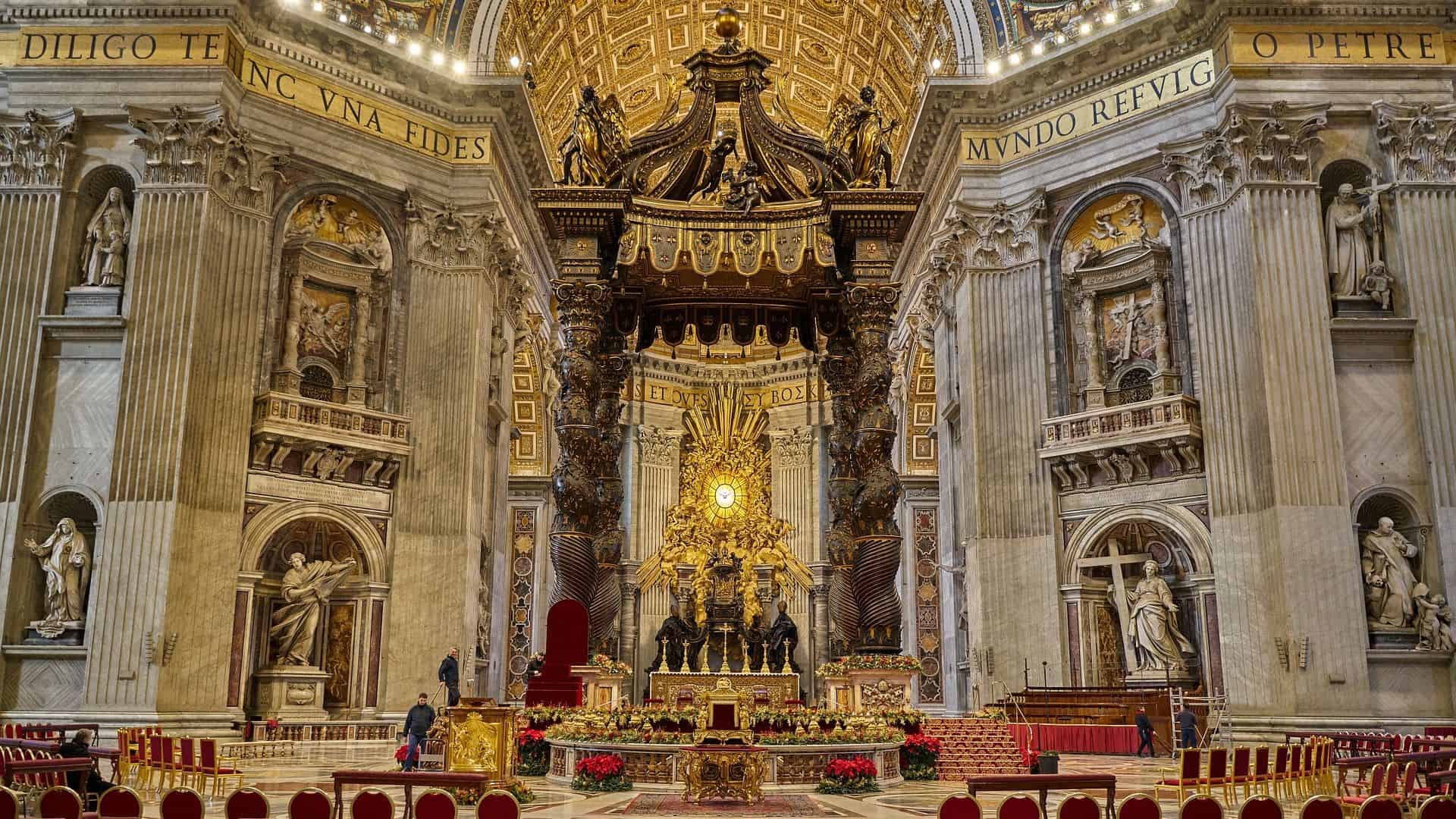
The ready availability of sacramental contact opens up a central agony in Catholic art. Why bother with an attempt to convey the actual majesty of God when it will be shown up by a piece of bread that carries actual communion with Christ? You can see this tension play out in the structure of any traditional Catholic Church: the excessive art of the apse descends dove-like from the lofted ceiling to the door of the Eucharistic tabernacle. We talk about Gothic cathedrals as soaring testaments to God, but it’s really an architecture of failure - the glory of God undercut by his own Real Presence.
Pop stardom is in many ways a secularization of the cathedral paradox. We go to enormous expenditure to transform pop stars into auto-bio-graphical works of art, all in hopes of creating a meaningful moment of connection between fan and star. But if the art of Taylor Swift is communion-via-self-exposure, is the Eras Tour a more effective work of art than an Instagram engagement announcement? Eras is the cathedral, experienced by over 10 million people over two years; the engagement announcement is the Eucharist, consumed by 30 million people in less than a day. We’d rather celebrate Eras as a major achievement of commercial art, but if Taylor Swift is selling Taylor Swift, then her engagement to Travis Kelce - and the public’s participation in that engagement - is the more authentic work of art.
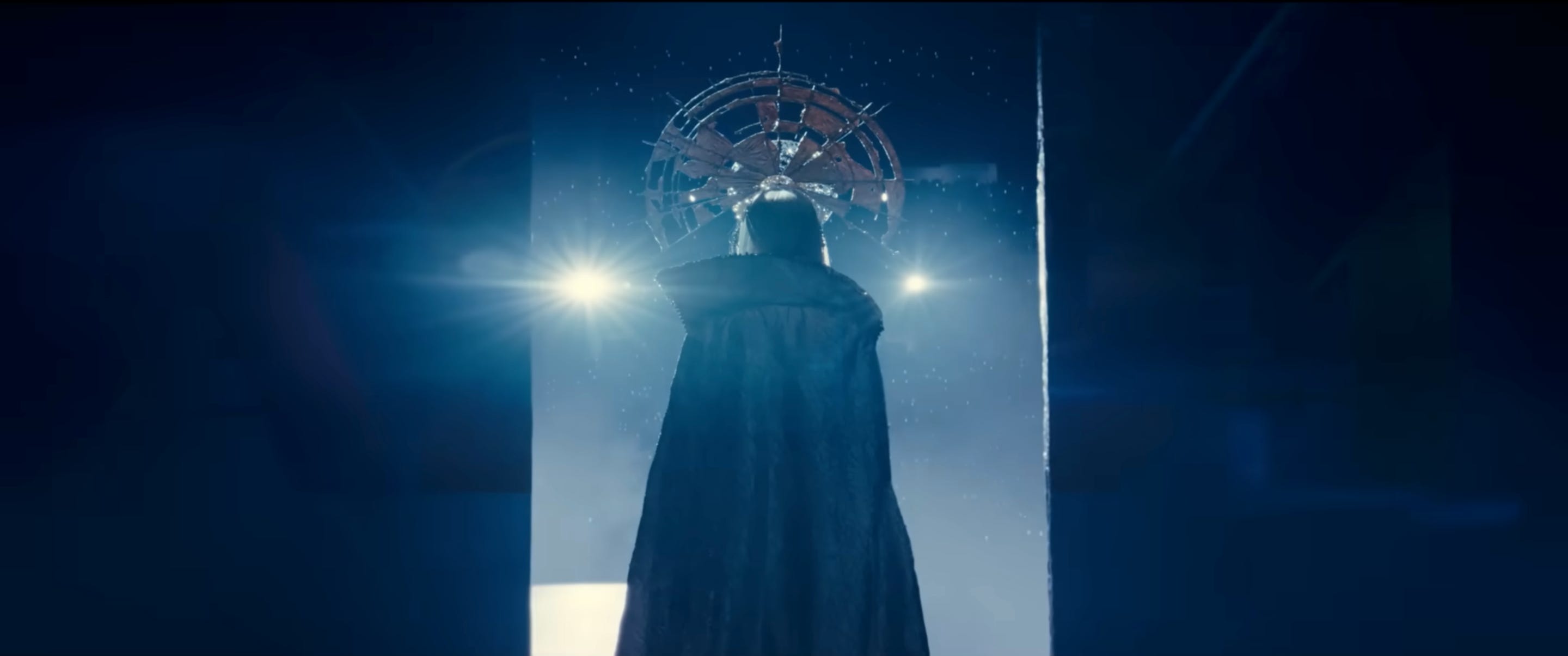
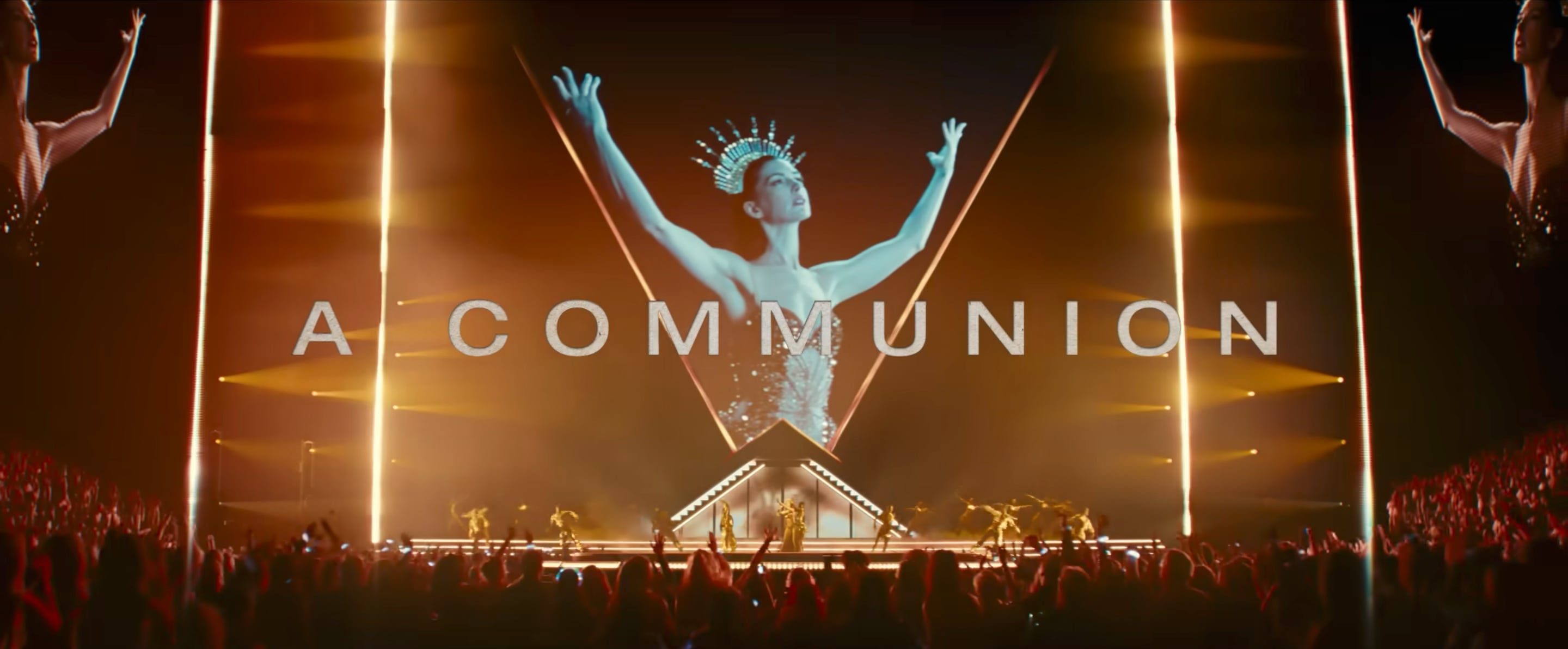
It should be clear by now what all of this has to do with Mother Mary. The film starts off in Extraordinary Form, Mother Mary a walking Catholic icon (complete with gilt and halo) ensconced in the cathedral of the arena tour. But the glory is immediately undercut by a mental breakdown: Mother Mary hates every new dress presented to her and can’t go on without a change. When Sam asks what could possibly be wrong, Mother Mary responds, “they just aren’t - me.” She can’t identify what that means, and Sam is too proud to figure it out. They spend most of the movie in this mode, Mother Mary feeling the weight of millions of eyes striving to connect with hers and failing, Sam dealing with the disappointment that she’s poured her entire life into Mother Mary only to be left with no acknowledgement of her faith. They struggle with all these feelings until they finally engage in an ancient ritual that creates a ribbon of mystical blood that literally connects them by means of their open wounds. Only then can they experience a genuine connection that allows them to create true art. If you need more proof of what this movie is about, note that Mother Mary is wearing a monstrance on her head, that she starts the movie with a “Burial,” ends it with a resurrection, and sings about the “Holy Spirit” all the way through. Also she has a song called “My Mouth Is Lonely For You.” This isn’t subtle.
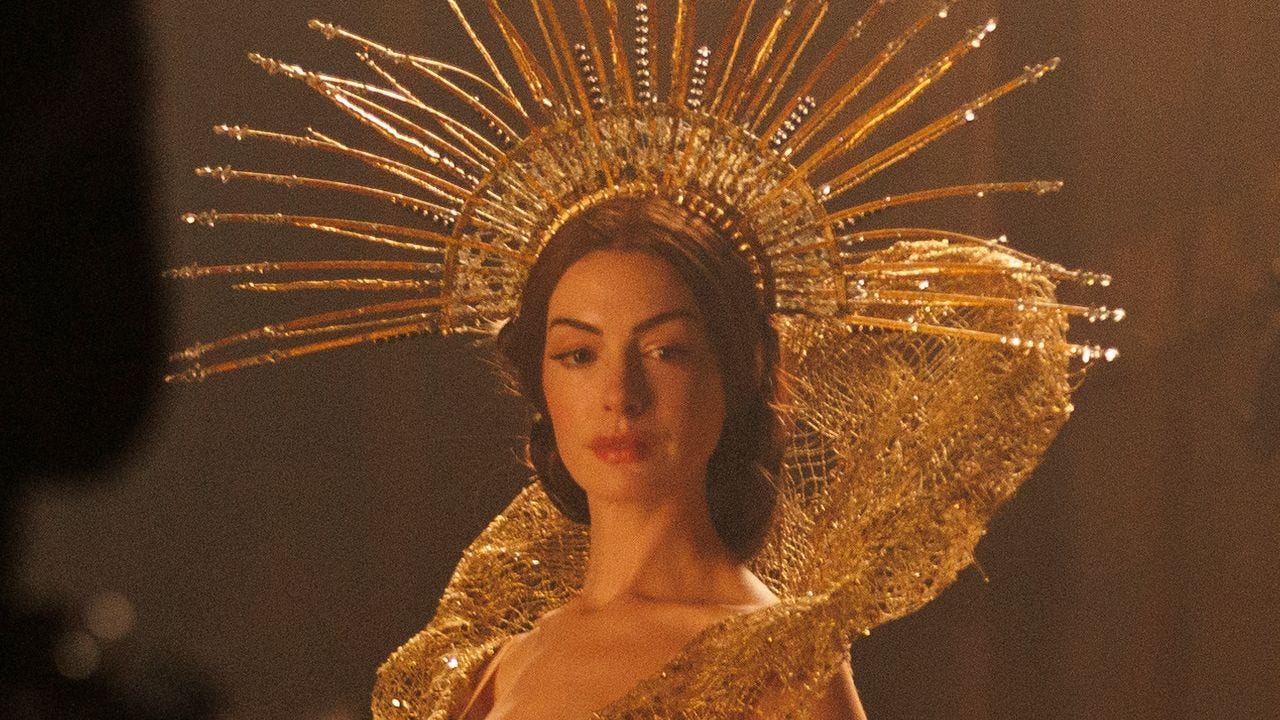
As tidy as his metaphors are, I don’t think Lowery is here to develop a thesis about pop stardom. Instead, he’s telling a much more personal story about two women and the artistic betrayal that broke their relationship. And because he’s operating in this theological range, he’s telling a story about loss of faith. If Mother Mary is in her Gethsemane phase, Sam is in her Dark Night of the Soul. She’s poured herself into a person/artwork and she’s longing for the tangible results of sacramental connection. When she doesn’t get them, she breaks. Lowery develops Mary and Sam’s relationship in this theological tenor, creative break-up as loss of faith as seen from both sides, forsaken Jesus and lapsed communicant. Every one of Sam’s moves should be familiar to anyone who has ever left the Church: aversion to liturgical music, physical pain when attending Mass, way too much familiarity with theological terminology that comes out in weird ways - but mostly, a sense of dull absence that can only replaced by over-devotion to art and fascination with quantum theory. Plenty of people can quit the Church and move on, but some people are stuck in the agony of sacramental absence for life.
Based on his background, I’ve got to think David Lowery falls into the latter category. Mother Mary reads as an attempt to fill the absence left by communion with the connections we can make through art. It works for awhile, but it falls apart when Lowery tries to transform the agony of lost communion into something that can actually be solved. Sam discovers that the only way to feel OK is to be literally re-connected to Mother Mary, and in the end she gets what she needs. That’s great for her, but it doesn’t actually make any sense. There is no sacramental connection to pop stars. The relationship between artist and fan will always be unfulfilling, as will the relationship between artist and art. To put yourself into your art is to destroy yourself. To devote yourself to an artist is to go insane. There are no happy blood ribbons to connect you. There are things you can touch and there are things you can’t, and the only in-betweens are sacraments, which for most people are too freaky to think about.
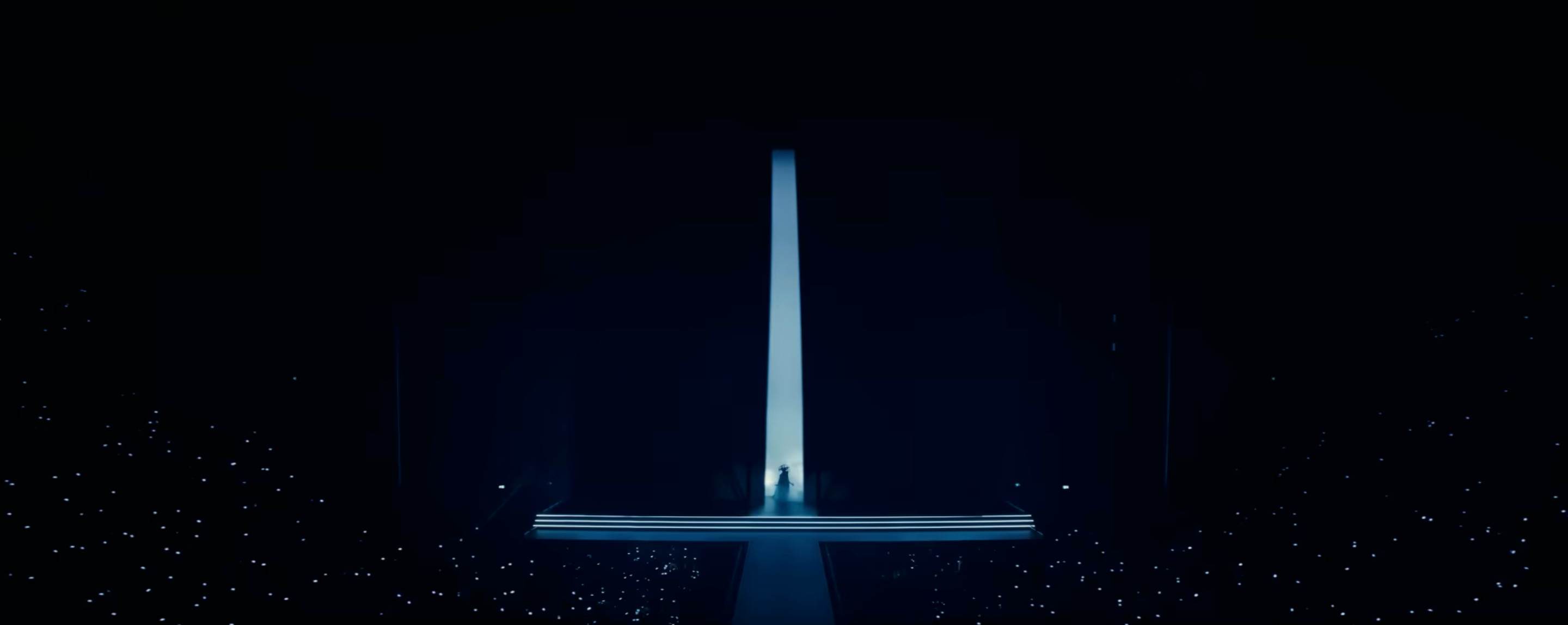
The most charitable reading of Mother Mary is that the silly ecstasy of its concluding shots are Sam’s realization that her dream to hear Mother Mary sing the most perfect song ever just to her is absurd - and that the red dress she sews is a manifestation of their shared open wound, the lack that will always connect them. That’s a tidy conclusion, and I think Lowery lands it. But it’s hard for me to accept a happy ending to this story. The real reason that I didn’t devote my life to figuring out Lana Del Rey isn’t because I’m bad at academia (though that helped) but because I find pop stardom depressing, depraved, and demonic. We ruin these young people’s lives for what? a false communion, the imitation of something we can experience in significantly more genuine ways that don’t require billions of dollars of surveillance and pyrotechnics and abuse. Sacraments or otherwise, communion is available in shared self-sacrifice, executed in boundary-respecting and reasonable ways, between people who care about each other. The opportunities are actually rather abundant if you pay attention for them. You don’t even need a record deal or a stadium. You don’t even need a magic piece of cloth.
In the end, Lowery is a poptimist: he’s open about his love of stadium shows, and I think he’s equal parts Swiftie and Little Monster. Partly out of fear for my life and partly because I don’t really want to be a jerk to people who love this stuff, I’ll say that it’s OK to feel that way. But if you’re going to bring my life’s work into the equation, I’m hoping for some critical bite. Mother Mary ends as a celebration of the capacity for this particular form of art to create meaningful connections. Where I’ve ended up, after thinking about it for years, is that anything that imitates the experience of religion - including, far too often, religion itself - is enormously damaging, both to the figure at the center of it and to the people who devote themselves to that figure. Catholic communion is the playbook for fascism, and it can only save itself when it’s free from the peripherals and focused on the real thing. If you want a non-damaging relationship with God, in bread form or otherwise, it needs to be personal. If you want to love art, it needs to be in a way that celebrates the material realities of the art, not the cult of the artist. And if you want to love a person, you should probably just love the person - not the bits and pieces by which you come to understand them, but the revelation through those bits and pieces of the person who also loves you.
I don’t think Lowery disagrees. In the end we get a stripped-down, halo-free Mary, exposed and loving before a humbled Sam. But it’s still in the setting of the arena, self-exposure as just another component of the performance. That kind of honesty is a brutal expectation to put on an artist. “You give people the gift of giving a shit about you,” says Sam at her cruelest. It’s a pretty spot-on distillation of what it means to be a 21st-century pop star. But it doesn’t say a single thing of what it means for a real person to love or be loved.
Great, now that’s out of the way. Thanks for reading *life is disappointing.* If you found this newsletter slightly less disappointing than the rest of your life, consider liking, commenting, sending me money (thanks!) or subscribing. Subscribing will get you exactly what you get here but sent to your email inbox. We’ll be back next week with even more Anne Hathaway.
In his Big Picture interview, David Lowery says, “Michaela literally says what the movie is about in the first 20 minutes. Like, she like lays it, very clearly on the table.” I don’t have any proof that this is the line he’s talking about, but I would be willing to be that I’m right.
Set to music by Charli XCX, in her 73rd of 215 film credits this month.
If you want to learn about why the correct metaphor is actually *transaccidentation*, I’m happy to send you my grad school admissions essay.