
EMERGENCY NEWSLETTER: THINGS ARE GOOD
children kill STAR WARS, saves movies // BACKROOMS survives A24 studio notes // OBSESSION airs gen z's post-adolescent laundry

My goal with this newsletter is to write about new films as they reach general release, along with seasonally appropriate commentary on other cinematic events and interests. I was going to write about something else but last weekend was too exciting, so I had to pivot. This newsletter comes out on Fridays, which this week means Saturday.
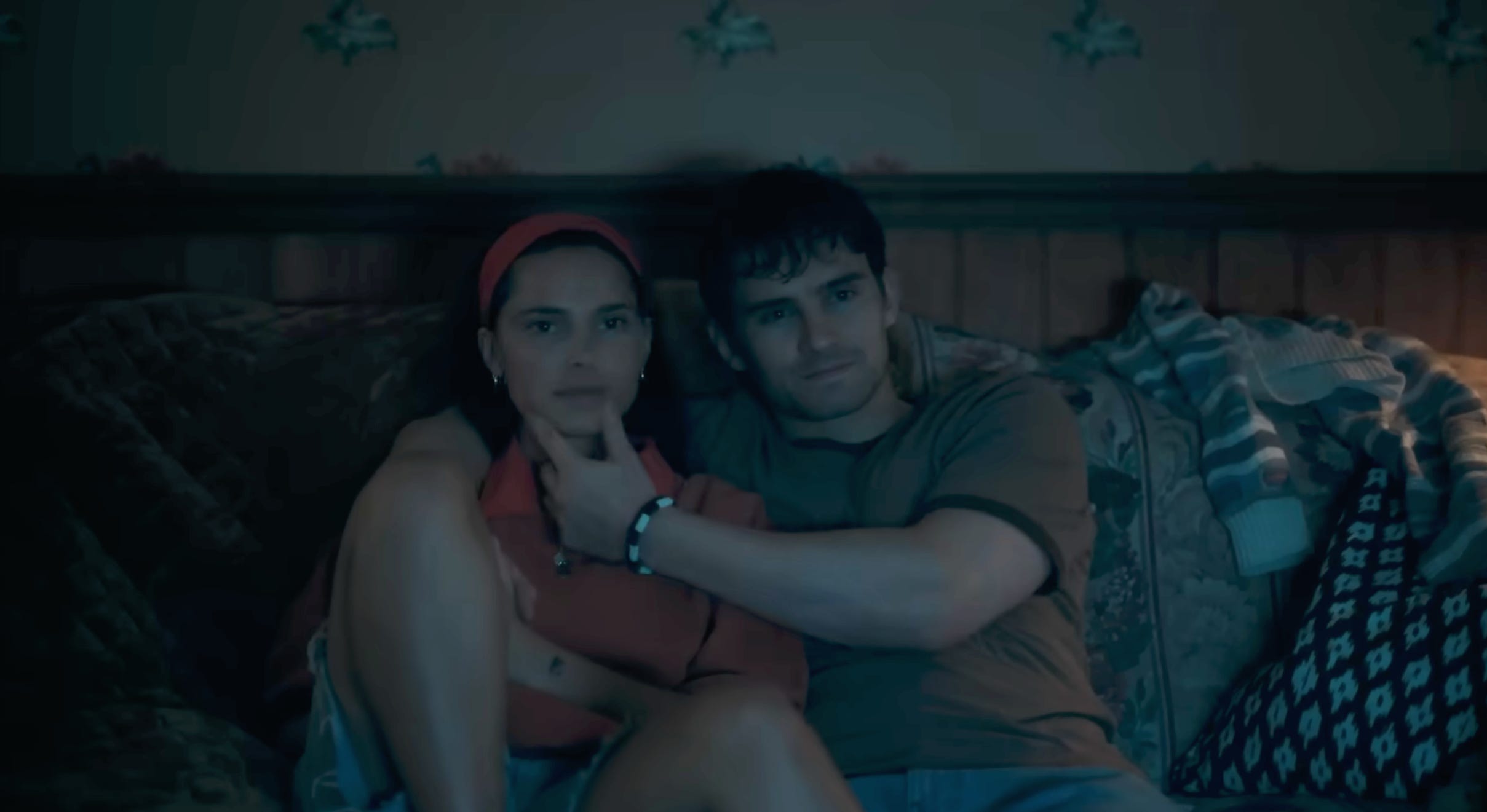
Maybe you haven’t heard, but “MOVIES ARE BACK.” I realized something weird was happening when I got to the Main at 1 pm on a high-70s Saturday and found myself in the middle of a lobby full of people under the age of 25. The momentum carried through the weekend and across the country, and ended with a rare piece of inspiring box office news: two independent-ish horror movies, made by a 20 year old and a 26 year old, took number one and two at the box office over a Jon Favreau Star Wars movie.
Was this Gen Z’s June 1982, or at the very least their August 1999? Young people don’t get excited about this kind of thing in the moment because they are young and fun and free, but there’s a good chance a generation will look back on this weekend for the rest of their lives and reminisce about how good they had it. I missed 1999 due to being a child and and 1982 due to my parents not having met yet, so to make up for lost time I pivoted from my previous plans and caught a double feature on this historic weekend of cinema.
Something I sometimes forget about myself is that I spent a significant part of my growing up at the Mall of America. My father owned an ice cream shop, and I went along with him every Saturday to get out of the house on cleaning day. As magical as the MOA is to teens and foreign adults, it didn’t have a lot to offer to a six year old, so most of my defined memories from that part of my life came from behind the walls. There was an easily missed door next to our shop, and behind it was a winding series of hallways that connected the offices and storage rooms behind the third-floor businesses. Whenever I got bored playing around in freezers or burning through the Windows 95 games suite, I’d get out and run around in the hallway. I was too much of a rule-follower to travel very far and I’d get scared anytime an unfamiliar adult came through one of the doors - but I always had an understanding that the Mall was a much larger place than the famously large place everyone knew it to be.
So when a teenager first told me about the Backrooms in 2022, I felt an immediate sense of familiarity. An ambiguous, empty space behind ordinary, lived experience loaded with loneliness and nostalgia? I get why this makes sense to me - does it make sense to you? The internet has a bizarre relationship with the 1990s and the word “nostalgia” that would take time to unpack, but the original Backrooms picture is an unspoken manifestation of whatever it is. “Liminal photography” - images of empty hallways, atreums, dead malls, parking garages - opens up something for internet kids that summons both longing for a time they never experienced and dread that they might find themselves trapped in it. It doesn’t really make sense, which is sort of the point. I don’t know who dropped “liminal" into the conversation, but for once they picked the right word.

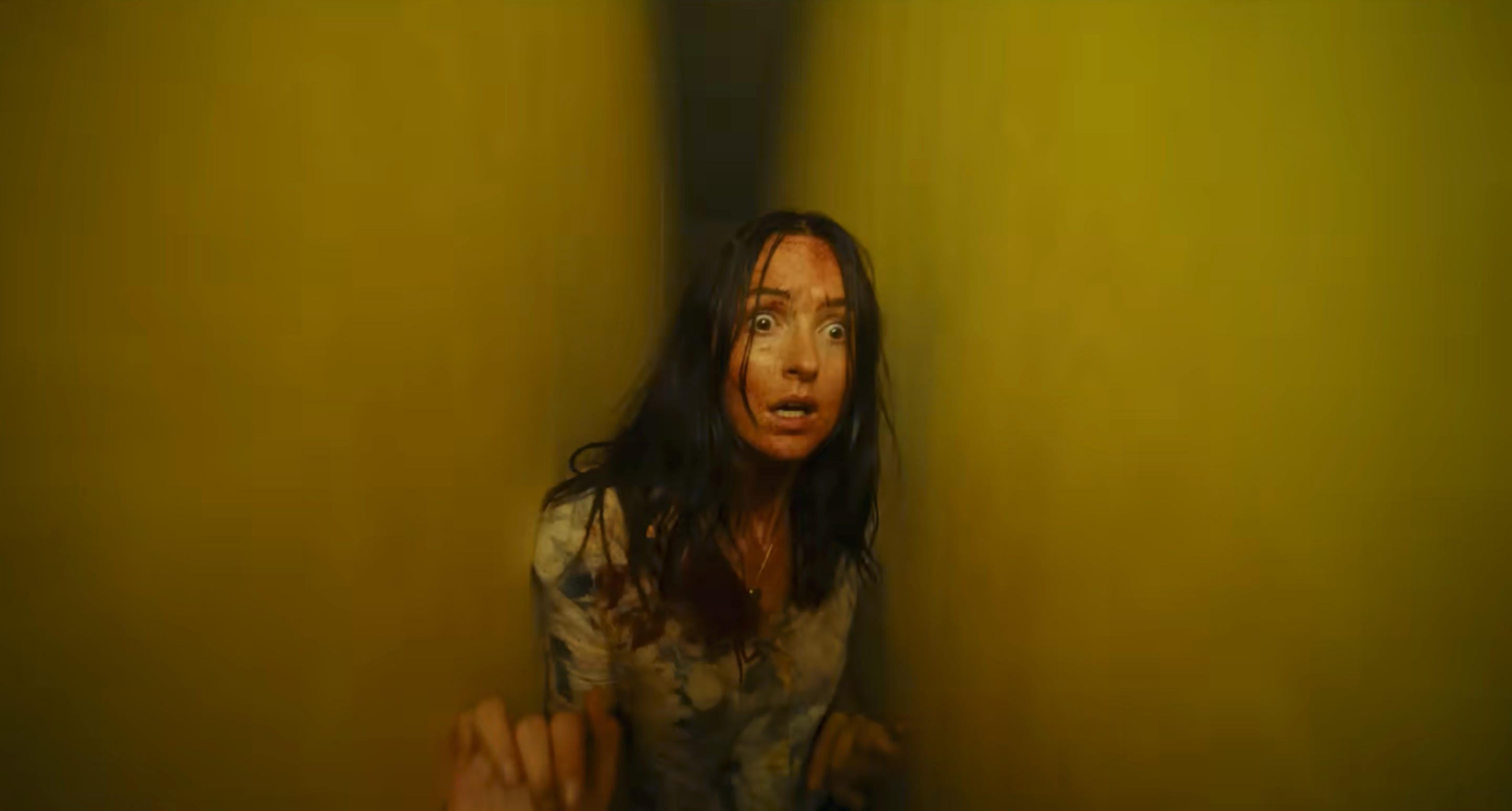
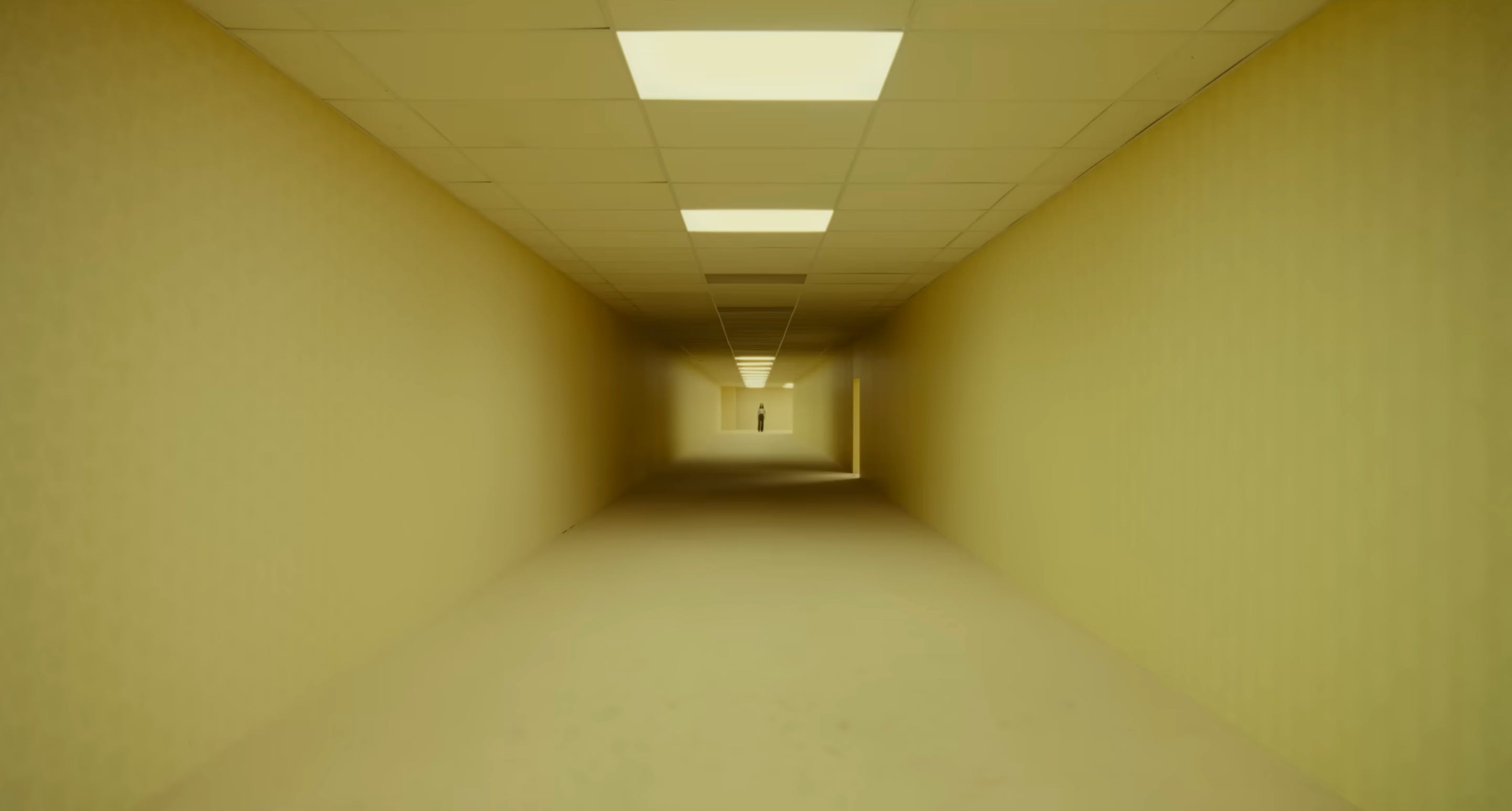
Backrooms, Kane Parsons two-hour film that rose out of a Youtube interpretation of the Backrooms idea, is both a manifestation and a deconstruction of this confused internet nostalgia.1 Parsons’s story binds together a wide swath of lore that you would have to go to the Backrooms Wiki to fully understand. In 1990 a failed architect, Chiwetel Ejiofor, finds a hidden door in the mostly empty basement showroom of his furniture store. Behind it is an endless maze of yellow-wallpapered rooms scattered with familiar, but just slightly off, stuff: chairs, cardboard cutouts, stop signs, seagulls . . . and something else. As he goes deeper and deeper, the off-ness gets off-er, and Chiwetel’s mind gets increasingly warped into the mix of desire and disgust that liminal spaces conjure.
When Backrooms is shot on camcorder, or when it revels in the analogue set design of its increasingly warped Escher-scape, or even when it incorporates its teenage side protagonists wearing very Gen-Z approximations of what people wore in the early ‘90s, it thrives. The bummer is when it delves into the real-movie stuff that seems to have been forced on Parsons to fit the A24 brand. This mostly manifests as a routine 2020s horror script from TV writer Will Soodik, who shoehorns in a standard-issue trauma plot via flashbacks and therapy talk. There are moments of insight in Soodik’s writing, but we really don’t need it. There’s a shorter, more inscrutable version of this movie that offers all the best parts without explanation: the found footage, the incredible set design, the nightmare-slop body horror. It probably could have made $100 million without an extra half-hour of studio notes. It’s hard to hold your own against executive pressure when you’re a terminally online nineteen year old.
As it is, Backrooms is two movies, and like some of the nightmares that occupy it, it’s sort of a horrifically grafted slop combo. Oddly, what weakens Parsons’s movie extenuates some of his themes. The uneasiness of the Backrooms is the sense that it must be going somewhere paired with the gradually apparent fact that “somewhere” doesn’t exist until you decide you’ve arrived. You can only find meaning in liminality by forcing on a definition. What better way to enact that in cinema than to wedge middlebrow integrity into an otherwise formless collection of hallway sequences?
You can do this to real life too. In 2021 I went back to the Mall of America backrooms for the first time since I was a kid. I went through one of those doors, down a hallway, and came upon a giant room that I’d never seen before, decked out in cheap party materials and carved apart by haphazard dividers. If you live in the Twin Cities, there’s a good chance if you did this too - the Mall was one of our biggest COVID vaccine sites. As I left out a different hallway that spat me out in a completely different part of the Mall, I felt a wave of catharsis - not just because a year-and-a-half of pandemic isolation finally felt like it was ending, but because it was happening in this meaningless, vacant place that for some reason felt like home.
When I was a child I wandered the Backrooms blindly. Now I’ve put away childish things and see through an A24 script darkly that grafts a destination onto the end of the hallway. I’ve been lost in the cracks of the MOA my entire life, and all that I’ve been looking for is - the liberal social order! That same narrative brain tries its hardest to make sense of Parson’s vision - to attribute meaning to the rambling, to put into clear therapy-speak something a generation is still processing. It doesn’t quite work, and it’s for the best: if Will Soodik’s script had succeeded, this movie would be a dud. Thankfully the material is too large for a coherent metaphor, and the aimlessness escapes A24’s attempts at prestige. If Parsons has a career ahead of him, that aimlessness is going to be where he finds it. Stay liminal, kid - don’t let anyone tell you where they think you’re going.
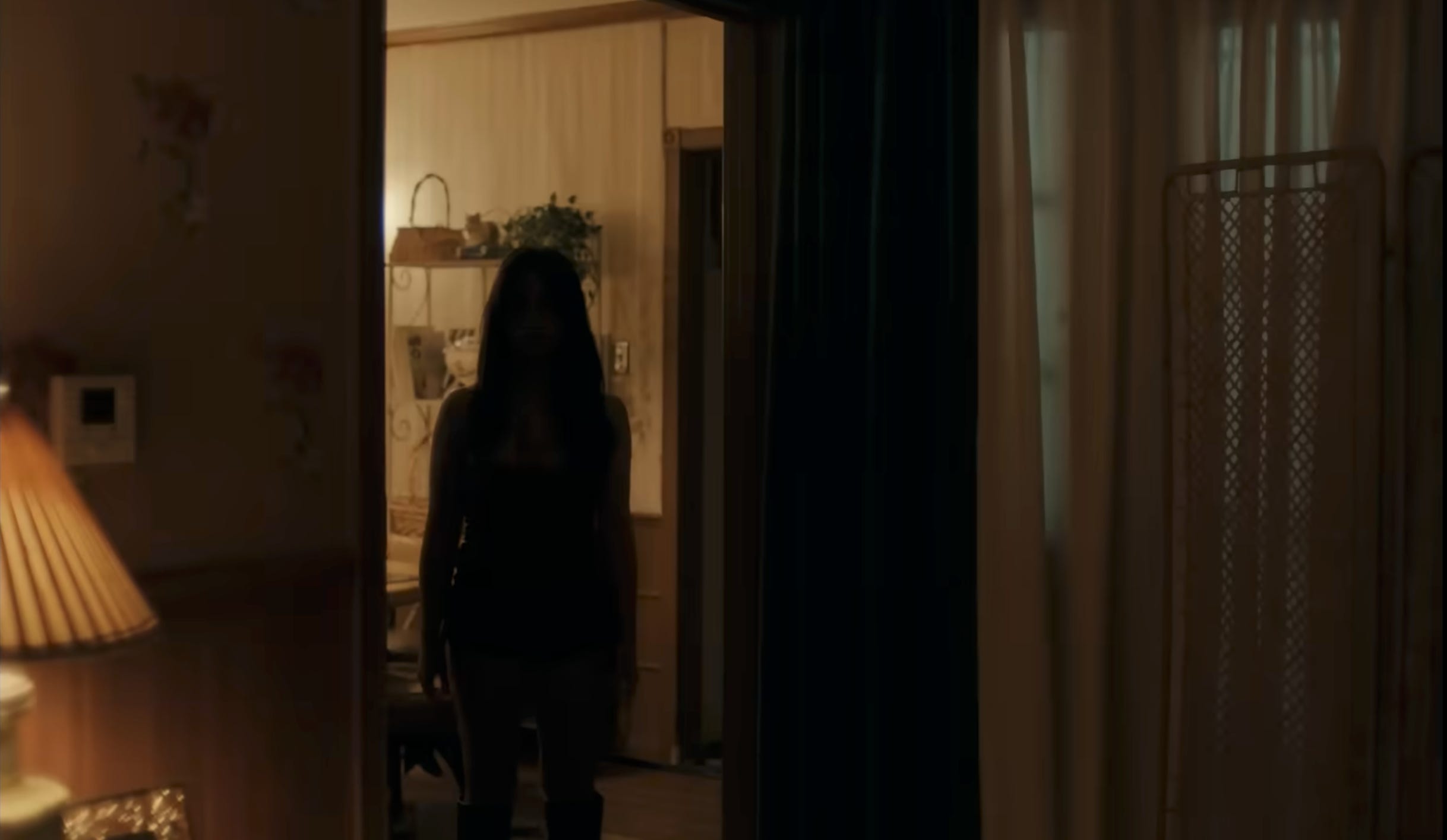
If I were to put a finger on what’s irked me about Elevated Horror in the past several years, it’s the tidiness that results from going into a film with a clear thesis. I’m not at all opposed to theses, but what horror can do that maybe nothing else can pull off is the revelation of total disorder. Why should a movie that ends in a chaotic bloodbath have a point? Horror is what happens when you have a feeling that exceeds a coherent thesis, so when everything from The Babadook on fits neatly into a clear idea about human relationships, we cheapen the genre into middlebrow allegory.
Of the millions of takes on Obsession, Griffin Newman’s on Critical Darlings last week was the one that convinced me I had to watch it:
I think there’s something really interesting in this movie in that it is made by someone so young, and that very often when filmmakers are this young and get a chance to make a feature, it’s like a Boogie Nights thing where they want to show that they’re older and more mature. And we rarely see a competently, well-crafted movie, made by someone in their early-to-mid-twenties, that also is kinda of that exact headspace. I think some of the limitations of the worldview of this movie are interesting because we rarely get to see these people express themselves, that usually people have worked through their shit more by the time they get to make this film. And this feels like a movie made by someone in the process of being, like: was I the problem?
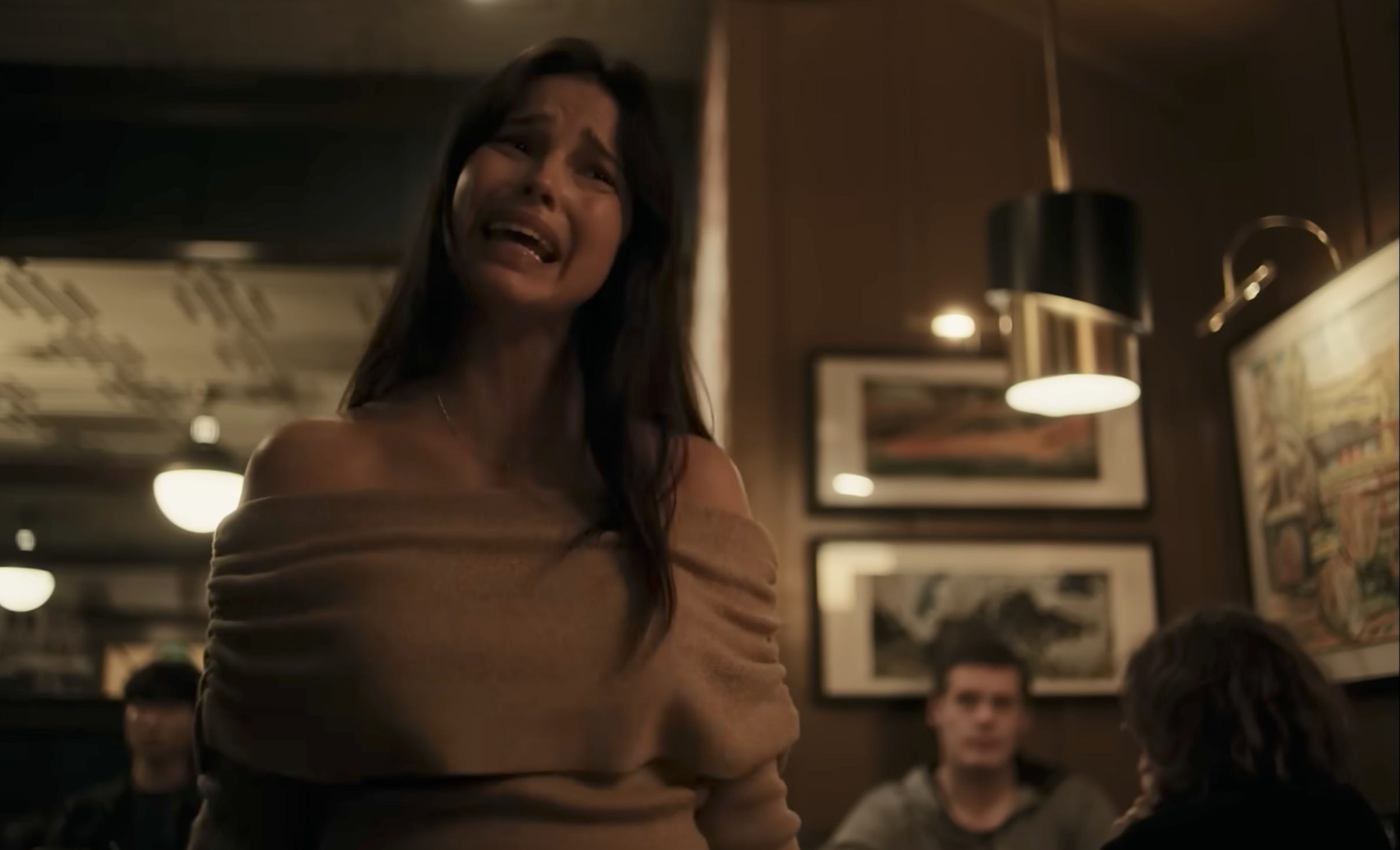
What I find novel about Curry Barker’s debut is that, despite operating within the on-the-nose mechanics of 2020s horror, he’s dealing with raw and stupid emotions that only befit young people. You could argue that Obsession doesn’t escape the Elevated Horror mold: It’s very clear what it’s about, and it functions as a taut 90-minute horror comedy with clear set ups and pay offs. Bear has a crush on Nicki; Bear makes a wish that Nicki will love him more than anyone else in the world; the wish works, and predictably bad things ensue. But instead of using that clarity to make a morally acceptable point, Obsession reads like Barker working out what a dumbass he and his friends are, and it ends in a bloody mess. This would be an embarrassing movie to come from a fully formed cerebral cortex, but it’s not - it’s from a kid who’s trying to understand something raw, and it ends up as a vital and potentially generation-defining horror film.
If Backrooms is fodder for teens to argue about in their parents’ basements, Obsession is perfect for 20 year olds to fight about with fake IDs in bars. I would stay very far away from anyone over 30 who empathizes too deeply with Bear. He’s the sort of character that makes you deeply embarrassed about your former self - or if you’re more of a self-love type of person, one you’re proud to have moved along from as you’ve matured and learned a little bit more about the world. But for young people, I’m sure there are rigorous debates about who’s the psycho, Bear or Nicki?; or, what’s worse, toxic male expectations or clingy women? etc.
There’s an obvious right answer here, even if Curry Barker isn’t removed enough to see it. And there’s enough id in this movie to make that answer obvious, whether it’s intentional or not. Barker gives us the worst possible outcome, achieved in pretty close to the worst possible way, which is to admit that when you’re young and stupid there’s sort of no way out except the long road to maturity. Part of me wishes I had seen this movie when I was 22. I think I would have eventually seen Nicki and Bear’s situation for what it is, and I think I probably would have realized a little faster that holding anything in the world to a standard that it can’t meet is a recipe for cruelty. At the same time, I can easily imagine some young/dumb/full-of-cum kid seeing this and thinking that Bear is a tragic hero. But that’s the risk you take when you let young people make art and when you let other young people consume it. Part of the value is letting kids work through the mess.
So I’m happy that Obsession is reclaiming horror for young people. I’ve never been much of a fan of the rawness of teenage horror movies, and I don’t know if I’m actually a fan of this one. But I think it serves its function, which is at least part of why kids are seeing it in droves. Curry Barker has good enough instincts that he should be able to make more spot-on movies as he matures, and my prayer is that he doesn’t get dragged into the edgelord reactionary bullshit that young horror directors before him have plummeted. Hopefully this is the first big step from a guy with ideas and editing instincts as he grows into a generational auteur. I hope he learns a bit more about the world and himself before he makes his next movie, but I’m grateful he was able to get this one out there before he got too self-conscious to make it.
That’s probably what I’m most excited about this weekend: something has shifted, even if it’s just for a moment, that opens up the possibility for young people to get their movies out there without getting dragged through the Hollywood ringer. Instead of paying your dues for twenty years within sanctioned industry echo chambers, you can do your spec work on the internet, get enough of a following to convince a producer that you’re viable, and jump straight to a debut that works like you’re a well-established filmmaker with all the messiness of an amateur films. It’s a new route to doing something messy and cheap that gets seen by more than a scene or a festival audience. I’ve been preparing for post-collapse cinema, but maybe we can do good things again within some semblance of monoculture.
We’ll see what lessons Hollywood learns from this weekend, and we’ll see what happens in the career of these two directors. I can see Curry Barker going the contemporary path from horror debut to big-budget IP opportunities mixed with middlebrow Oscar bait. I have no idea what will happen to Parsons. It’s hard to foresee a future where Backrooms isn’t turned into a horror franchise, run at first by Parsons but eventually getting handed off to someone else - which means that we’ll probably have a mediocre 2, potentially an unhinged 3, and then a rotating stable of secondary and tertiary directors with varying degrees of vision, creativity, and market banality for 4 through 16.
But that’s to assume that previous movie market rhythms apply to something that’s fresh, young, and more or less unprecedented. It’s hard to say this isn’t at least a little bit the start of something new. What’s obvious about this weekend is that everything the experts anticipated about 2026 at the movies - complete IP takeover, elimination of risk, the end of shots taken on low-budget writer/directors - has nothing to do with what the people actually want. For the first time in a decade (I think? box office statisticians, sound off), we have a strong shot at ending the first half of the year with five original screenplays in the YTD top ten.2 Sometimes it’s kind of cool to be alive.
Thanks for reading *life is disappointing.* If you found this newsletter slightly less disappointing than the rest of your life, consider liking, commenting, sending me money (thanks!) or subscribing. Subscribing will get you exactly what you get here but sent to your email inbox. I will be back next week with previously scheduled MOVIES ABOUT STEALING programming.
The easy narrative is that Kane Parsons invented the Backrooms concept in 2022, which isn’t true. The Backrooms came out of a re-post of a long-circulated picture on 4chan and spawned a whirlpool of collectively produced fiction about an alternate world behind the walls of ordinary realty. Parsons built his adaptation on three years of that lore and added some Blender surrealist elements, but the underlying concept never belonged to him or anyone else. That’s not even remotely a knock on what he’s accomplished - it’s very cool that something that emerged out of the ether of the internet can make it out of the basement as a fully formed popular work.
Depending on what you count as original and what happens in the next month. Project Hail Mary is based on a book but not on previously existing franchise; Michael is an original screenplay but based on decades of Jackson content and media management. Regardless, both of those and Hoppers are locks. Obsession broke in last weekend and Backrooms overtook GOAT on Wednesday. You could make a case that Backrooms isn’t original content, and I would call you pedantic. The three contenders still to come are are Toy Story 5, Scary Movie, and Disclosure Day (I’m not holding out on the new Jackass, Masters of the Universe, or Power Ballad). If all three of those get in and the two Gen Z horror movies hold on, that makes the Top 10 something like: Super Mario Galaxy, Project Hail Mary, Michael, The Devil Wears Prada 2, Hoppers, Toy Story 5, Scary Movie, Disclosure Day, Backrooms, Obsession. I’m not saying that’s definitely going to happen (the entire bottom five would have to make over $150 million), but it could - which is way better than anyone could say for the past five summers.