
four movies about old people
MSPIFF highlights featuring ian mckellan (86), roy blakey (94), marianne faithfull (78), a scandinavian witch (maybe immortal)

I went to MSPIFF and saw too many movies. I am in fact still at MSPIFF and have many more movies to see. So far my biggest regrets are: forgetting that most people acknowledge Daylight Savings Time and showing up an hour late to Silent Friend; having a real job that made me too tired to meet Dean Cundey; losing the email address of the only person who thought my press pass was cool (Mars, if you’re out there, sorry! and thanks for the scone).
But plenty of great things happened too. One interesting thing about arts festivals is their ability to bring out old people. I guess it’s easier to see four films on a Tuesday when you’re retired? I love the opportunity to watch new films alongside my elders - and I’ve also noticed that the MSP Film Society values representation, because all my favorite features so far have been about people over the age of 70. Here are some highlights from MSPIFF, all of which celebrate people living their best lives into their eighth, ninth, tenth decades.
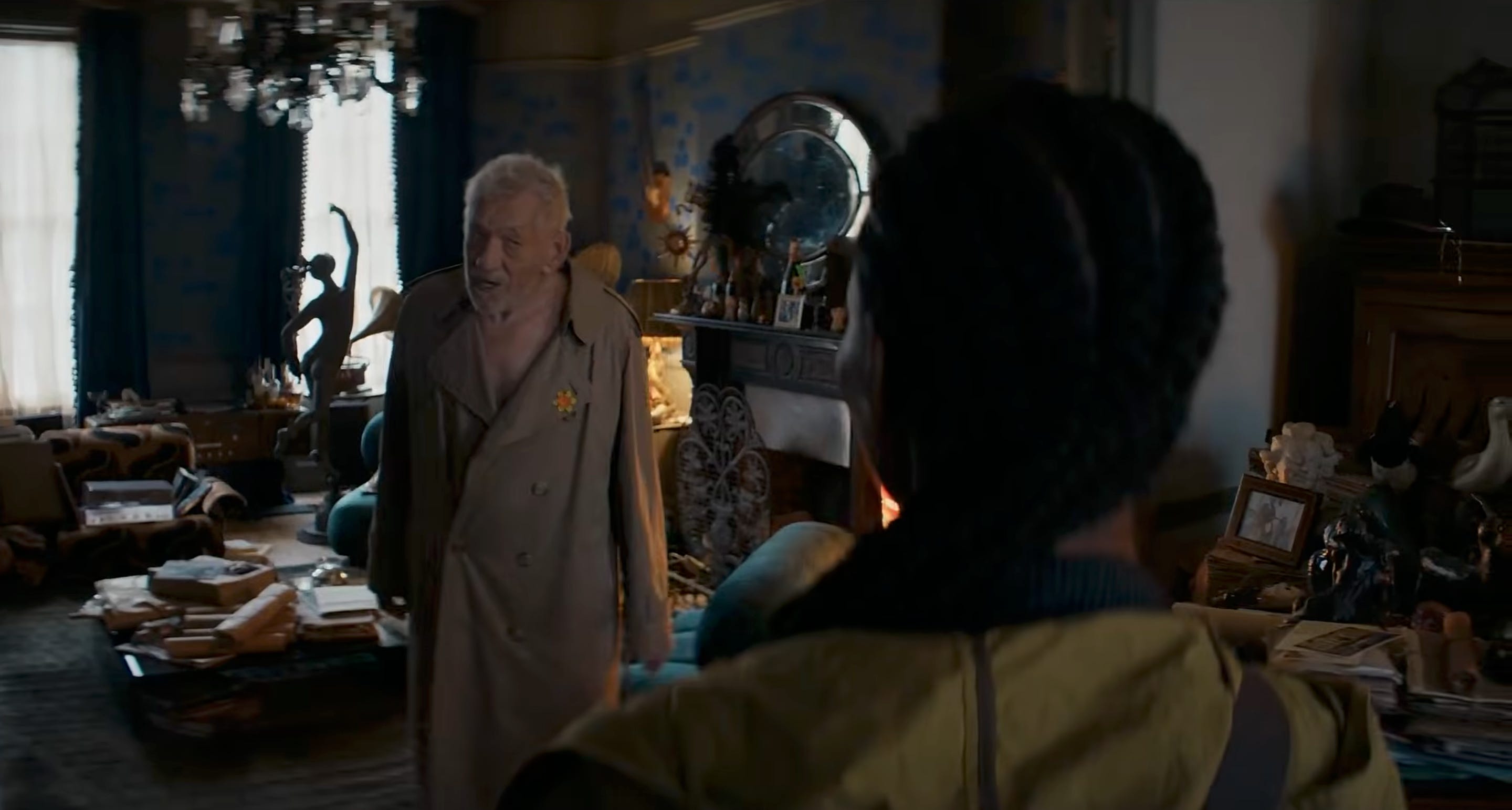
I think I’ve come around to Steven Soderbergh’s second career of crapping out terrible-looking half-films every six months. I hate this damn lens he keeps using, but I wonder if it’s just the best way to capture two great actors running through a smart script in a gorgeously dressed London apartment without putting in any directorial labor. I was going to write a sentence about how Soderbergh is old and has earned some shortcuts, but I checked his Wikipedia and saw he’s 63. This is America, Steven - get back to work.
Ian McKellen, in contrast, is 86, well past retirement age and working like he doesn’t have a pension. I’m not sure how much longer we have with him, but his performance in The Christophers reminded my fourth-grade self that I was right to be offended by his 2001 Best Supporting Actor loss.1 Who else can convincingly mumble “I was waterboarded by a deluge of kittens” like he’s King Lear while wearing a fuzzy neon sweater under a chore jacket with a wine bottle stuffed in the side pocket? Michaela Coel holds her own against him, and their chemistry makes up for any number of lacks in cinematography, production, or plot (James Corden shaped or otherwise).
It doesn’t really matter what this movie is about. McKellan is a cancelled boomer painter and Coel is a millennial restorationist. They clash over a variety of generational quibbles, mostly about art forgery. It’s the first movie I’ve clocked that uses the phrase “during COVID,” and its the only one that accurately grasps the idea of a very-online octogenarian. I was charmed to discover that screenwriter Ed Solomon began his career with the original Bill and Ted movies before working his way through Super Mario Bros., Men in Black, McG’s Charlie’s Angels, and the Now You See Me movies. If nothing else, Soderbergh knows how to pick his collaborators.
The Christophers is sometimes trite, sort of nothing, and minor in every way, but as an opportunity for Ian McKellen to have as much fun as he’s ever had before leaving this mortal coil, I’m here for it. If you’re convinced that cinema is going to die because corporations won’t pay to make movies, check this out. When Hollywood collapses there are going to be a lot of out-of-work actors waiting for their close-ups. All you need to do is rent a digital camera with a stupid lens and point it at them.
The Christophers is a Neon property and is supposedly in theaters right now, somewhere? It seems to have made $80,000 last weekend, so good luck finding it.
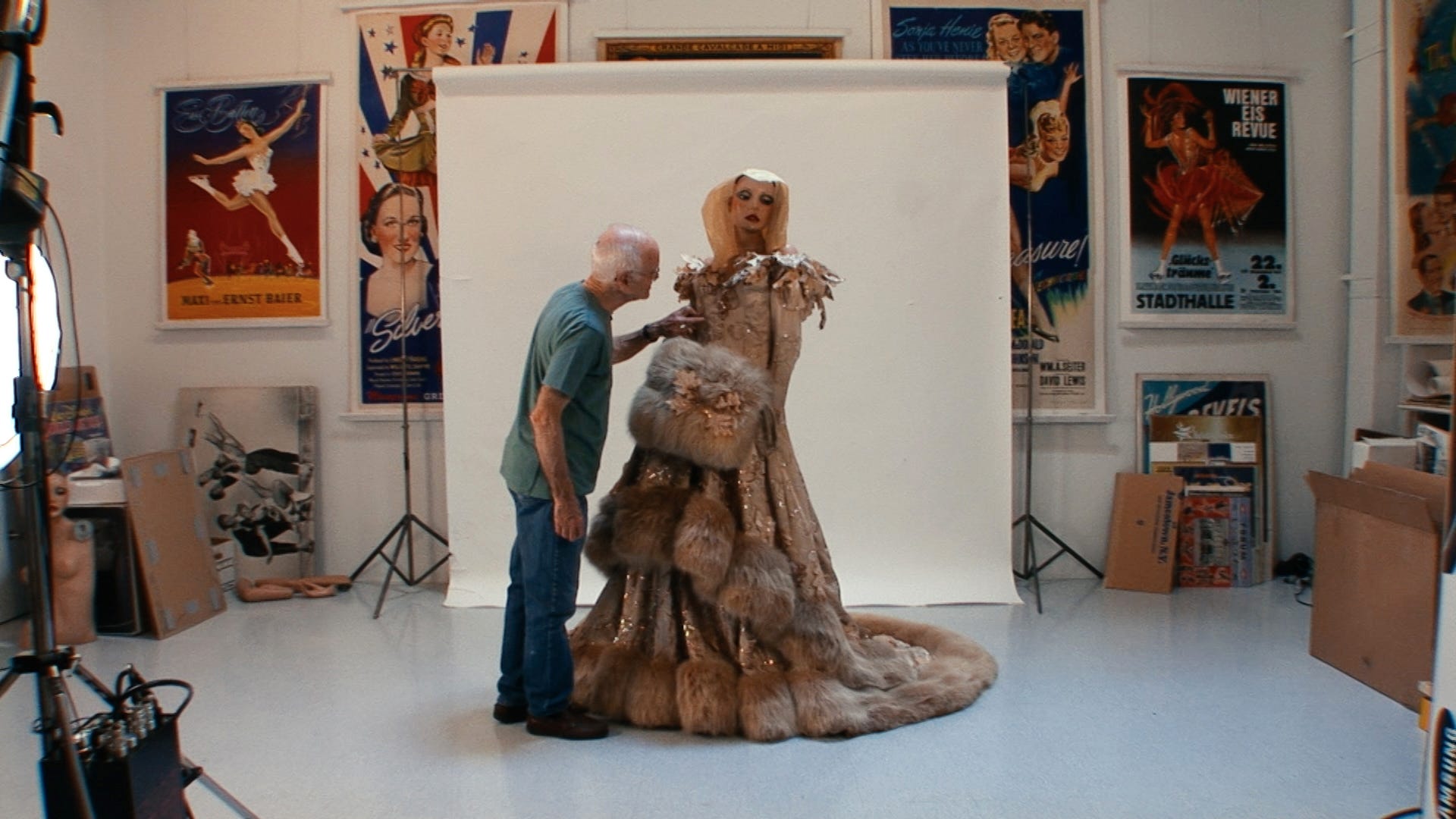
Right up the street from the Main is the Roy Blakey and Keri Pickett Photography studio, a place you’ve probably glanced at a million times in your life if your bar is Whitey’s and your primary liquor store is Surdyk’s. It’s quite a bit emptier than it used to be, but not long ago it featured: the world’s only comprehensive collection of theatrical ice skating memorabilia; the largest collection of benjarong porcelain outside Thailand; a library of original portrait photography featuring Broadway dancers, pop musicians, and drag queens; an epoch-defining collection of black-and-white male nudes. All of these and more were collected and created by Roy Blakey, a person who doesn’t have a Wikipedia page but who Divine once called his second-favorite photographer.
I don’t have anything smart to say about the craft of Uncle Roy, Keri Pickett’s celebration of her famous uncle’s life, but I can confirm that there were Hamnet levels of sniffling at its premiere. Pickett isn’t trying to do anything new with the documentary form - she’s here to tell the story of her uncle, with whom she shared a home and who was the subject of her passive lens for the final 30 years of his life. More than a retrospective, Uncle Roy is an attempt to preserve a century of memories that are quickly slipping away as a family line without children ages and dies. Near the start of the film, Roy, pretty far along in the dementia process, mumbles, “I wish I could remember any of the things I’ve done in my life.” “Well,” Pickett responds, with a hint of the patient exhaustion of someone who has explained the same thing at least ten times that day, “for that, I’ve got you covered.”
I won’t spoil the surprises that Pickett brings to the surface in Uncle Roy. Blakey’s under-celebrated importance as a gay photographer is the major takeaway, but what I found most astonishing was what I learned about theatrical ice skating, a massive entertainment industry that I assume 90% of people under the age of 40 have never thought about. Blakey began his career as a globe-trotting ice performer, and as he (and the world) aged out he fought to preserve as much as possible of what he considered the world’s greatest art form. By the end of Uncle Roy, it’s hard to say he’s wrong. For thirty or forty years we had a highly developed art form, beloved by millions, and now its gone - except for an obsessive collection of everything it ever produced, stuffed in a not-particularly watertight Minneapolis basement.
The drama of Uncle Roy is the search for a permanent home to Roy’s collection. No matter what happens, it will never be the same as the mess of photos, posters, and costumes that could only be accessed through a private tour with Roy himself. Someone else will pick out the narratives now that he’s gone: curate the labels, decide which photos to reprint, select which pieces of memorabilia to put on display. Is it sad that memories pass, or is their fading into irrelevance a celebration of the continued existence of life? I think we can have both. Lives are lived so we can tell people about them. A documentary like Uncle Roy, the distillation and sharing of a lost life by someone who loved it, is maybe the purest enactment of that.
Uncle Roy doesn’t have distribution yet. If you’re a scout for a documentary distribution company and you’re reading this, you should pick this one up.
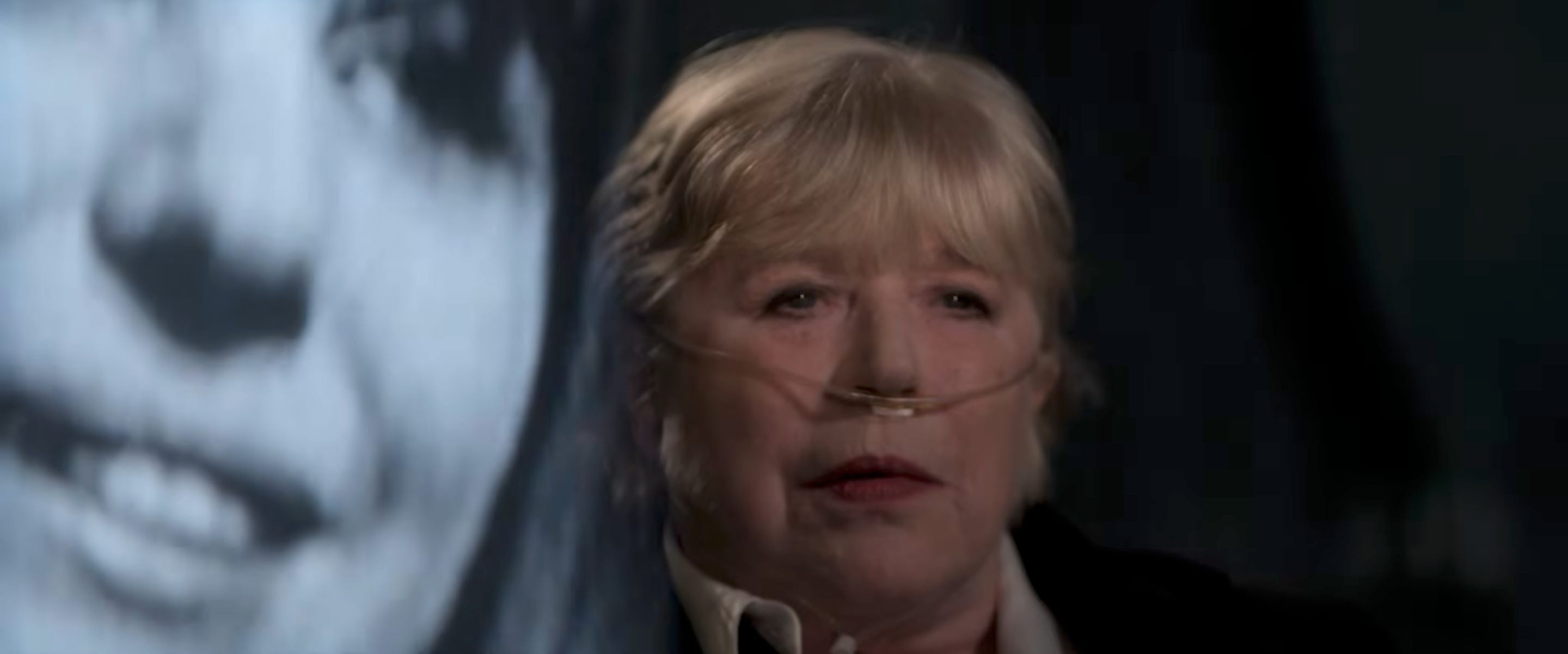
Another movie about a dying counter-cultural icon, this one a bit better known but nevertheless at risk of being forgotten. Broken English is whacky documentarians’ Iain Forsyth and Jane Pollard’s tribute to Marianne Faithfull, English folk singer turned New Wave crooner who died during the course of filming at age 78. If you’re paying attention to the wrong things, you’ll see this as a film starring Tilda Swinton and George McKay as two government cogs struggling to keep the doors open on a 1984-esque agency called The Ministry of Not Forgetting. Their first subject is Faithfull, because I guess she’s at risk of being forgotten? I don’t really get it, but they’re probably on to something: I would estimate about 80% of the audience at my showing were women born before 1960.
Forsyth and Pollard’s concept is over-determined, but the bones - get Marianne Faithfull in the studio, show her clips of her 60-year career, let her talk shit - is impeccable. Anyone who’s heard “Why d’Ya Do It” knows what kind of cussing she’s capable of, and even confined to a ham-fisted gimmick she still gets to the gullet. The archival footage is great,2 but the most moving footage comes from the present: Faithfull in breathing tubes and a casual tuxedo, not at all grandmotherly but more than a little doting, shaking her head at six decades of men who couldn’t figure out how to take her seriously. “In spite of all these things,” she spits, “all these stupid interviews, and all these stupid men, I’ve actually lived a lovely life. So fuck ‘em.”
60 years of being fucked over is probably a whole lot better for the soul than unlimited success. Forysth and Pollard present Faithfull as the smartest person in the room, willing to hear out anyone’s opinion but fundamentally disinterested in its value, always interested in making art but never getting precious about it. Faithfull couldn’t be a less annoying hagiographic subject. No need for Dylan’s self-mystification or Bowie’s arty re-invention - Faithfull takes the more baffling route of telling everyone straight that just because she’s a legendary alcoholic doesn’t mean that every song she sang about alcoholism is biographical. To say this politely while still cussing out anyone who is too stupid to realize it requires a certain conversational magic that they don’t teach us in America.
It’s pretty obvious that it’s coming, but there’s a surprise at the end that cements Broken English as an important piece in Marianne Faithfull’s history in and of itself. For as much as I was annoyed with Forsyth and Pollard’s cleverness, they end up documenting a perfect conclusion to a beautiful career. Young men don’t get all that many opportunities to cry along with a room of 70-year-old women. What a privilege to do it here.
Broken English doesn’t have American distribution. It’s hard to imagine it will find its way into stateside theaters, but I imagine it will show up on MUBI or something, so keep your eyes peeled.
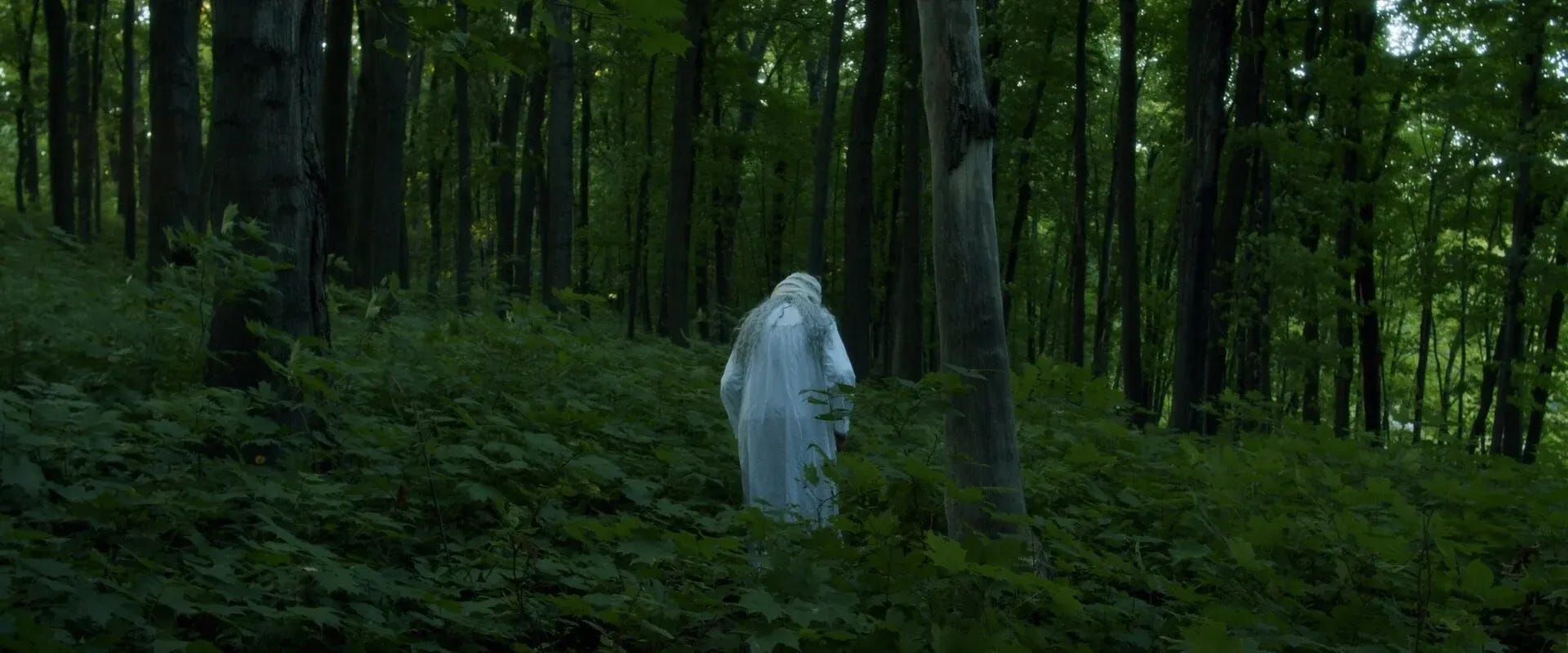
Jayendra Ganta’s debut feature Anda is about as low budget as movies get and still looks better than The Christophers. Filmed almost entirely inside a classic Twin Cities Craftsman house (with the occasional shot of Lake Nokomis), it was made by a hyper-local crew of first-time filmmakers who, in their post-film Q&A, seemed almost gleeful about how little they knew about what they were doing.
Amateur hour though this literally is, Anda is a lovely-to-look-at contemplative horror film that holds tension, manages pathos, and weaves together genuinely interesting sonic and visual ideas. “Succeeds at being a film” seems like a low bar, but I can think of quite a few multi-million-dollar dark fantasy films that can’t clear it. A blend of Scandinavian and South Indian folklore with a sprinkle of mothman, Anda tells the story of Norma, an aging woman (theater actress Amy Warner in her first leading film role) who gradually loses touch with reality after meeting a crust-punk-adjacent lady who may or may not be a younger version of her mother. Things start to fall off the rails as Norma flickers between the child, maiden, and crone version of herself, and the vibes don’t improve when a bandaged apparition with a vibe not dissimilar to the Eraserhead baby shows up in the guest bedroom.
The degree to which this completely effective movie was made on the fly is a testament to the spirit of cheap filmmaking in this year of bloated mega-projects. The entire film is shot with shaky handhelds, which for about two seconds feels cheap but almost immediately transforms into an organic intimacy that wouldn’t work any other way. All of the film’s diagetic art was made by producer and co-writer Caleb Bell-Jones, who became de facto art director after a scheduling SNAFU forced him to throw it all together in under three hours. The script was written with minimal dialogue in order to be shot as fast as possible, a strategy that backfired when Ganta discovered that dialogue is much easier to film than perfectly composed silent shots. Somehow, it all comes together. As Bell-Jones put it in the Q&A, “Doing it wrong shouldn’t be a barrier - you’ll find out.”
It would be crazy to say that Anda is a flawless movie. It has many of the problems you’d expect from a movie made with zero dollars in two weeks in Minneapolis. But the creativity of this team, and their willingness to limit their film to those limitations, and their flexibility to fill in the gaps with crazy sound design, meditative creepiness, and longing silences, is a testament to everything that makes micro-cinema a worthwhile enterprise. Ganta and co. have figured out how to make something beautiful and say something true without quitting their day jobs. I hope they’re up for trying it again.
Anda already won Best Feature at New Jersey Film Festival and will hopefully win something at MSPIFF. Keep an eye out for it around the Twin Cities or at your local independent film festival.
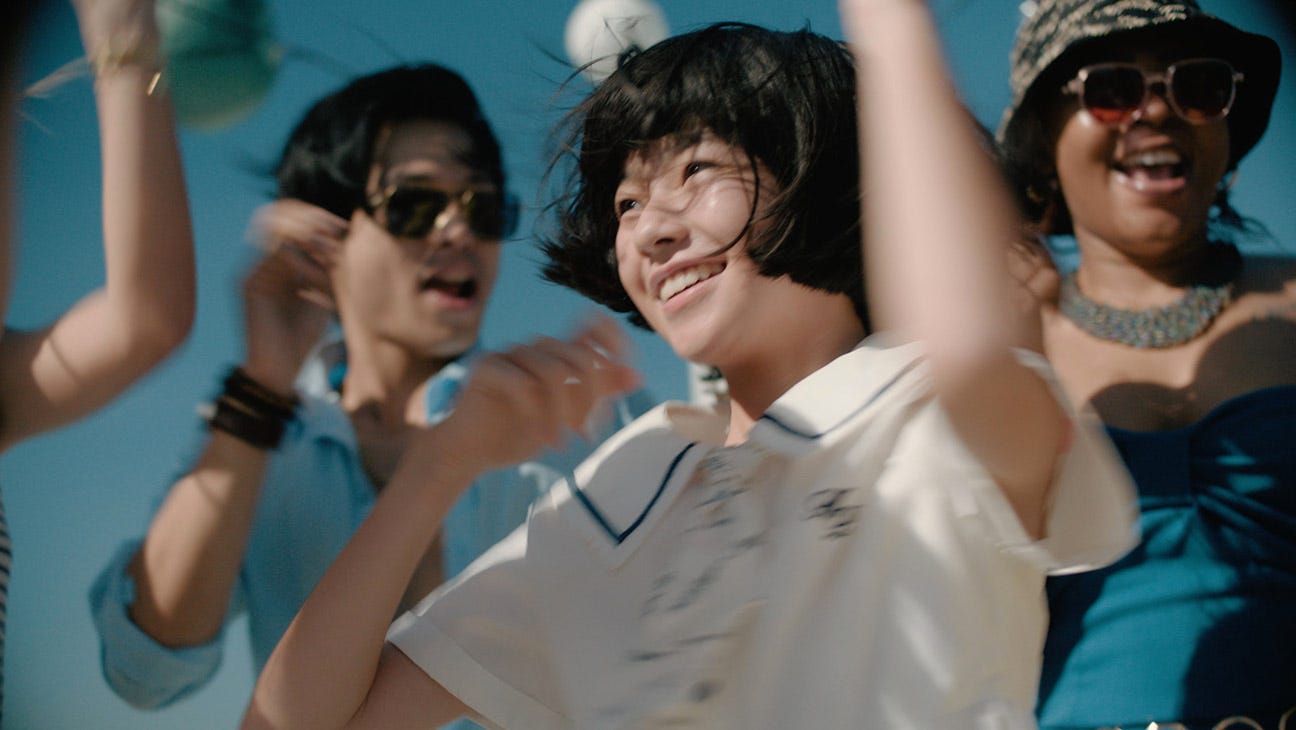
MSPIFF keeps rolling through Sunday. Lots more coming this weekend: Chie Hayakawa’s Renoir (saw it last night, thought it was great); Erupcja, the latest stop on the Charli XCX cinematic world tour; Carla Simón’s Romería; and of course, Sophy Romvari’s much-beloved Blue Heron. I’ll be back with all that and more next week.
Though of course we all remember Jim Broadbent’s iconic performance in the much-discussed modern masterpiece Iris.
If you can’t put up with the artifice of Broken English, you can at least get joy out of gems like an early ‘70s, post-overdose interview where Faithfull moans, “Just imagine having to sing “Satisfaction” when you’re 45.”
Thank you for the Ben and a theatre full of 70 year old women crying image, I will cherish it.