
francis, figgis, fiasca
francis ford coppola, mike figgis, and the late david graeber celebrate megalopolis's first birthday

My goal with this newsletter is to write about new films as they reach general release and to feature seasonally appropriate commentary on other cinematic events and interests. This week we’re celebrating Megalopolis’s first birthday with a messy attempt at understanding it via Mike Figgis’s phenomenal new documentary Megadoc and the work of the late David Graeber. This newsletter comes out every Friday, which this week means Saturday afternoon.
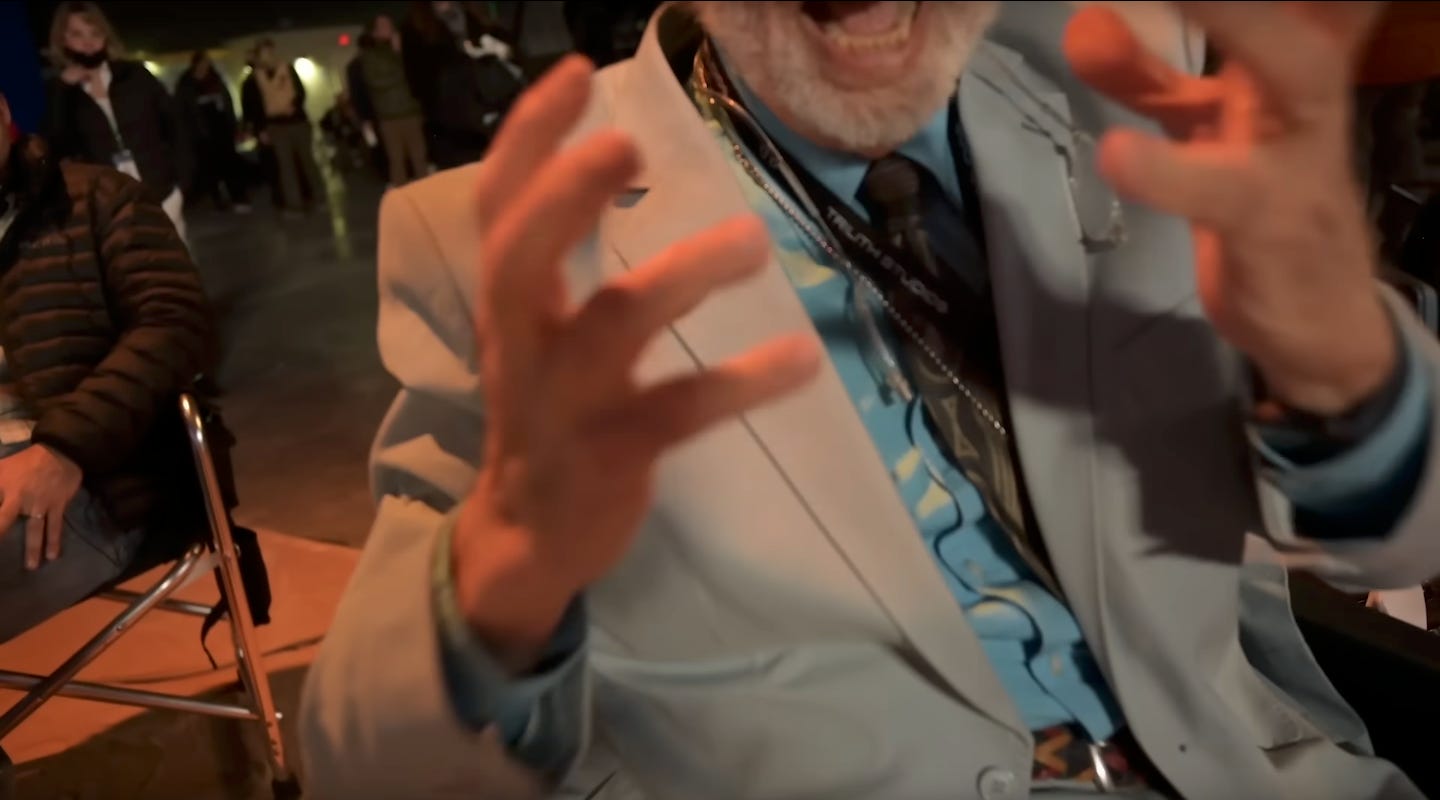
“WHO CARES IF YOU’RE BROKE IF YOU MADE SOMETHING YOU BELIEVE IS BEAUTIFUL?”
Anthropologist, anarchist, and people’s champion David Graeber died in 2020, well before his time but not before the culmination of his life’s work, The Dawn of Everything, a non-linear history of humanity. Written in collaboration with archaeologist David Wengrow, The Dawn of Everything argues that we aren’t fallen modernists who need to get back to the paradise of primitivism, and we aren’t cogs strapped into the train of constant progress - instead, we’re participants in a messy group project that ebbs and flows without any concern for pervasive patterns of development. We do a lot of things for a lot of different reasons, and we have the innate capacity to change our minds and do something else.
Graeber died too soon to learn that Francis Ford Coppola was embarking on the culmination of his own life’s work, a forty-years-in-the-making cinematic epic that re-sets the fall of the Roman Republic in near-future New York. I don’t know anything about Graeber’s movie taste, but I’m not sure he’d think much of Coppola’s premise. And I really don’t know what he’d think of Coppola’s 2023 Instagram announcement that the literary works inspiring his project weren’t your typical cyclical-history-guy names (Gibbon, Spengler, Strauss-Howe) but David Graeber’s populist trilogy of Debt, Bullshit Jobs, and The Dawn of Everything. (Wengrow’s only response, via Twitter, was “Jesus”.)
Anyone familiar with Megalopolis and Graeber might be at a loss for what Coppola’s film has to do with an anarchist survey of anthropological history. Really, most people might be at a loss for what Megalopolis has to do with anything. The movie is a fiasca: ugly, on the nose, incoherent on every level, and plagued by allegations of sexual harassment to boot. It cost $120 million in Coppola wine properties and made just over $10 million. Since leaving theaters it’s been rendered unwatchable: unavailable on Blu-ray, unavailable on streaming, only shown at select Coppola-approved screenings to preserve the sanctity of the theatrical experience.
The only defense of Megalopolis, from critics and from the people who worked on it, is that it’s not about what it achieves, but what it tries to do. It’s a manifestation of the swing, a celebration of the possible blasted out with no fear of ending up in the second deck behind home plate. If it fails to present a convincing vision of the politics of tomorrow, it succeeds in conjuring a future where people look back and say, “Megalopolis was the greatest film of the 21st century.” Or, as John Voight says in the new production documentary Megadoc: “It’s not something you understand; it’s something you see as a possibility.”
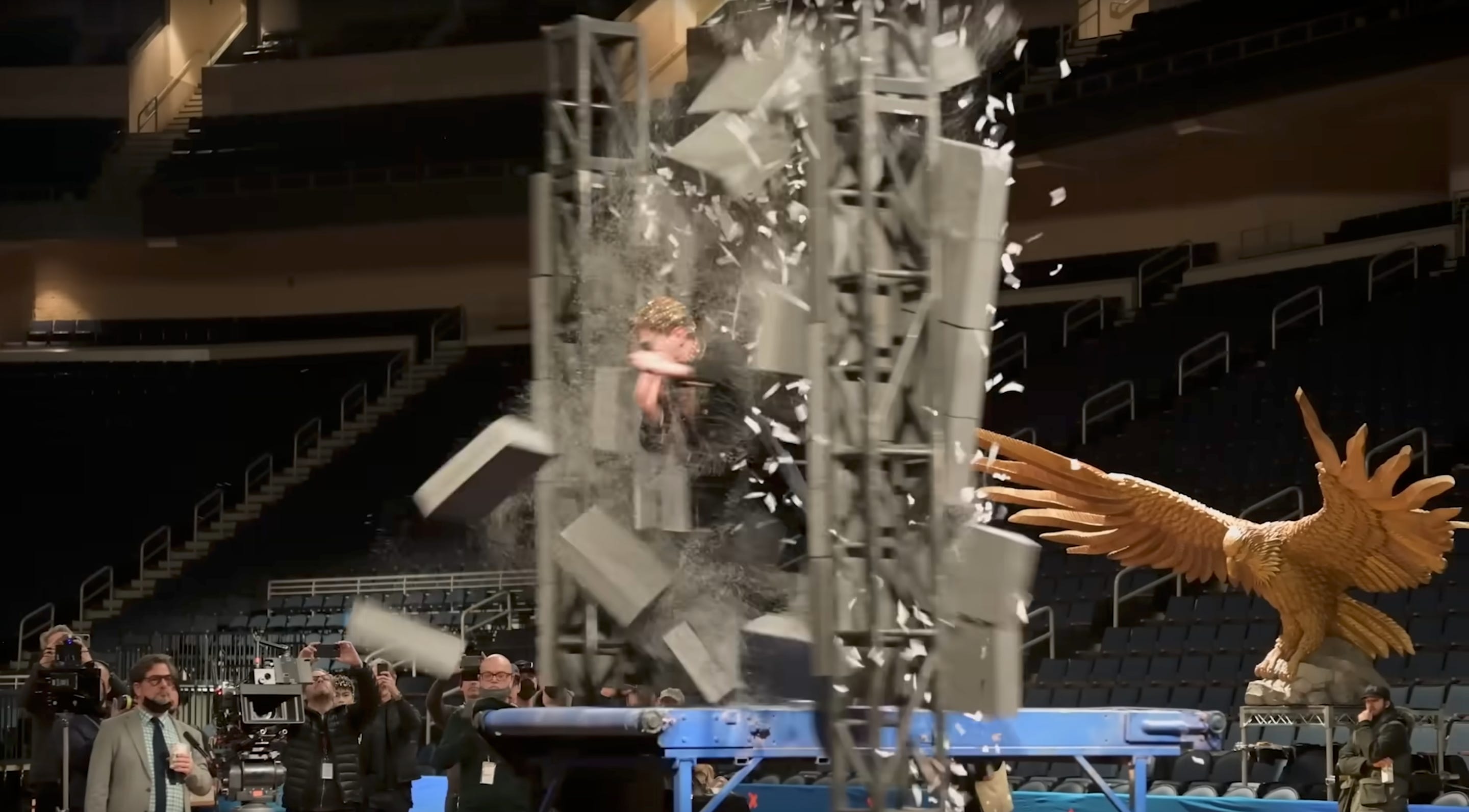
“ABANDON ALL WORRY, YE WHO ENTER HERE”
I’d love to lay out a coherent argument for how Megalopolis, as revealed through Megadoc, is an artistic manifestation of Graeber’s theory of social development. And - my computer died on Wednesday morning, I’m currently writing on a new computer and don’t have access to a lot of notes, my job is busy, and honestly, it’s really hard not to think about One Battle After Another right now. In the end, this is a fairly academic thesis that’s difficult to develop when the central text is unavailable for home viewing and you keep forgetting your copy of The Dawn of Everything at work. So the rest of this is going to be messy. I think what I’m doing here is called “enactment,” which is a great way to explain away writing that reads like shit.
Megadoc was made by Mike Figgis, a storied filmmaker and friend of Coppola who was invited to film the entire production of Megalopolis from start to finish. It’s obvious from the start why Coppola wanted the documentary to happen: in his mind, Megalopolis is less a finished product than an event. His dream isn’t to make the perfect movie he’s had in his head for half his life: he wants to transform the way movies get made. It’s less important that things hold together than that they’re done in the way he wants them to be done. If the result is a success, wonderful. If it’s a failure - well, at least we had fun.
Coppola starts by assembling his cast in what looks like a high school gym and engaging everybody in a series of theater games. Dressed in vinyl slip-ons and mismatched socks, he takes on the role of embarrassing drama teacher. He points to a sign on the wall that says, in Latin, “Abandon all worry, ye who enter here.” He makes everyone hold hands and shout out nonsense phrases. When anyone tries for subtlety, he gets them to go bigger. Like all high school drama teachers, his goal is to get everyone comfortable with doing things they’d normally be too cool to do.
It doesn’t last. By day ten of shooting, the cast and crew are aware that there isn’t really a plan. There’s an idea, for sure, but it’s not clearly communicated across the massive production. Coppola brushes that off, reminding everyone that they’re participating in a collective act of creation. All ideas are fair game. This is beautiful until it becomes evident that some people need direction while others are primed to take a mile for every inch. Shia LeBeouf, fresh of cancellation and right around Step Nine, starts to challenge everything Coppola asks him to do. Giancarlo Esposito acts like he’s the only person on set who’s ever made a movie. Dustin Hoffman wanders in and acts like Dustin Hoffman. Aubrey Plaza rolls her eyes at Figgis’s camera at every available opportunity. Nathalie Emmanuel refuses to be filmed eating.
There’s a certain percentage of the audience who will see Megadoc hoping for reality-TV disaster footage, waiting for a Shia shit-fit, or a collapsing piece of scenery, or evidence that Coppola is a gross old louche who spends more time smoking weed naked in his trailer than directing. But Figgis resists the urge to lean into misfortune and does his best to understand what everyone thinks they’re doing. As things get worse - as the production crew quits, as days are spent producing ten-second practical-effects shots that look like mid-’90s CGI, as Shia ruins take after take with terrible ideas - it becomes increasingly clear that an 82-year-old man can’t manage a project this large with no production support and no financiers saying “no.” And he knows it. During week one he’s responding to technical mishaps with speeches about how we’re in the process of reclaiming the lost art of play. By week two he’s bemoaning how much better things were in the old days when everything was simple.
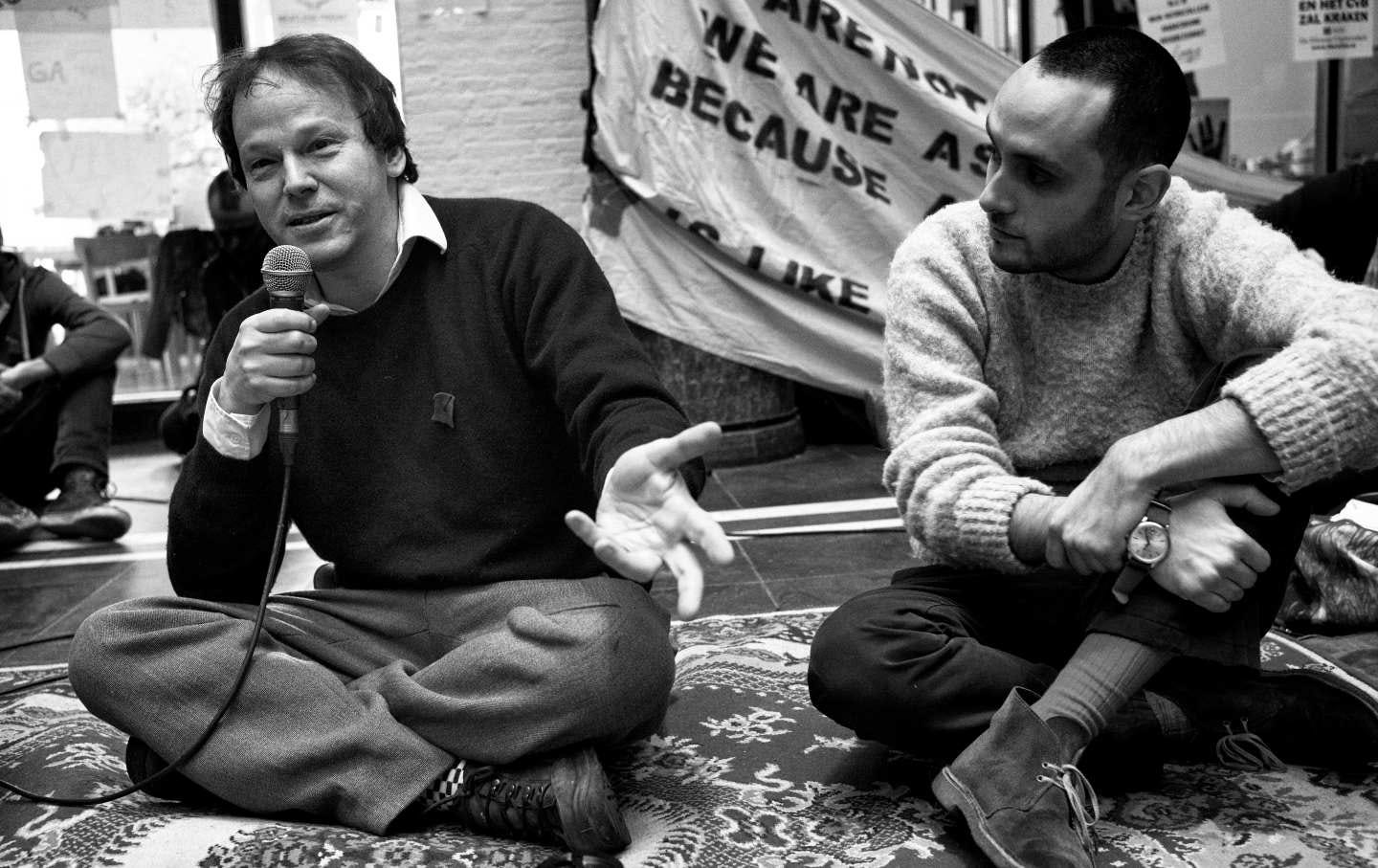
“THAT’S JUST MY PHILOSOPHY, I MIGHT BE WRONG.”
Graeber and Wengrow’s theory of social development is that the history of humanity is neither cyclical nor progressive. It’s not exactly random, either - there’s just a lot going on, and because of that there’s no discernable pattern. Societies do things a certain way, and then they stop, for all sorts of reasons. Sometimes a highly technical, “developed” society abandons cities and shifts to de-centralized, clan-based units. Sometimes societies achieve access to a technological advancement and shun it completely. Graeber and Wengrow offer tons of case studies from across the world. They present evidence that cities long pre-date agriculture. They argue that North America was a technically advanced, semi-united network of nations, every bit as sophisticated as Europe but unrecognizable to colonizer eyes. They demonstrate that the Mayans developed large cities with complex social housing, and that they abandoned them for unclear reasons that might have had to do with revolution.
If there’s a political/philosophical takeaway, it’s that life isn’t locked into an unbreakable progression. We are capable of reminagining and reinventing the world, and we don’t need to wait for cycles or whatever other paths we imagine we’ve been suckered into to make that happen. This more or less sums up the political idea that David Graeber fought for his entire life: we are the 99%, and we are in control of our destiny.1
This might not jive with your politics, but it’s a fascinating theory to apply to art, both as product and as process. If you abandon the typical rules of narrative and instead let your story go whichever way it wants to take you, you might end up with something fascinating. And if you abandon the rules of project management, you might start off with a limiting idea and end up with something previously unimaginable. Either way, it’s a risky endeavor. You might get a late-career masterpiece that alienates most people but resonates for a few as a towering achievement of 21st-century art. Or you might spend forty years obsessing over an idea, change directions three or four times, throw away your children’s inheritance to make it happen, and end up with an incoherent assembly of expensive images and soundbites that will only be watched due to your clout as the creator of four of the indisputably best films of all time. Everybody’s somebody, and we all do it different. Per Graeber, that’s sort of the point.
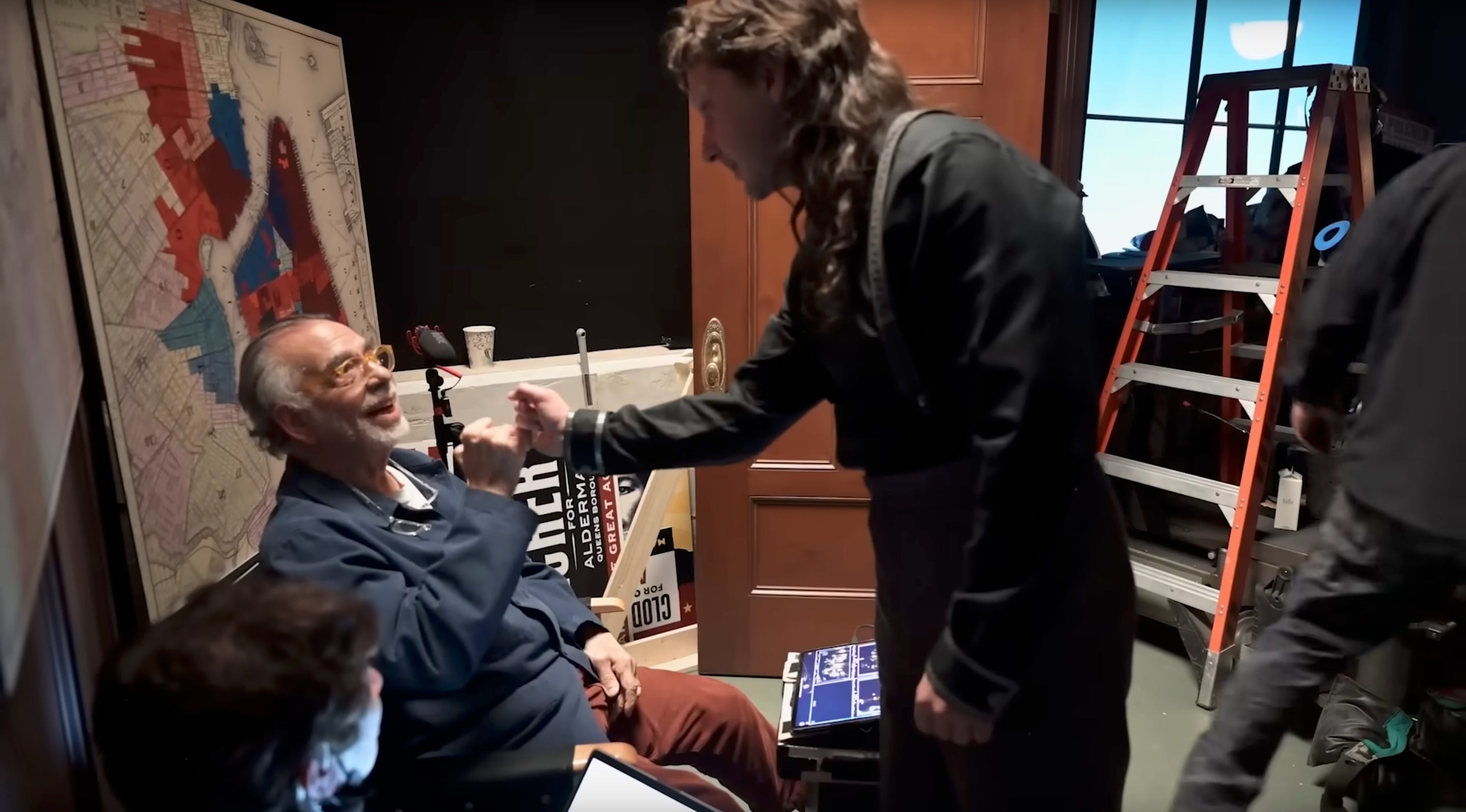
“FILM IS THE ONLY ART THAT KILLS ITSELF.”
There’s a dubious quote from Coppola on IMDB about his 1996 disaster Jack:
“I must say I find Jack sweet and amusing. I don’t dislike it as much as everybody, but that’s obvious - I directed it. I know I should be ashamed of it, but I’m not. I don’t know why everybody hated it so much. I think it was because of the type of movie it was. [. . .] But I was always happy to do any type of film.”
After watching Megadoc, I’m 100% convinced he actually said this. Coppola is a guy who loves making movies. Part of the reason he made his 1970s run of masterpieces is because he’s always been willing to make everything, and everything includes “perfection.” Megalopolis comes off as his full embrace of that everything-ness, a production where he can finally foster a space for everyone to do everything they want cinema to do.
There are three moments in Megadoc that expand Coppola’s theory of cinema, all resulting from arguments with Shia LeBeouf. The first comes after Shia attempts to dismantle a completely ordinary interior scene. Coppola sits him down and asks him why he Megalopolis needs to be made. “I have money, I already have fame, I already have Oscars. What do I get that I want?” Shia insists that he’s doing it for art. “I made The Godfather,” says Coppola. “I already have art.” Shia continues to insist that it has to be art. Coppola cuts him off. “Fun! I want to have fun!”
Later, after Shia insists for the 30th time that Coppola’s direction isn’t lining up with his perceived reality of his character, Coppola sits him down and asks what a movie is. Shia says something stupid about capturing life. “It’s flashing lights on a screen,” says Coppola. “Nothing on screen is real.” Shia insists that yes, what’s on screen is real: “You might not believe it, but I do.” Coppola, demonstrating enormous patience for insanity, ignores him: “The only thing that’s real is the audience.”
Finally, at one of Megadoc’s darkest moments, after a day beset by production- and Shia-related misfortunes, Coppola turns to Figgis in despair: “Film is the only art that kills itself.”
Somewhere in there is a thesis about cinema and its ability to enact the human political experience. I don’t have it yet, but I’ve only been working on this essay for a week. Maybe in a year or forty I’ll get there.
“THE HUMAN BEING IS THAT, GOD DAMN IT”
OK I’ll try. What’s clear from Megadoc is that Coppola isn’t just a nut but a genuine believer in both the potential of the human race and the glory of the cinematic form. He truly believes in a positive vision of collaborative creation, one where freedom is more important than avoiding mistakes. Megadoc suggests that Megalopolis could have been more if only everyone was willing to play as much as Coppola. It might never have gotten made, but it would have been an even more glorious failure.
This is the Graeber of it all. Human life - maybe life in general - is a glorious failure, always an attempt at doing something more than we can actually do, and always falling to pieces in the end. The central lie of cinema is that life can fit within an artistic vision, pared into an orderly series of flashing lights that project sequences comprehensible to human perception. One way we tell that lie is when we argue that a “perfect film” is one that bullies life into something orderly and easily digestible. Another is when we pretend that the drive for perfection doesn’t exist. Megalopolis negates both lies by exposing both its visions and its failures by means of itself. It’s framed as potentially the greatest movie ever made, and it spectacularly fails to achieve it.2 In doing so it suggests that humanity will never pull off its wildest dreams - and demonstrates that the flexibility to give up, adapt, and try something new in pursuit of those dreams is the innate instinct that keeps us alive.3
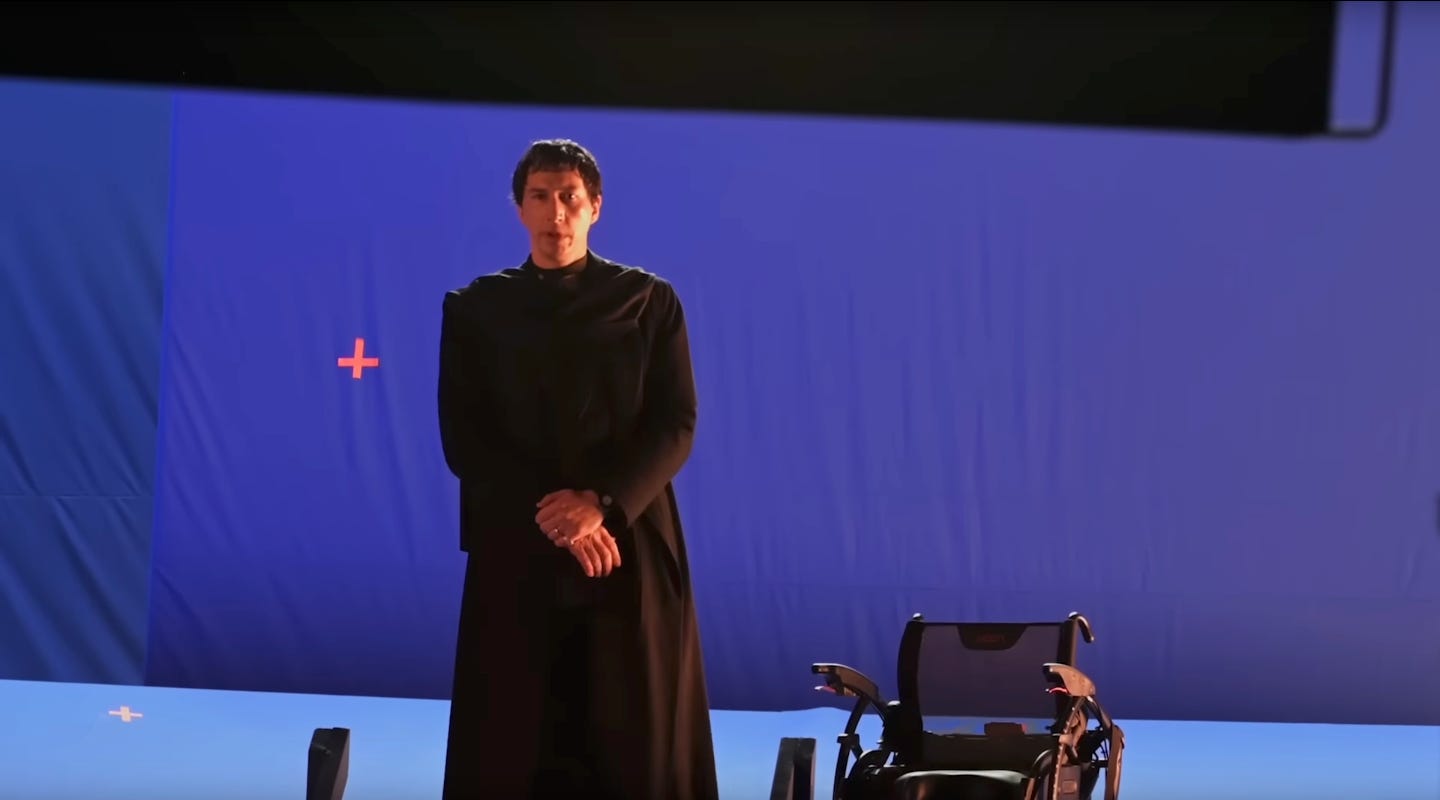
One of the last scenes filmed for Megalopolis is a speech by Adam Driver about his vision of the future of humanity. It’s the point in the script that is most clearly adapted from Graeber, beginning with freedom from debt and building into an exploration of communitarian life without boundaries. It’s corny, it’s on the nose, it’s given in front of a blue screen by a guy who looks like he forgot to do a costume change from his Star Wars shoot. I honestly don’t have the damnedest idea what the speech is about - I lost the current when I saw the actual movie, and I lost it again when I saw it in Megadoc. But Coppola gets it, and he applauds it like a true believer. “Bravo!” shouts Coppola. “The human being is that, God damn it!”
This is a sound of a man living out his vision of how cinema can bring about life as it should be lived. The cast and the crew indulges in play, releasing creative energy that exists outside the everyday and grasps at unimagined potential. The camera captures and kills that potential, and the projector casts it forward in meaningless, flickering lights. Why would you do this to life? Because someone out in the audience will see it and be reminded that they’re human and that they’re real and that they’re capable of more than what they see on screen. Who cares if the film doesn’t work? You don’t have to understand it. You just have to celebrate the possibility.

Thanks for reading *life is disappointing.* If you found this newsletter slightly less disappointing than the rest of your life, consider liking, commenting, sending me money (thanks!) or subscribing. Subscribing will get you exactly what you get here but sent to your email inbox. Come back next week - but more importantly go see One Battle After Another and be reminded that cinema is alive and life is worth living.
Graeber gets credited with “we are the 99%,” but, good OWS collectivist that he was, he denied sole responsibility for coining it.
The components around Megalopolis (the art theory term for this is the awful word “parergon”) are part of what makes this framing possible: the publicity, the press releases, the explosive trades stories, the hilarious trailer featuring bad reviews (and the additional story that some of those reviews were fake) - and, of course, Megadoc.
There’s an argument that Coppola’s infuriating habit - shared by Megadoc interviewee George Lucas - of re-editing his released films is an embodiement of this belief in adaptation. Or proof that he’s insufferable. People are complicated.