
i love you alive guys
matt johnson and jay mccarrol contribute to the public health with NIRVANNA THE SHOW THE BAND THE MOVIE // ira sach's captures the forgettable in PETER HUJAR'S DAY

My goal with this newsletter is to write about new films as they reach general release, along with seasonally appropriate commentary on other cinematic events and interests. This week we’re back on track with a spoilers-free celebration of Matt Johnson’s Nirvanna The Band The Show The Movie and a catch-up review of last year’s Peter Hujar’s Day. This newsletter comes out every Friday, which this week means Saturday.
One of my favorite social interactions is when someone describes a a comedy in excruciating detail and stares at you until you laugh. This usually happens when you’ve been hanging out with your neighbor for the fifth day in a row and normal activities like “give me the controller so I can beat this boss for you” or “hold the camcorder until I land this kickflip” have ceased to hold your mutual attention. The passive party can zone out for fifteen minutes and think about other things, and the active party will continue ad nauseum as long as you catch their eye every couple minutes and toss out the occassional forced laugh. I don’t often find myself in these interactions since becoming a socially functional adult, and I think I’m the worse for it.
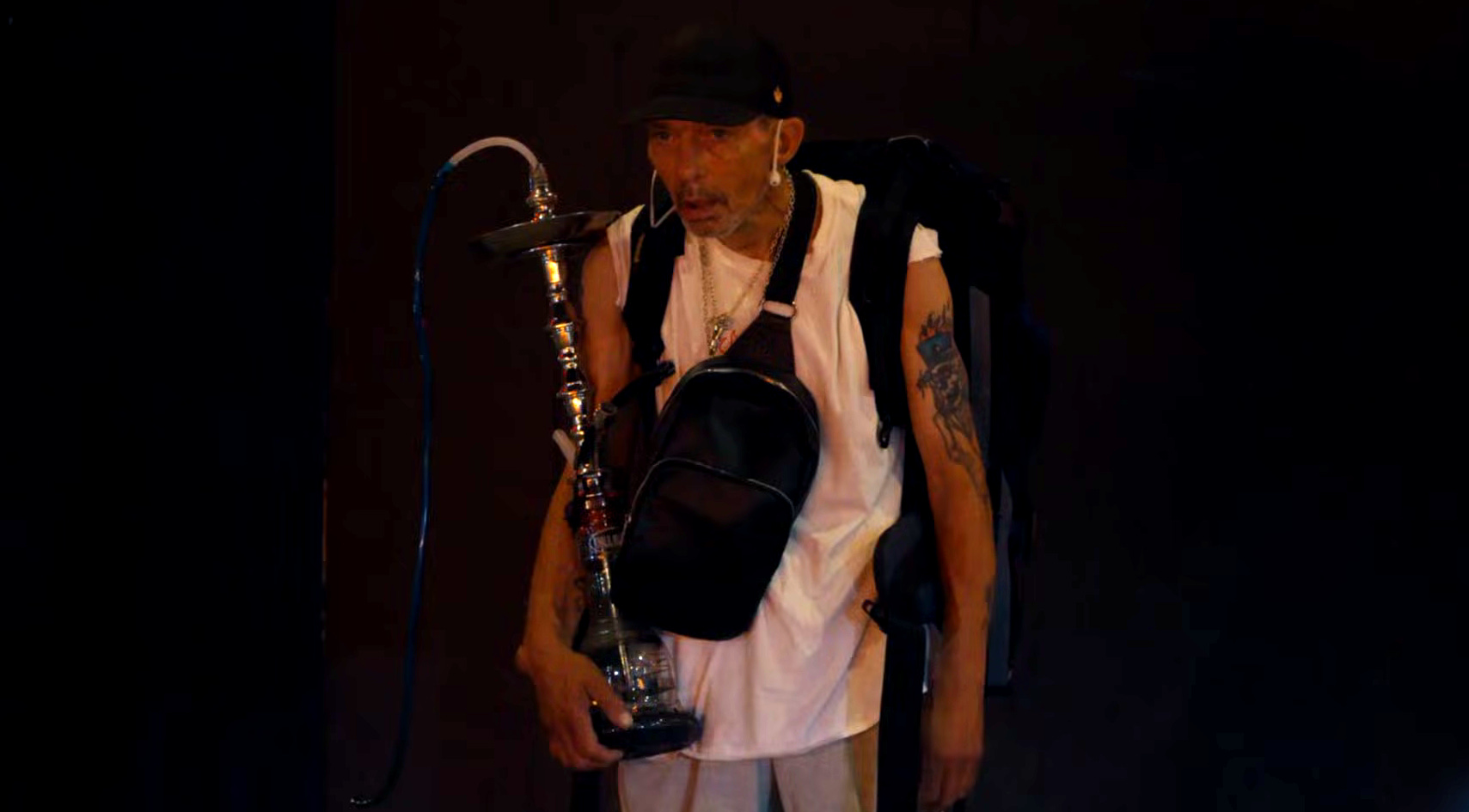
I’d love to summon that spirit and describe the funniest scenes from Matt Johnson and Jay McCarrol’s Nirvanna The Band The Show The Movie, but I was always the beta neighbor and never got any practice. That’s OK - you can use my critical weakness to your advantage. There is no reason to read about Nirvanna The Band The Show The Movie. You should just go see it. There’s no way to convince you that you should see it, but you should. There’s this one scene where the main guy, Matt, is drinking this discontinued pop from the ‘90s called Orbitz, but he still has a bottle of it leftover, and he says “What are the ingredients? Sugar, water, corn syrup, and it also says ‘lightning in a bottle’” and his friend Jay says, “that’s just the slogan, it doesn’t actually have lightning,” and Matt says, “Or does it?” And then - boom! Doesn’t that sound funny?
Seeing NTBTSTM in theaters is an essential act of self-care in these trying times, sort of like drinking water or remembering to eat breakfast. According to an anti-burnout training I had at work this week, laughter is essential because of something to do with “the neurosequential model.” I did some further research and discovered that some scientists have gone so far as to say that laughter is “the best medicine.” As an amateur observer, I have to agree: once in a while it's important to sit in the dark for ninety minutes and experience joy. Not Safdie-style horror-joy or Friendship-style wtf joy, but just simple joy in the fact that humans are alive and can achieve spectacularly stupid things for the sake of making other humans laugh. This is healing. You need this.
There are lots of good things already written about NTBTSTM, and I don’t have much to add other than to say that they’re correct. The only reasonable reactions are “how did they do this?” and “this is so funny,” plus maybe a sprinkling of “this is really sweet” if you’re sentimental and “I am so proud of my country” if you’re Canadian. It will inspire you to create the social circumstances to make anything possible. It will remind you that it’s worthwhile to hold onto both your dreams and your friendships. It will clear your brain of the compulsion to think about time travel. And if you are someone who is incapable of experiencing in-the-moment joy, it will at least make you marvel at some of the greatest meta-technical achievements of 21st-century cinema.
If NTBTSTM gets its fair day in court, it will inspire theoretical, practical, and legal arguments for years to come. It isn’t the first unscripted, documentary-style comedy, but it’s a leap forward in a genre that felt decades-buried dead. Our expectation for narrative cinema is that the director controls for most variables but occassionally adapts to disruptions. Our expectation for documentary cinema is that the director captures the unexpected but occassionally manipulates the footage to get what they want. NTBTSTM exceeds both, first by engineering open-ended set-ups that allow extraordinary things to happen, and then by back-building story arcs to incorporate the unanticipated turns. The production stories are insane. Things that look like set pieces are the result of pure happenstance, and things that seem unfilmable are the result of delicate social engineering. At one point during shooting, a news event occured outside a famous Canadian recording artist’s home; Jay and Matt raced to the scene, captured a sequence, and shifted the entire structure of their film to incorporate the footage. For the latter: at one point, a GoPro is attached to an unknowing bystander’s head to capture an indescribably dangerous scene; Jay and Mike manipulate the bystander, convincing him to turn his head at just the right moments to capture what is more or less a David Copperfield act.
You can get on Reddit and speculate what was real, what was faked, what was mythmaking, what was buried to avoid legal culpability. Or you can just experience Nirvana The Band The Show The Movie as a testament to what can happen when you hold life open for the possible. Beautiful things can happen if you put care into your conditions and don’t worry too much about the outcomes. And they can blossom if you open yourself to chaos and build on the unexpected. This sounds like philosophical advice for serious times, but sometimes what you do with the world around you is so stupid, so unimportant, so responsive to the simple joy of being alive that nothing matters but the hilarious moment surrounding you. If you’re struggling to remember what it feels like to live that way, figure out where this is playing and go see it. It might not be quite as funny as your neighbor summarizing South Park, but it’s close.
Someday someone is going to look back on the history of podcasting and wonder when we switched from Serial-style radio scripts to the four-hour chat sessions we endure today. It has something to do with parasocial relationships, something to do with modern advertising, and something to do with Call Her Daddy. Whatever the reason, podcasts have evolved into an excuse to listen to people chat, which is either the lowest form of entertainment ever created or a crystallization of the human need for communication. Or I guess both.
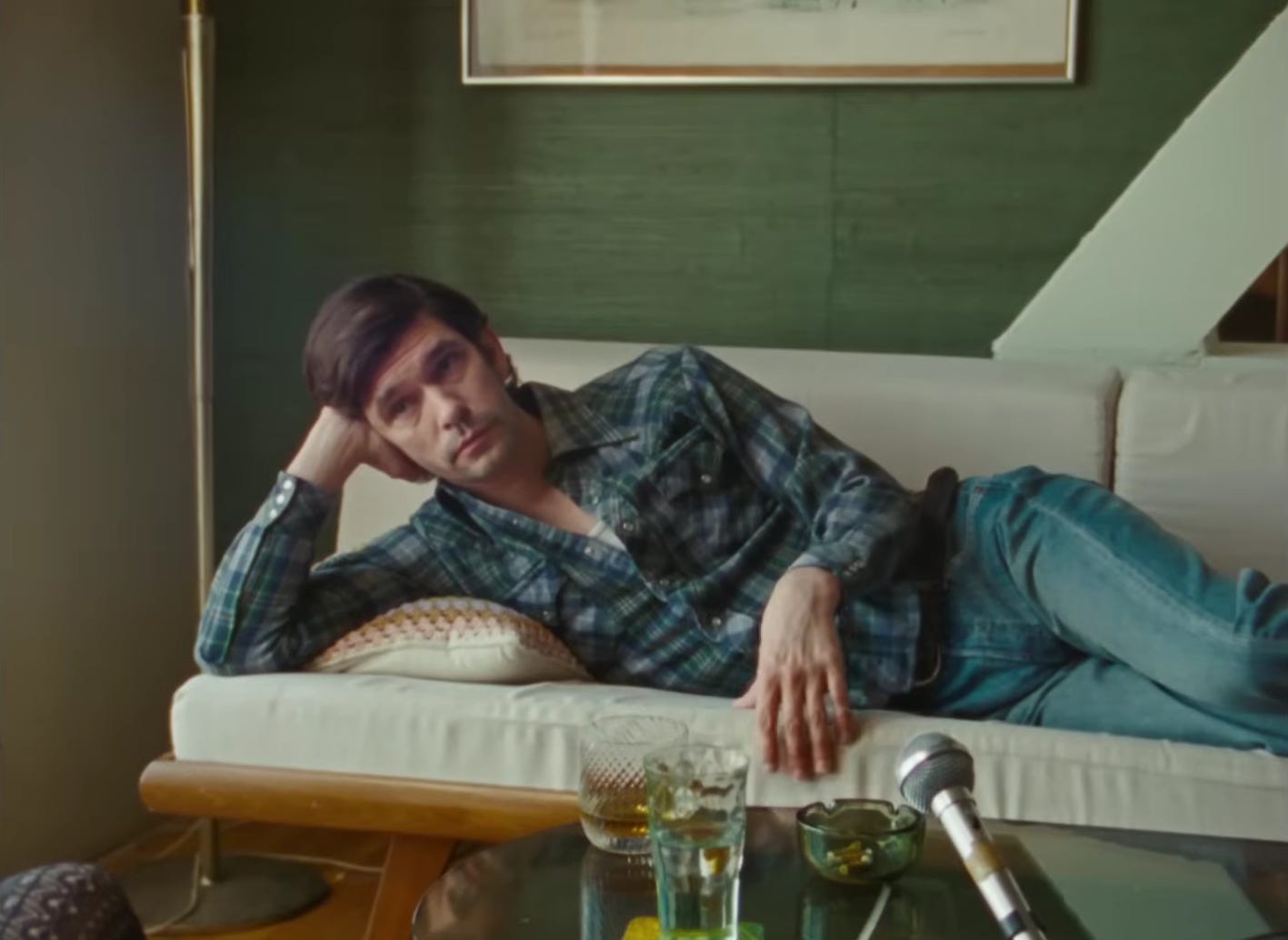
Ira Sach’s Peter Hujar’s Day is a movie about a time one person thought it might be interesting to record herself chatting with another person. The twist is that this happened in 1974. The chat is about how they’re chatting about everything that happened to one of them (the titular Peter Hujar) the day before (his titular Day). Sometimes it’s a recounting, and sometimes its a discussion of the fact that it’s being recounted. Sometimes what’s depicted is the recording of the conversation on magnetic tape; sometimes what’s being depicted is the recreation of the recording being filmed on 16mm cameras. Very little happens, very little is explored. All we get is a cross-media expansion of a fifty-year-old chat.
The original Peter Hujar’s Day was a failed project of writer Linda Rosencrantz. Rosencrantz had hoped to record interviews about the daily life of her interesting friends, the better to understand what she perceived as the inanity of her own life. The project never took off, but Rosencrantz managed to record and transcribe one interview with her friend Peter Hujar, a New York street photographer whose career was just on the verge of taking off. The tapes were lost, but the transcription was finally published in 2021 as Peter Hujar’s Day (the book). Ira Sachs turned it into a screenplay and brought Ben Wishaw and Rebecca Hall along for the ride. Instead of doing the normal thing and recreating the Day in question (which Hujar recounts in excruciating detail, down to what Alan Ginsberg didn’t offer him to eat and when exactly he put on his socks), Sachs recreates Hujar and Rosencrantz’s conversation. And instead of convincing us that we’re watching an authentic conversation, Sachs regularly reminds us - through classic meta-film strategies like double takes, outside-the-set shots, and intrusive boom mics - that we’re watching a recreation of a conversation that should have been lost.
There’s no reason this project should succeed, and if it were longer than 71 minutes it might collapse under the weight of its pretense. But the meta-cinematic elements strip away the disbelief that’s always so hard to suspend in period recreations, and the meta-conversational elements break down the viewer’s indiffference about the subject matter. What’s left are the raw words of a long-past friendship rendered authentic via undisguised artifice. The Day is buried underneath the recounting, the tape is lost to history, the film is self-aware in its status as recreation - the only connecting fiber are the actual words of an actual conversation between actual people that just happened to survive across a century.
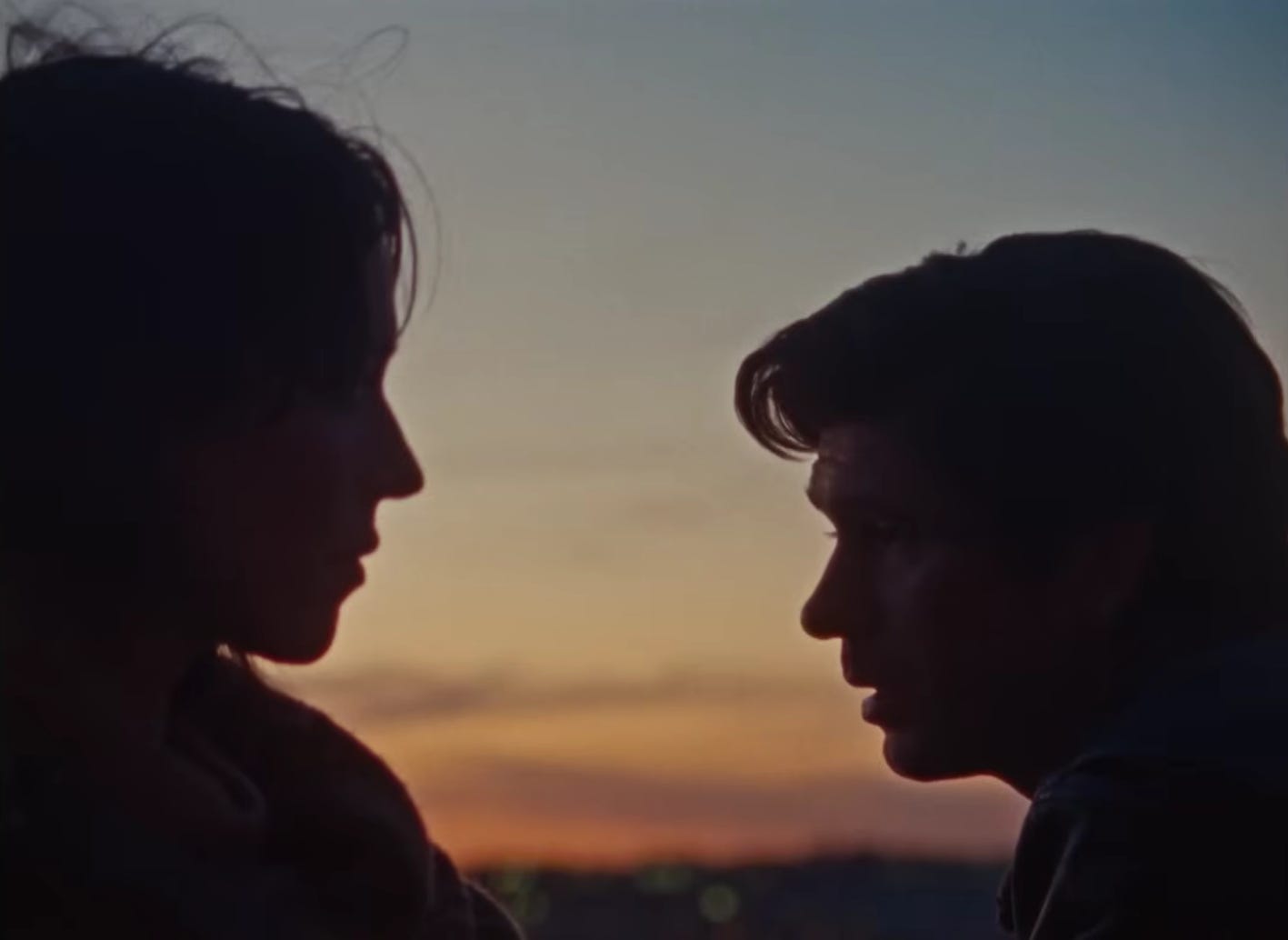
Undergirding Peter Hujar’s Day is the impending death of a gay man as he opens up to his friend without fully admitting the pain of his circumstances. AIDS is just around the corner, and the setting sun and the Mozart’s Requiem drops are not astoundingly subtle reminders that this is a record of mortality. It makes a good double-feature with 2025’s other chatty gay artist movie about death, Richard Linklater’s Blue Moon. Both films refuse to lean into depression and instead stay alive on the inanity of gossip. You could listen to these men patter about nothing because the sad lives around them are an opportunity for their words to shine. Like a podcast, those words invite you into relation with someone you’ve never met. To capture them on film is to memorialize a potential friendship long passed. For Lorenz to alcohol, for Hujar to AIDS - and both of them to time, their voices lingering and summoning up a long-past New York that now feels impossible.
I think this is true of any record of a conversation no matter when or where it was recorded. A transcript will always be a frozen artifact of a lost moment that only existed between the people talking. The contemporary podcaster’s New York feels just as impossible to me as Peter Hujar’s. It’s a New York created through the sound of a voice removed from the context of ordinary life and caught up in the magic of its own mythology. Even at its most inane, it renders boredom into something special and unique and wonderful. Which is maybe what any good conversation does. The least interesting things are turned into magic when we’re with our friends. If we pay attention to that alchemy, the same can be true of their settings. An ordinary Lower East Side apartment becomes a triumph of Midcentury design. The slats of light from the setting sun render late afternoon into abstract-expressionist transcendence. A casual reminder of the need to eat becomes a cue for the Mozart Lacrimosa. Ira Sachs isn’t the first person to do this, but it’s wonderful to watch something so boring transform into something so beautiful. Someday we’ll look back on the inanity of our current conversations and remember them as the most glorious parts of being alive. You can let the words slide by if you want. Just remind yourself that it could be a memory and be happy to live in it.
Thanks for reading *life is disappointing.* If you found this newsletter slightly less disappointing than the rest of your life, consider liking, commenting, sending me money (thanks!) or subscribing. Subscribing will get you exactly what you get here but sent to your email inbox. Next week I think I’m going to deal with the sloppy trilogy of Gothic novel adaptations that have assaulted our our streaming platforms and cineplexes over the past several months. Either that or Pillion.