
raised on promises
needle drops, film stock, analog, and NOW in the greatest film of the 21st century

The subtitle is a hyperbole, maybe. My goal with this newsletter is to write about new films as they reach general release and to feature seasonally appropriate commentary on other cinematic events and interests. I could write a long review about why One Battle After Another is probably the best movie of the past ten years, but what’s the point? These things speak for themselves. I’m focusing instead on PTA’s use of VistaVision and what that has to do with maybe the greatest needle drop since “Mean Streets.” SPOILERS - I am diving right in and I’m not proving much context. If you haven’t seen it . . . bring your ass.
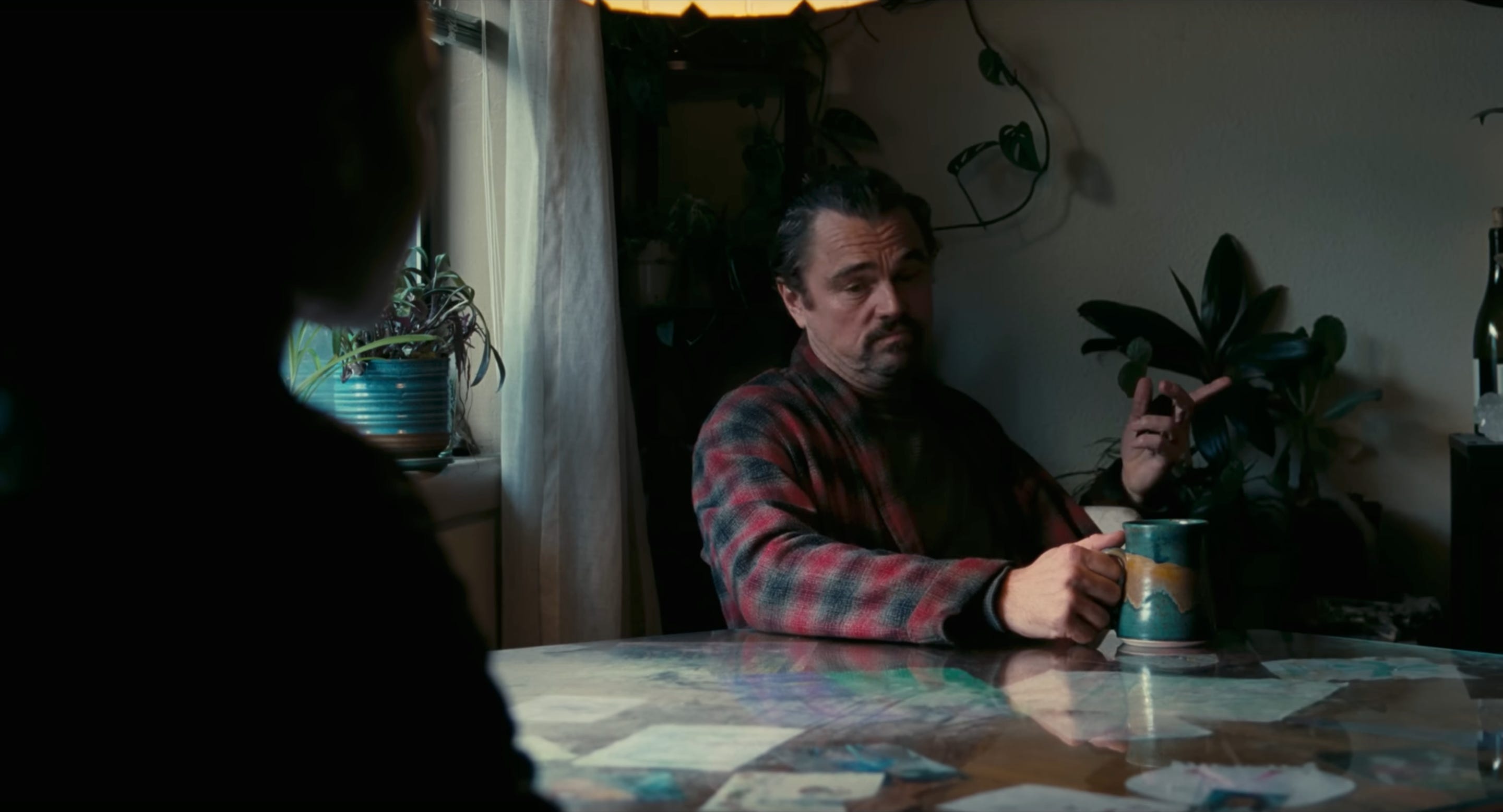
About a third of the way into One Battle Afer Another, Bob, trying to explain away a night of bad behavior to his teenage daughter, finally invokes the meta-elephant in the room:
Turns out Albert bought all this old equipment from, uh, from Steely Dan’s old studio to try to get that, that sort of vintage, you know, that sort of crackling tube sound. You don’t need any of that stuff anymore. He, he, he brought out a computer program - boom! with a press of a button -
I have tried but mostly failed to understand the complexities of the Steely Dan sound. From what I can tell, it doesn’t have a lot to do with crackling tubes, and it probably requires a whole lot more than a press of a button to recreate it. But it’s undeniable that the extreme cleanliness Becker and Fagen lost their minds over in the 1970s is significantly easier to achieve since the advent of digital recording. Bob doesn’t know what he’s talking about, but he’s right: in 2025, for normal people, the sonic difference between analog and digital doesn’t exist.1
What Bob doesn’t get - at least when he’s bullshiting away a hangover - is that, despite the vast array of digital buttons, there are no bands in 2025 that sound like Steely Dan. Really, there are no bands at any point in history that sound like Steely Dan, because what can’t be recreated is the labor that went into Steely Dan’s sound. The end result isn’t (just) the crackling tubes - it’s the care for recording and the fight against its failings. Analog recording is the result of a very different kind of work than digital recording. It requires a preciousness about levels and takes that transforms the way the record is made, which transforms the sounds it contains, which is why people continue to obsess over Steely Dan fifty years after the fact.
It’s also why they obsess over their physical media. You know how hard these guys worked, and you want to give a little bit back. You want to take the LP out of the case, put it on the player, line up the needle. When that needle drops, the labor aligns, and it comes through in the pops and clicks of a record that has been played and replayed across five decades: a recording of Becker and Hagen’s studio agony, but also the dust and the bumps and the cigarette smoke of everyone who came between their time and yours. You’re participating in a legacy, the same way Bob’s friends want to participate in a legacy by buying Steely Dan’s old equipment. The sound isn’t the point. It’s the work, it’s the memory, it’s the shared human experience.
I haven't had the joy of seeing One Battle After Another on film. I’m curious how much film projection matters from a sensory perspective: I know when a screen is big and I know when a speaker is loud, but I can’t say for certain that I’m able to perceive a difference between all those formats Ryan Coogler so kindly explained to us. We’re told that the film experience is meaningful, but our eyes aren’t trained to assess film stock any more than our ears are trained to hear the ghosts in Katy Lied.
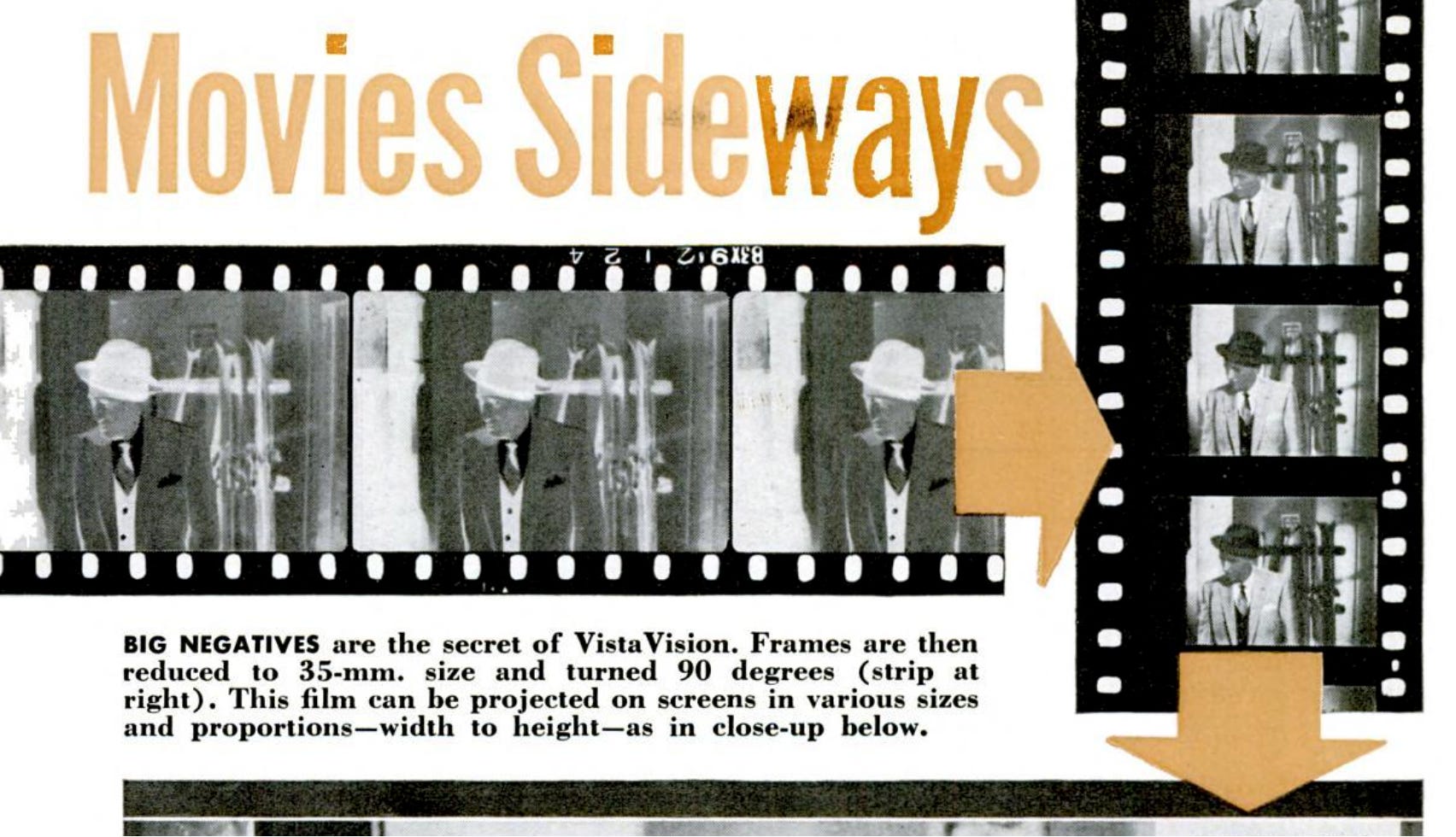
One Battle After Another was recorded on VistaVision, an outdated Paramount filmstock whose heyday lasted five years in the 1950s. VistaVision achieved a wide shot comparable to Twentieth Century-Fox’s CinemaScope but without any anamorphic distortion. It accomplished this miracle by flipping the frame on its side, allowing for a significantly larger, higher-resolution frame. VistaVision is captured on 35mm, just like ordinary cameras, and it can be projected on 35mm projectors, just like ordinary films. You just had to turn everything 90 degrees.
Only a dozen or so VistaVision cameras were ever made, and only a handful still work today. Those cameras shot some of the greatest movies of all time: White Christmas, North by Northwest, The Searchers, Vertigo. They came back into our lives for the first time in 60 years when Brady Corbet decided to use them for The Brutalist.2 At least part of PTA’s decision to use VistaVision on One Battle After Another is direct competition with Corbet, who I’m sure he at least sort of recognizes as a rival. But PTA is also a guy who has devoted his entire career to the spiritual resonances of analog, and I think the opportunity to make *this* movie on *that* film with *those* cameras was too much to pass up. There’s a legacy at hand - who wouldn’t want to participate in it?
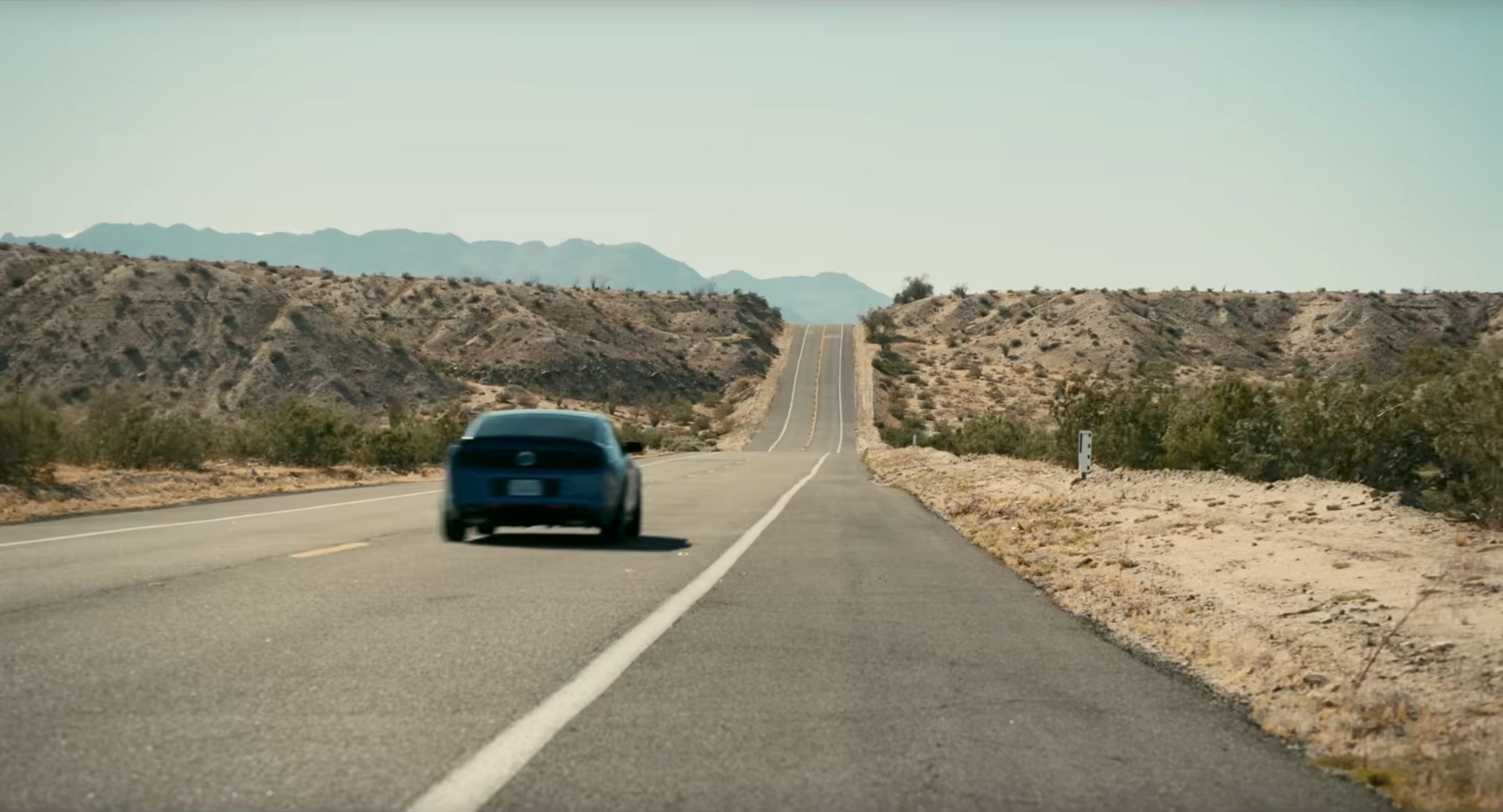
Here’s a fun thought experiment: Imagine you’re driving your Dodge Charger over the hills of California State Route 78 in the Anza-Borrego Desert. Now imagine you’re filming that experience from the perspective of your front bumper. The camera needs to be six inches off the concrete, close enough to the road that your footage disorients your viewer with its constantly changing relationship between pavement and sky. How do you attach the camera to your car? Now imagine you’re using a film camera from 1955 with a 35mm canister that loads from the back. How do you pull that off without busting the camera? And how do you ensure that you’re getting a decent shot with no digital returns?
My answer is “I don’t know,” which I think is the only one available to all but the small handful of people who somehow pulled this off. I was too exhilerated by what I was seeing to think about cameras the first time I watched the result. I spent the entire time thinking about cameras the second time I watched it, but instead of feeling technical and emotionless I started crying because it was so beautiful to think that someone tried this and succeeded. But also I still slammed my foot on the imaginary brake when the cars finally crash.
It’s an extraordinary achievement to make someone feel something during a car chase in 2025. Part of what we can and should celebrate about One Battle After Another is the novelty of its action sequences, scenes that render the biplane fight in M:I:W/E earlier this year pretty much irrelevant. But even more than that: it’s incredible to consider that, through a restored VistaVision camera, Chase Infiniti is experiencing the same run that Cary Grant ran in North By Northwest, that John Wayne ran in The Searchers - participants in a long strand of high-grade film running across the American West, one continuous marathon of people being fucked with, of people fighting back. The same run, the same fight, nothing old, nothing new, one battle after another, every single one worth it because running is what it means to be alive.3
One way to convey that continuity is through homage and reference.4 But there’s another kind of continuity that comes from the physicality of shooting on film. It stems less from intentional framing and more from the natural results of participating in a unifying act of labor. To limit your shooting to a handful of shots, to labor over them with antique cameras, to struggle through the mechanics of strapping a rig onto the front fender of a car - it puts you in direct conversation with the history of cinema simply by merit of sharing the same problems.
It’s not that One Battle After Another has a particular visual quality that could only be created on film - it’s that it conveys a grounded visual experience in which the limitations of physics force the cameras into a stable series of shots. The intentionality is palpable, and so are the little blips of humanity that make each moment unique and simultaneously evergreen. This is a jittery, nearly three-hour chase film featuring multiple clandestine organizations navigating multiple fucked-up situations, and never once do I wonder what’s happening or who I’m supposed to care about. I’m watching a movie about people dealing with the weight of the world, and the camera is always there tracking Bob or Willa or Sensei, reminding me over and over again that it’s the humans, not the chaos, that I need to pay attention to. The camera is too big, and the shots are too hard, and the film is too precious, to focus on anything else.
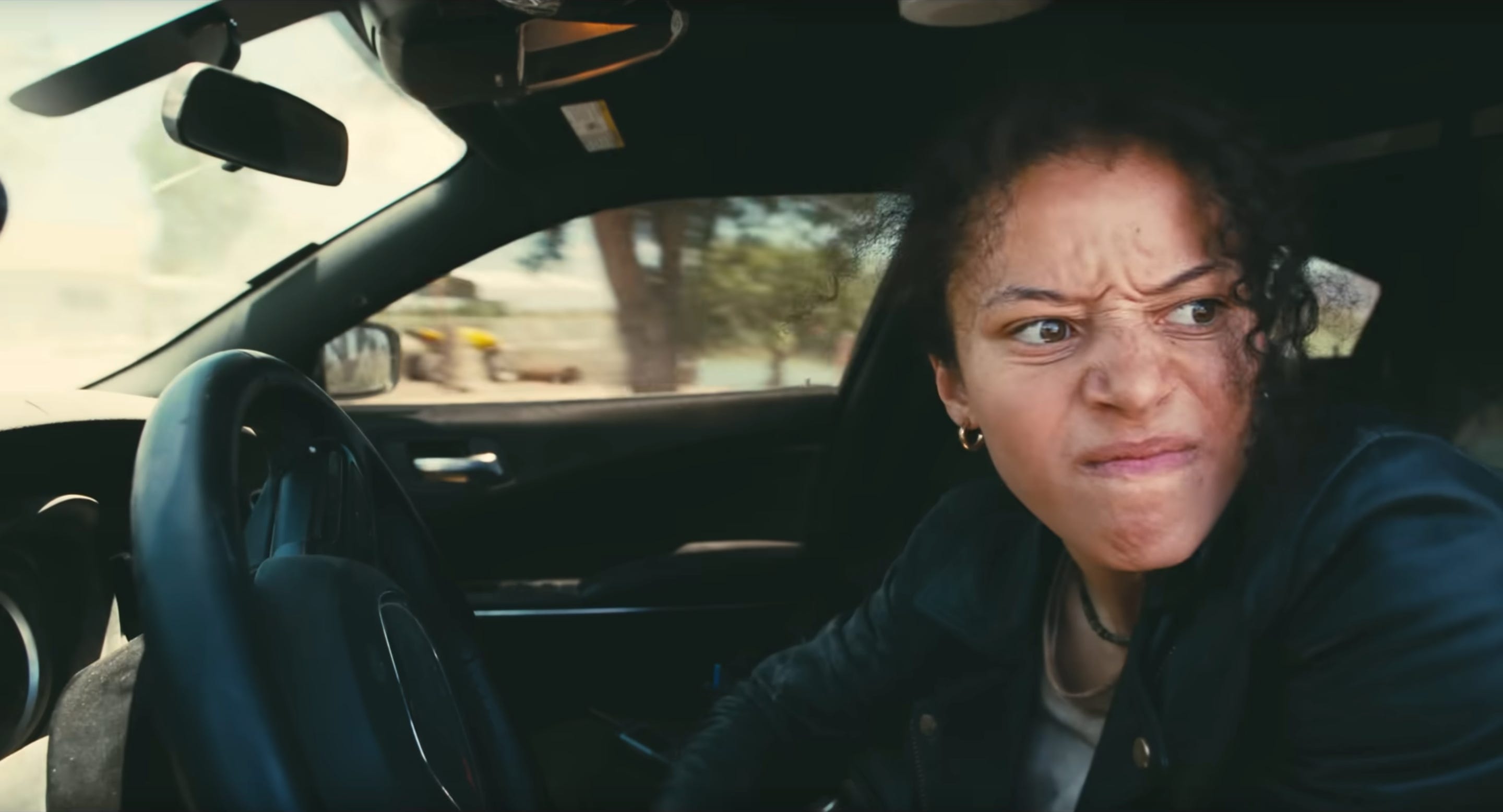
But PTA shouldn’t be using film at all, because One Battle After Another is a 21st-century movie. A 2025 movie. A This Is What It’s Like Now movie. And I’m not sure if you’ve noticed, but we are living in the Digital Age. We are surrounded at all times by digital cameras, and we look at their footage on digital screens. Modern movies are shot on digital. Modern revolutionaries stream on digital. The modern government surveils you on digital. Life is cheap, life is fast, everything is going so much with no respite, and none of it is happening on VistaVision.
This line of thinking makes people feel insane, which is sometimes the point, but more often an unintended side effect, of digital cinematography. I’m convinced that the micro-decisions pushed along by digital cameras, even when we don’t notice them, tend to quietly break our brains. Infinite takes, total coverage, 4K face scans, unlimited capacity for deepfakes - this is our worst nightmare of a surveillance state, and they’re the daily realities of our audiovisual media. When we see careless digital cinematography played out in a movie about the real, organic world, it makes us feel that the real, organic world doesn’t exist.
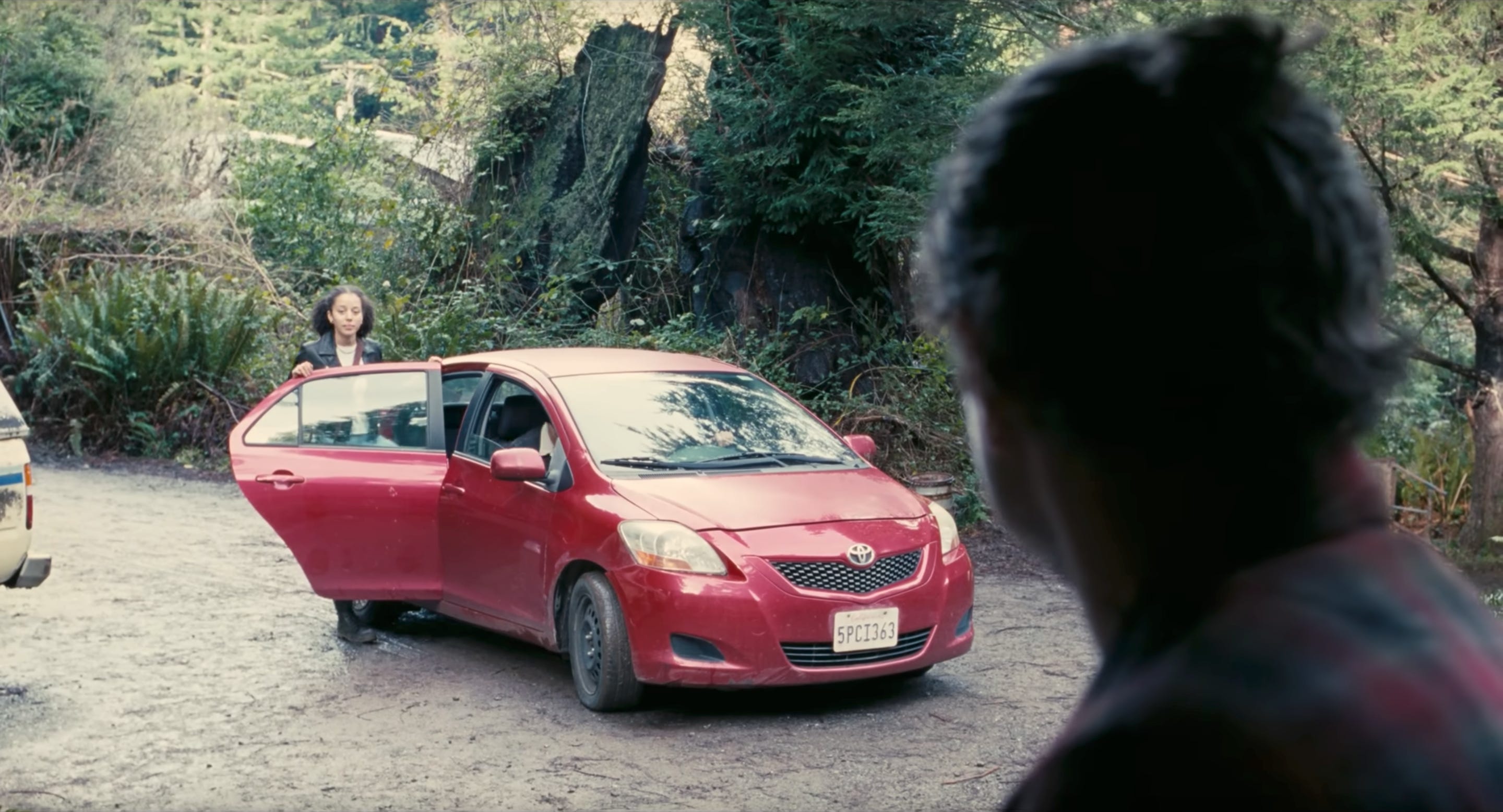
The first time I noticed the impact of this differentiation in One Battle After Another came in the bank robbery car chase from the opening act when we jump up to an overhead shot of Teyana Taylor’s final run. Oh thank God, I thought, this is shot from a helicopter. The camera is jumping around like that because it isn’t attached to a drone. What is the meaning of a helicopter shot vs. a drone shot? A drone is a literally inhuman view of the world, a shot that can only convey the potential for a total robot surveillance state. A helicopter shot conveys the police state too, but at least it’s one where the police are noisy, obvious humans. One says you’re alone in this world and someone is watching. The other says, well, at least you have an enemy.
There are plenty of enemies in One Battle After Another, but there are plenty of friends and loved ones too. Mostly there are a lot of people interacting with one another, and that’s where the story happens. This is what separates it from a movie like Eddington, which is just as much a 2020s-problems movie but one where those problems overwhelm the humanity - and the human storytelling - of any of its characters. Ari Aster sees a lot of terrible troubles, and he lets his infinity camera spiral over all of them. PTA sees the same troubles, but he grounds his limited-take clunker on the people who have to deal with them.
It feels crazy to call a thriller as relentless as One Battle After Another “calming,” but somehow it gives me a sense of relief - not facile non-comments about how everything is going to be OK, but the simple reminder that we’ve been here before, that we’ll be here again, that really we’ve always been here, and at the middle of it is the only thing that has ever mattered, which is people caring for each other. This is a NOW movie, sure, but tell me a point in American history when NOW didn’t look like this: paramilitary organizations running raids on immigrants? radical groups fighting for small gains and falling apart due to infighting? secret cabals of white supremacists making weird stuff happen by means of the police? “You better be talking about the Philippines.” VistaVision in 2025 reminds us that we live in history, not isolated moments. We can deal with this. This is what we do.
I’m not going to argue that a digital camera can’t do that, and I’m not going to say a VistaVision camera is always going to make it happen. But if your inclination is to get lost in the hegemony of the moment, the demands of physical touch can do wonders for putting you back in contact with the ongoing flow of human vitality. Film isn’t touch, of course, but it is a physical *analog* for things that actually exist. It limits a plot that could have been a nightmare to a story about love. It rips us out of the headlines and back into the continuity of the human spirit.
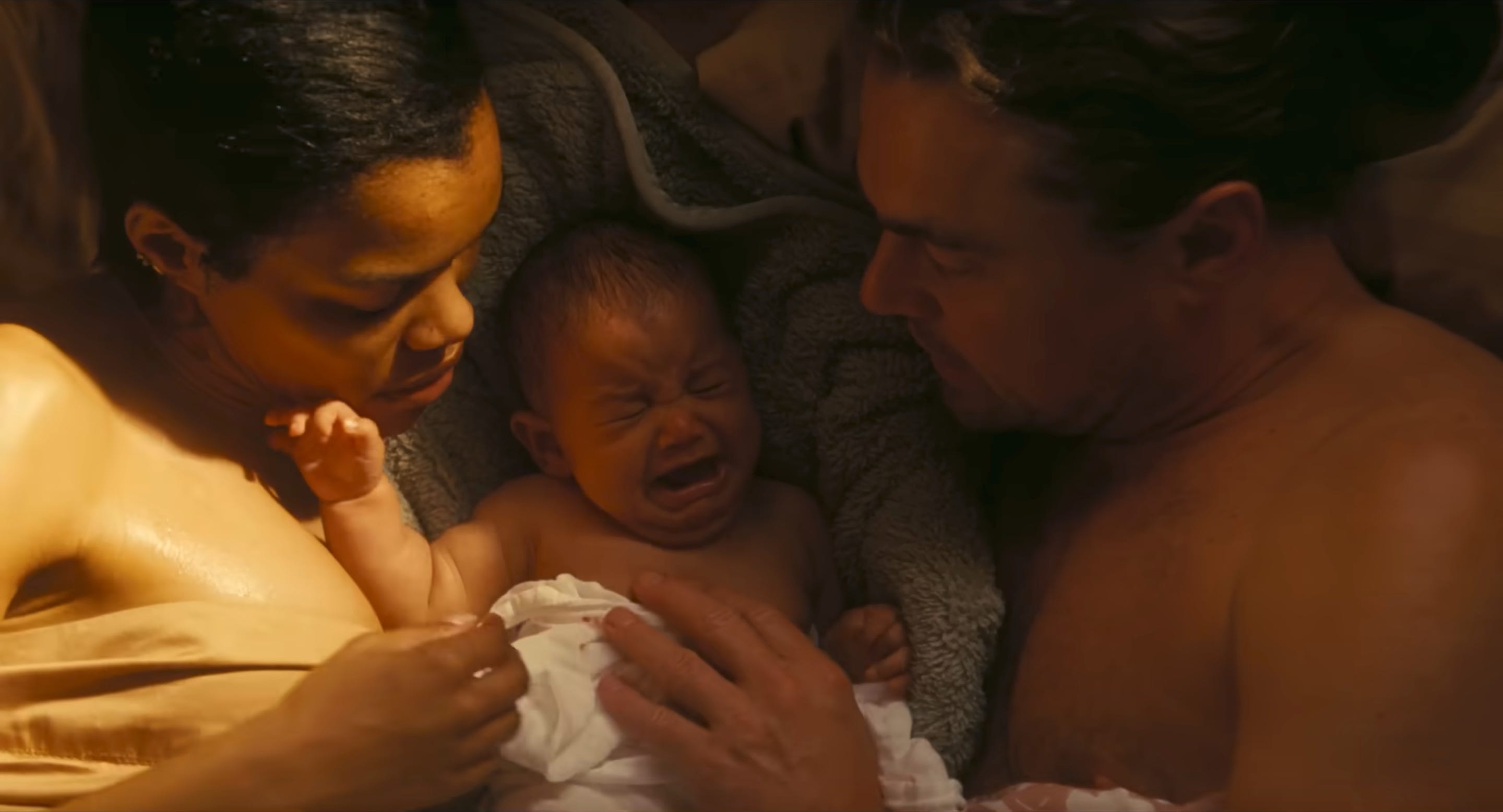
Which is why the key to this movie is its final needle drop. We’ve heard “American Girl” so many times, in so many movies. Most prominent in my mind is Silence of the Lambs, when the senator’s daughter sings along in the car just before she’s abducted by Buffalo Bill. It’s a very Ari Aster feeling to primarily associate the phrase “raised on promises” with being stalked by a serial killer, but that’s modern life, baby. Tom Petty is dead, the American dream is dead, American girlhood is co-opted by nefarious forces that may or may not be co-opting America’s movie theaters this weekend. This Is What It’s Like Now.
And then PTFingA has the audacity to slap this song onto the end of this cute-ass movie, ringing guitars ramping up as Chase Infinti scurries off in an M65 to join a protest while her dopey girl-dad flops back on the couch to play with his new phone. How many times have we heard those guitars backing up a routine TV plot, or selling car insurance, or filling out a Pandora playlist at a fast-casual restaurant? And now we’re here like it’s 1976 and nobody knows who the Heartbreakers are, and we’re hearing “American Girl” for the first time, and those crackling tubes are embodying the hopes and dreams of the free young women of America.
This positivity, this unvarnished hope for the future - this kills me. And it works because of the uncomplicated reframing of a song that has become tacitly synonymous with ironized dad-rock bullshit. Recontextualized in VistaVision, all that cynicism washes away and leaves us with a song as it was intended to be heard, scratched through fifty years of slowly degrading vinyl but fresh all the same.
For a moment, we’re back in the ocean waves of history. Life doesn’t have to be cheap. Music doesn’t have to be background noise. Cinema doesn’t have to be a constant rush of experience. And politics doesn’t need to be a crushing deluge of anxiety. It’s the antithesis of Eddington, and so much more useful to not just the current American moment, but every Tom Petty-soaked American moment that we will continue to experience as our country continues to both suck and not suck.
I don’t want to oversell all of this. I am not enough of a pervert to say that running a VistaVision rig is the good fight. This movie does not have Revolutionary Potential. It will not save the discourse. It will not change the world. Plenty of people will see it and think it was just a pretty good movie. Some people won’t like it. And statistically speaking, most people won’t see it at all. Most people in my life didn’t see Sinners, hadn’t heard of Weapons, didn’t even know there was A Minecraft Movie. Movies aren’t what they used to be.
And - this is movies like they used to be. This is the real deal. This is why Edison invented the phonograph. This is why God created silver halides. This is why cinema exists.
Thanks for reading *life is disappointing.* If you found this newsletter slightly less disappointing than the rest of your life, consider liking, commenting, sending me money (thanks!) or subscribing. Subscribing will get you exactly what you get here but sent to your email inbox. I find it pretty hard to write about something this good without falling into long breathless sentences and hyperbole, so hopefully The Smashing Machine will kinda suck.
For an extremely readable history of recording technology and the analog/digital debate, check out Greg Milner’s Perfecting Sound Forever (2009).
Actually, they’ve been around the whole time and were used for high-resolution special effects shots: most notably, on the first three Star Wars movies, but more recently on nearly every Christopher Nolan film and a few Yorgos Lanthamos films. But Brady Corbet was the first 21st-century director to film the majority of a film on VistaVision - partly for the vintage allure, and partially because he prefers film to digital and you can’t shoot accurate architectural shots on an anamorphic lens.
PTA and Leo talks in their interview with The Big Picture about this continuity, especially w/r/t Vertigo.
PTA’s career is defined by reverence for 20th-century aesthetics, music, and film techniques, but, compared to his contemporaries and his idols, he’s not much of an homage guy There’s very little of the Coens/Scorsese/DePalma/Tarantino quotation shot in his work. He’s not much of a postmodernist, and that’s interesting - especially when he’s adapting a novel by a Postmodernism 101 author. EDIT: I wrote this before reading Max Read’s great piece about OBAA as a car movie, where he unpacks the inverted Bullitt allusion PTA achieves by swapping the roles of a Dodger Charger and a Ford Mustang in the Anza-Borrego car chase. Great. I don’t know what a car even is, but what a rich world of allusive potential we live in!