
eichmann in tehran // 2025 MOVIE BRACKET ROUND TWO
jafar panahi kills dogs and character arcs in it was just an accident // MAN v. MACHINE results + match-up

My goal with this newsletter is to write about new films as they reach general release, along with seasonally appropriate commentary on other cinematic events and interests. This week we’ve got thoughts on characterization and morality in Jafar Panahi’s Cannes winner It Was Just an Accident, followed by MAN // MACHINE ROUND 1 results + match-ups for ROUND 2.
If you’re here just to vote for M//M ROUND 2, go down about halfway for more information. Or if you think you know what you need to do, press this button and vote:
Three minutes into It Was Just an Accident, and Eghbal, our main character and audience surrogate, has already run over a dog. It’s not really his fault: it’s dark, the road isn’t lit, and the dog was running around in the street. But his daughter couldn’t care less about his excuses. A dog is dead, which is bad, and Eghbal was driving, which means he’s guilty. Who among us hasn’t killed a dog in front of a small child? I mean that like a metaphor. Maybe don’t think about it too much, it will make you feel bad.
If there’s anyone out there who wants you to feel OK about what a piece of shit you are, it’s Jafar Panahi. “I believe everyone is a good person,” he once said in an interview about his third film, The Circle. “It could be the result of social difficulties. Even the most dangerous criminal has that sense of humanity. At the bottom he’s still a human.” He said this in 2000, right around the first time one of his films was banned by the Khamenei regime. Since then he’s made nine movies rendered all but unwatchable in his home country. It would be hard for anyone to maintain a positivist view of humanity after a quarter century of censorship, travel bans, and imprisonment - and yet, here we are at the start of Panahi’s eleventh and supposedly angriest film, and he’s still asking us to sympathize with a dog killer who we quickly learn is a government torturer.
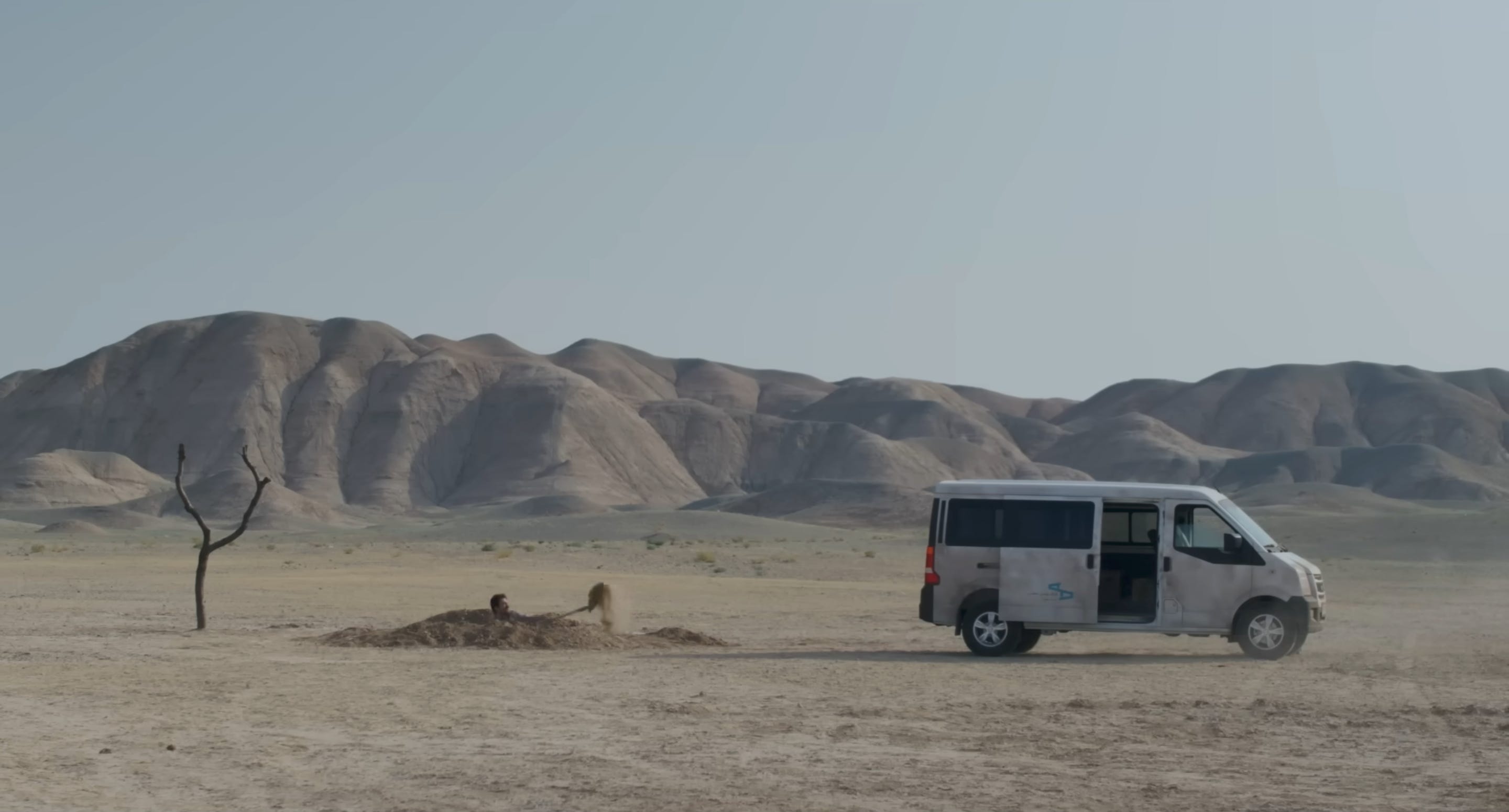
Or maybe we don’t. Moral identity is the central question of It Was Just an Accident. Shortly after Eghbal annihilates the dog, an auto mechanic, Vahid, recognizes the squeak of his prosthetic leg and identifies him as Peg Leg, a police interrogator famed for the brutality of his torture methods. Drunk on the opportunity for justice, Vahid kidnaps Eghbal and attempts to bury him alive. He quickly loses resolve and drags in a ragtag crew of fellow torture victims to help him figure out if he’s doing the right thing. Eghbal spends most of the movie passed out in a box in Vahid’s trunk, listening (or not) to the bickering of his would-be assassins as they try to figure out the inane specifics of vengeance. Pretty quickly we find ourselves relating to the struggles and political sympathies of Vahid and friends - while simultaneously worrying about what Eghbal must be experiencing as he suffocates in the trunk.
As lurid as this set up should be, what’s special about It Was Just an Accident is its refusal to fall into grotesque revenge cliché while still maintaining suspense. This shouldn’t come as a surprise from the guy who made an edge-of-your-seat thriller about a seven-year-old girl trying to buy a goldfish: Panahi knows how to stretch out the drama of everyday life without resorting to strategies outside the naturalist toolkit. It Was Just an Accident has no music, no blood, no twists. If five not-especially-competent strangers happened into kidnapping the guy who may or may not have tortured them, this is probably how it would pan out. If Panahi’s focus on a government operative leans into commentary on the banality of evil, his turn to in-over-their-heads dissadents proposes a comparable contemplation of the banality of justice.
It’s hard not to compare It Was Just an Accident to last year’s The Seed of the Sacred Fig, another illegally made film from a storied Iranian director about seeking justice against a regime operative. But where Mohammad Rasoulof’s film progresses from everyday life to heightened thriller, Panahi gives us nothing to hold onto other than humans portraying humans. He trusts the world he lives in enough to let the consequences of basic (in)decency play out on film as they would in life. In the real world, actions speak louder than semiotics, and Panahi isn’t interested in stultifying constructs like character and story arcs to make that obvious.
(SPOILERS FROM HERE ON OUT. Go see this movie if you can - it’s only showing in about 100 theaters nationwide, but yours might be one of them.)
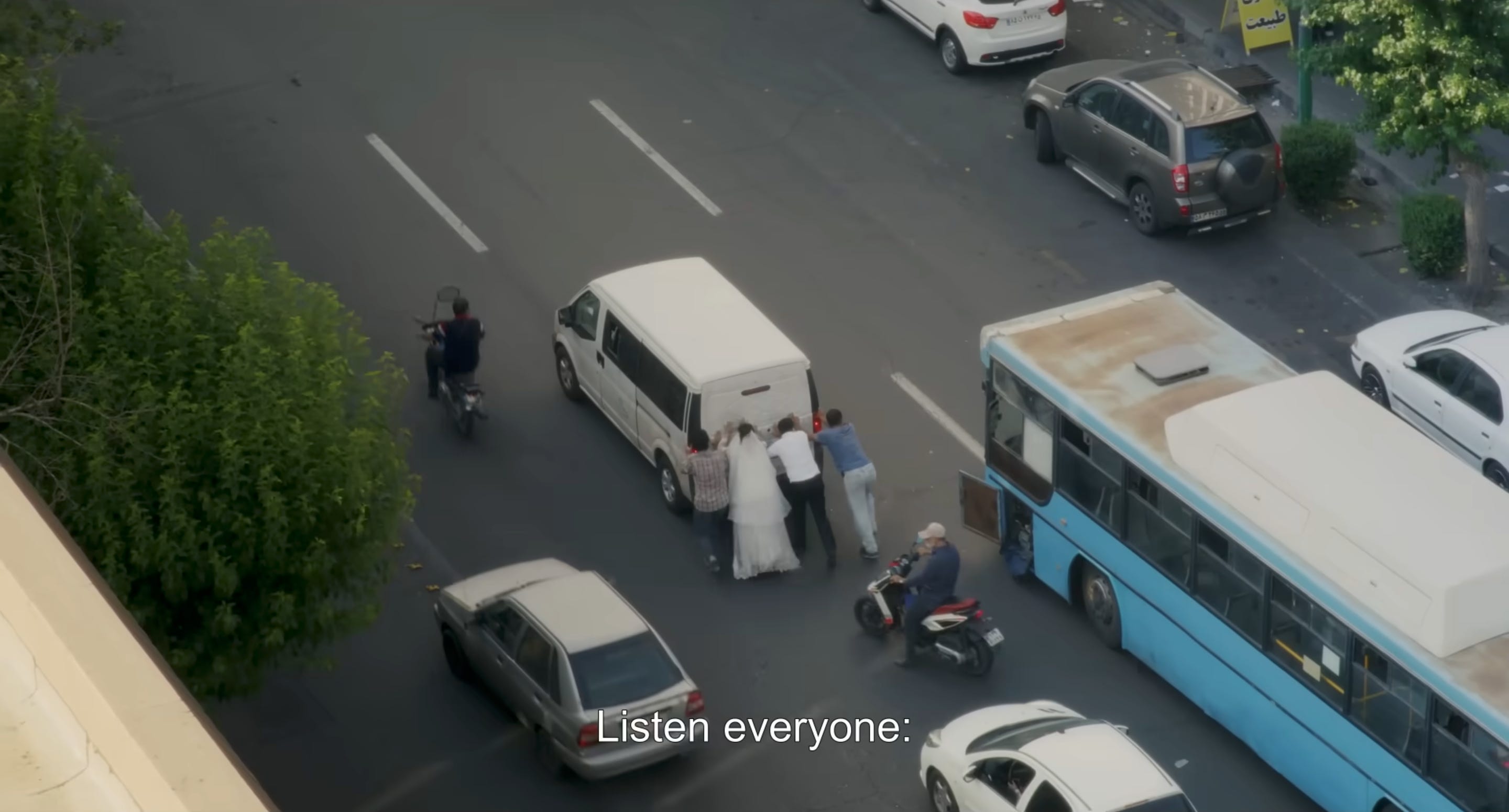
How do you pull this off? It’s worth breaking down the plot of It Was Just An Accident to pinpoint how Panahi constructs tension without traditional characterization.
Create audience sympathy with Character 1 (cute child, pregnant wife, physical disability). Immediately undercut sympathy by making him kill a dog.
Shift perspective to Character 2 and create audience sympathy (phone call with mother, poverty, physical disability). Establish an unexplained antagonism between Character 1 and Character 2.
Depict Character 2 exacting brutal and unexplained violence against Character 1.
Reveal that Character 1 is probably a torturer and that Character 2 is probably his victim.
Surround Character 2 with sympathetic friends (feminist photographer, cute newlyweds, hot-head comic relief) who also want to do violence against Character 1. Simultaneously, lock Character 1 in a box and remind viewer that he’s a human being by having him shit himself.
Reintroduce Character 1's wife and daughter by means of a birth scene, solidifying Character 1’s humanity - but do this by making Character 2 the active agent (driving wife to hospital, supporting daughter while mother is giving birth, paying for everything, buying everyone snacks).
Set up an astounding finale in which Characters 1 and 2 shout and confess and cry, thus forcing everyone, the audience included, to consider the circumstantiality and corresponding mutability of their actions.
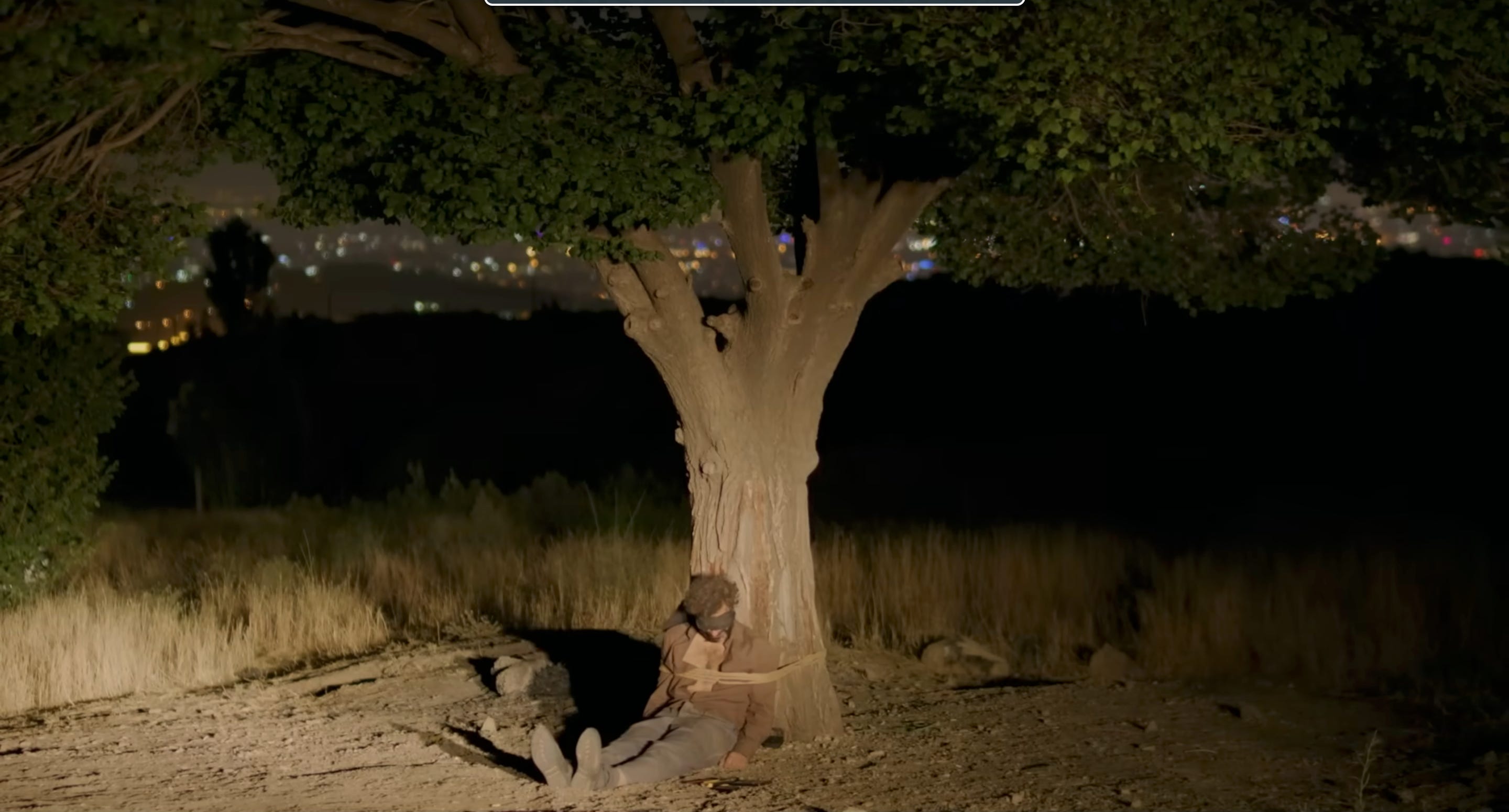
Never once does Panahi allow himself or his audience to settle into moral absolutes. He avoids the Hollywood trick of presenting a foil scenes that cast an otherwise monolithic character in a new light. Instead, he presents every situation as a decision that is only tangentially attached to the one that came before it. It’s impossible to hate either Eghbal or Vahid because we’ve seen them in the blandly decent context of their everyday lives. And it’s impossible to think either character is a saint because we see how quickly bland decency can turn to cruelty. There are no “unsympathetic” characters in It Was Just an Accident: to suggest that such a thing even exists would imply that the audience has absolute authority over whether someone is likeable, whether someone is moral, whether someone deserves to live or die. In other words, it would grant them the arbitrary judgment of the regime.
We don’t like this uncertainty: as viewers, we’d much rather play God than accept his indifference. We like to think that we know what’s going on inside a character’s soul because we believe we’ve been privvy to it from our privileged position between projector and screen. The power goes straight to our heads. Fairly often in arguments about movies, someone says, “I just don’t think that character would do that.” OK sure - but how often, in real life, would you think that anyone would do anything? People make unpredictable choices under extraordinary circumstances. People we despise are nice to animals. People we love are cruel to children and the elderly. You can’t predict a person’s actions even if you’ve known them their entire life, and in movies you’ve known them for about 90 minutes.
At the same time, it’s relatively easy to decide whether a specific action is right or wrong. I don’t mean the trolly problem calculus that goes into deciding if you should save a Picasso painting or a baby from a burning building or whatever - but whether a simple action is done out of kindness or malice. To take a pregnant woman to the hospital and to keep her daughter company while she gives birth is a kind thing to do, even if the woman is a fascist and her baby turns out to be Hitler. To deliberately cause pain to someone is a malicious thing to do, even if they’re a state torturer who has ruined thousands of lives and has it coming. What leads up to the act and what comes after has nothing to do with the material morality of the act itself. That includes the overall “goodness/badness” of the person doing it. Life is made up of an endless series of binary decisions (will I do this or not?) and there, not on some prescriptive character sheet in the sky, is where humanity happens.
It would be easy to describe Panahi as a director of ambiguity, a writer who revels in the indefinite nature of human interactions. But I’d argue the opposite: he presents us with situations where one reality holds multiple intents and experiences, but none of these negate the material clarity of the circumstance. He’s been this way since the end of The White Balloon, when two children gleefully run away to buy their goldfish while a third child who helped them is left behind without so much as a thank you. Is the ending happy or sad? It would be silly to say one or the other, but that’s not because we’re unsure about what happened. The clarity of the situation makes the many experiences surrounding it - past, present, and future - newly accessible. A dog is hit by a driver. No one questions whether or not the dog is dead or who’s responsible. The man who hit it can wash his hands and say it was just an accident. His daughter can call him guilty. But both can ask if he should have tried harder to avoid hitting it. Maybe next time he will. Or not. He won’t know until it happens.
So what about the conclusion of It Was Just an Accident? The simplest read of its final shot is to treat it like the Inception top and get in space-brain arguments about interpretation. We hear the squeaking steps of Eghbal walking up behind Vahid, and we don’t know what’s going to happen. Is he going to kill him? Is he going to walk up, pause, change his mind, and walk away? Or is the squeak just Vahid’s imagination, a cinematic reminder that trauma persists forever?
You can dig for clues, but you’ll be wasting your time, because the key to this ending is that it hasn’t happened yet. Eghbal - who is still, despite it all, our central viewer surrogate, the guy in the opening shot, the guy who, like us, has been stuck watching all of this play out without any ability to act, the guy whose POV we end with - is faced with a situation he has never encountered before, and he needs to decide what he’s going to do about it. He could act out his duty to the state and arrest Vahid. He could take vengeance into his own hands and kill him. He could stand still, make an ominous hand gesture, and walk away. He could reach out, shake Vahid’s hand, and thank him for caring for his wife and child. Or he could embrace Vahid like a brother and thank him for saving his soul.
You’ve known him for 100 minutes. What do you think he’ll do?
Zohran Mamdani wasn’t the only guy to pull off record numbers at the polls this November. Actually, I don’t keep records of this sort of thing, but a lot of people voted in MAN // MACHINE ROUND ONE, and we’ve got some results.
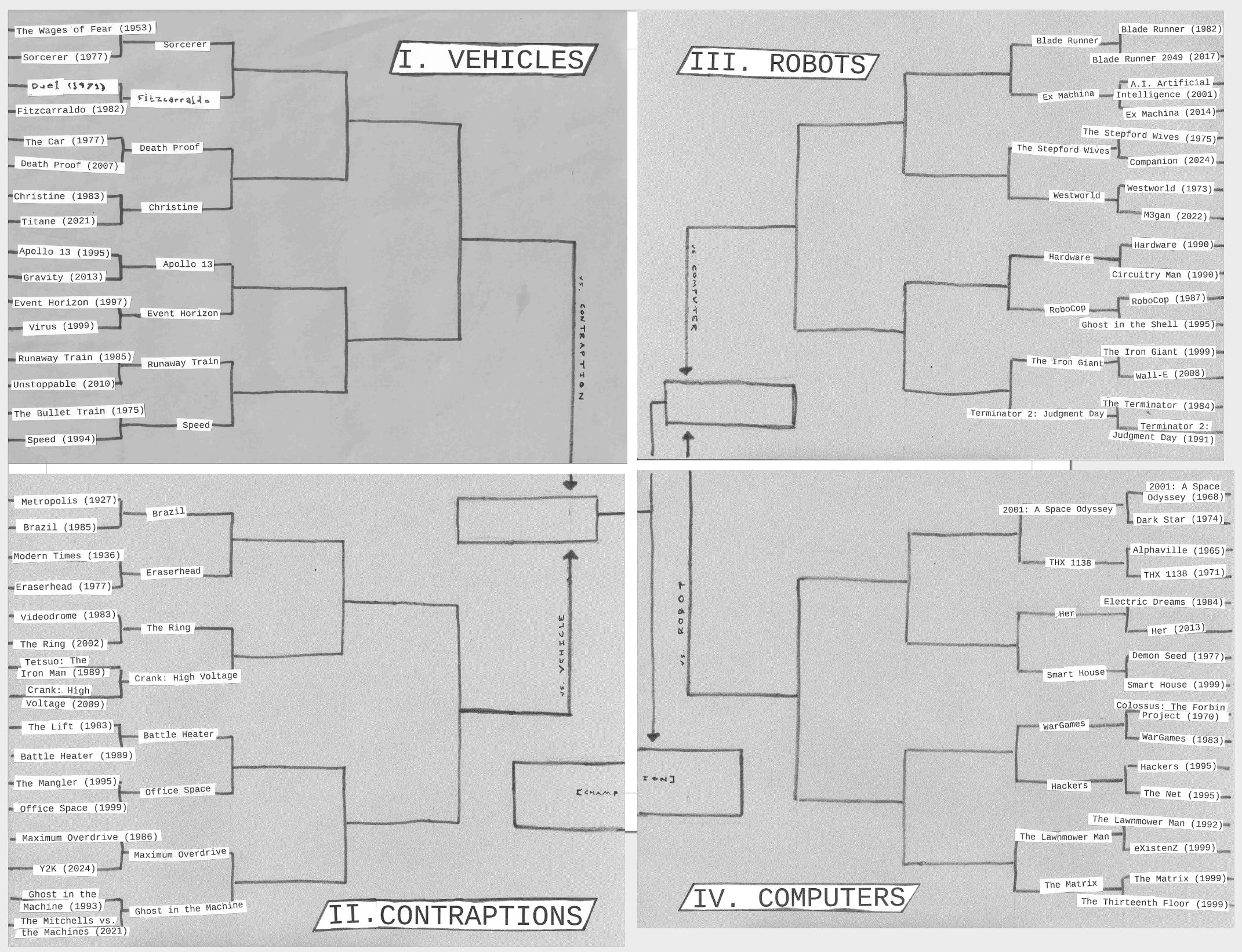
Heading into round one, the clear frontrunners were Speed in VEHICLES, Blade Runner in ROBOTS, and a statistical tie between The Matrix and 2001: A Space Odyssey in COMPUTERS. CONTRAPTIONS was always going to be anyone’s game, but Office Space came in with a sizable edge over the competition.
On that front, there were no upsets. Speed never dropped below 50mph aginst The Bullet Train, The Thirteenth Floor couldn’t hold a spoon to The Matrix, Office Space Geto Boys’d The Mangler, Blade Runner 2049 ended up like tears in the rain, and Dark Star failed to earned a single vote against 2001. Five-seed Apollo 13 also had no problem reducing Gravity to nothing more than a hallucination in space.
The hottest races proved to be the bottom of the ROBOTS bracket with The Iron Giant v. Wall-E and the battle of the Terminators. Brackets were bound to get wrecked no matter what the outcome of this division, but in the end The Iron Giant took out the trash and Terminator 2 bid hasta la vista, baby to The Terminator.
Other news: Gabe M.’s winner pick Crank: High Voltage stayed in it despite a solid cheering section for Tetsuo: The Iron Man; Wikipedia-less underdog Battle Heater is on a roll; David Cronenberg, arguably the defining Man v. Machine artist of our generation, has been wiped off the map.
ON TO ROUND TWO. Same as the last round: voting begins NOW and ends at 11:59pm next Wednesday, 26 November. Scholars among us will note that this is the day before Thanksgiving. Please don’t vote while drunk driving.
BRACKET LEADERS
Davis (27 pts)
Katie J. (26 pts)
Thom B. // Sam Z. Smith (25 pts)
ROUND 2 MATCH-UPS
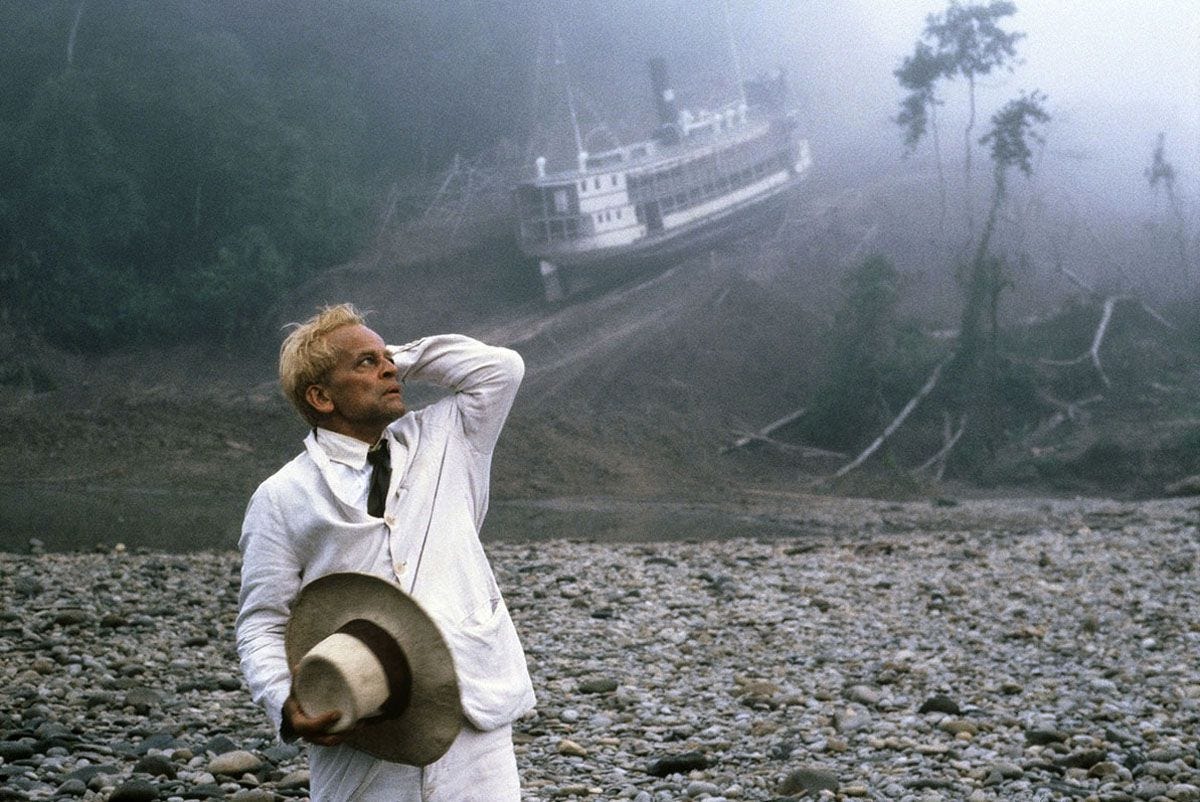
Sorcerer vs. Fitzcarraldo: A dream match-up, two films about men losing their minds in the jungle. The production stories on both of these films are almost as incredible as the movies themselves.
Death Proof vs. Christine: If nothing else, a choice between two of the best car wreck sequences in cinema history, one head-on and one in magical reverse.
Apollo 13 v. Event Horizon: Event Horizon has its cheering section, and a victory over Ron Howard could give it the momentum to go all the way. But that’s pretty heavy-lifting against a top-seed classic with solid boomer support.
Runaway Train v. Speed: probably the only time you’ll see Eric Roberts go head-to-head against Keanu Reeves.
Brazil v. Eraserhead: practical effects at their most demented.
The Ring v. Crank: High Voltage: I try to be unbiased, but this is a significantly stupider match-up than the Videodrome v. Tetsuo fight it could have been. But democracy is sometimes stupid.
Battle Heater v. Office Space: I watched Battle Heater with Florine last weekend and it immediately resulted in re-arranging all our furniture. If it keeps up this momentum it could do the same to the entire bracket.
Maximum Overdrive v. Ghost in the Machine: I’m thrilled that Rachel Talalay’s finely tuned ‘90s shlock made it to round 2. If you’ve always wondered what it would be like if a serial killer’soul was accidentally uploaded to the power grid, now is your chance to find out.
Blade Runner v. Ex Machina: Blade Runner is a strong frontrunner, but recency bias and years of easy streaming availability could push Ex Machina over the top.
The Stepford Wives v. Westworld: 1970s sci-fi showdown.
Hardware v. RoboCop: it’s RoboCop’s to lose unless the Letterboxd Video Store gets moving early and makes Hardware available on something other than VHS.
The Iron Giant v. Terminator 2: Judgment Day: definitely the hottest fight of Round Two. The winner will shape the rest of the tournament.
2001: A Space Odyssey v. THX 1138: a lot of blindingly white machinery to take in.
Her v. Smart House: probably the most true-to-life match-up we’re going to get.
WarGames v. Hackers: comes down to whether you wish you were a hacker before or after the introduction of fingerless gloves.
The Lawnmower Man v. The Matrix: I’m wondering if people voted for Lawnmower Man because it has a funny title or if they actually like it. Consider looking up the plot summary before doing this again.
Start voting. Tell your friends to vote too. This is important.
Thanks for reading *life is disappointing.* If you found this newsletter slightly less disappointing than the rest of your life, consider liking, commenting, sending me money (thanks!) or subscribing. Subscribing will get you exactly what you get here but sent to your email inbox. We’ll be back next week with ROUND 3 of MAN // MACHINE voting, plus reviews of Joachim Trier’s Sentimental Value and Noah Baumbach’s Jay Kelly.