
turtles in time
summer vacation german historical slog extravaganza // a boring movie about a tree // a boring movie about a house // time is a concept by which we measure our pain

My goal with this newsletter is to write about new films as they reach general release, along with seasonally appropriate commentary on other cinematic events and interests. In my enduring commitment to never growing my readership, I’m ignoring the Star Wars and the highly successful horror film and will instead kick off summer with a review of two extremely slow German films from the 2025 festival season that never landed wide distribution and are already out of theaters. This newsletter comes out on Fridays, which this week means Friday.
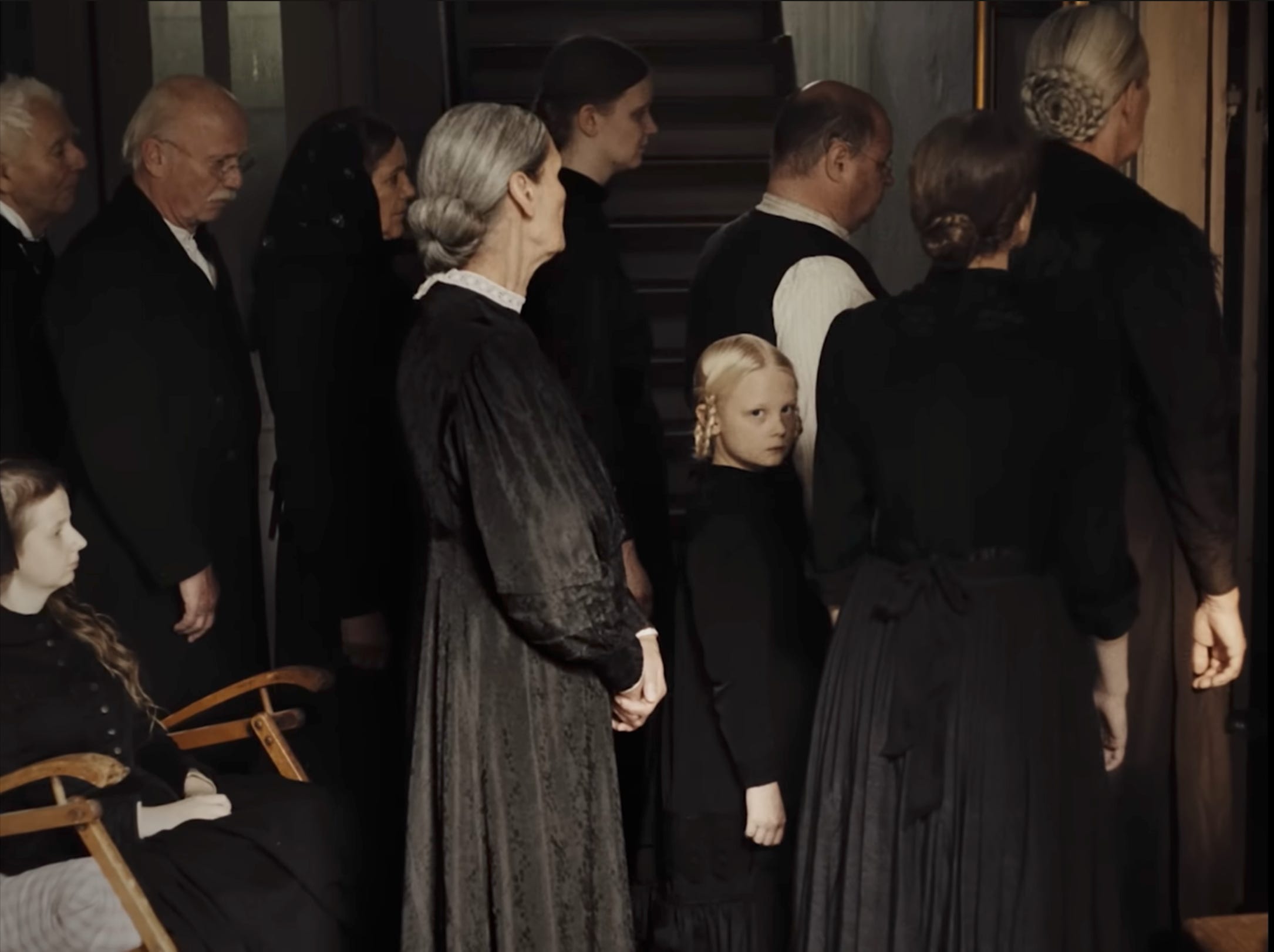
Summer movie season is up and running, so what better way to celebrate than with a five-hour double feature of century-spanning movies about inanimate objects and the generations of German people who interact with them? Ildikó Enyedi’s Silent Friend is about a 200-year-old ginkgo tree and three people who sit near it. Mascha Schilinski’s Sound of Falling is about a German farmhouse and four generations of sad girls who live in it. Neither can successfully compete with going outside in late May - but both are delicate meditations on the passage of time and the collective consciousnesses that oozes along with it, which is exactly what you probably want this time of year.
There’s a lot yet to discover in both of these films, but I’m immediately fascinated by the opposing ways their directors use cameras to represent time. Enyedi shoots Silent Friend with three immediately differentiable film stocks to distinguish three different eras. Schilinski takes the opposite approach and films everything with the same camera, color treatment, and frame. Both films jumps between decades almost at random, but while one distinguishes one era from another to clarify the timeline, the other collapses that sense of time into a haze of everything happening at once. Both approaches work, but it’s worth taking some time to see what’s exposed by their differences.
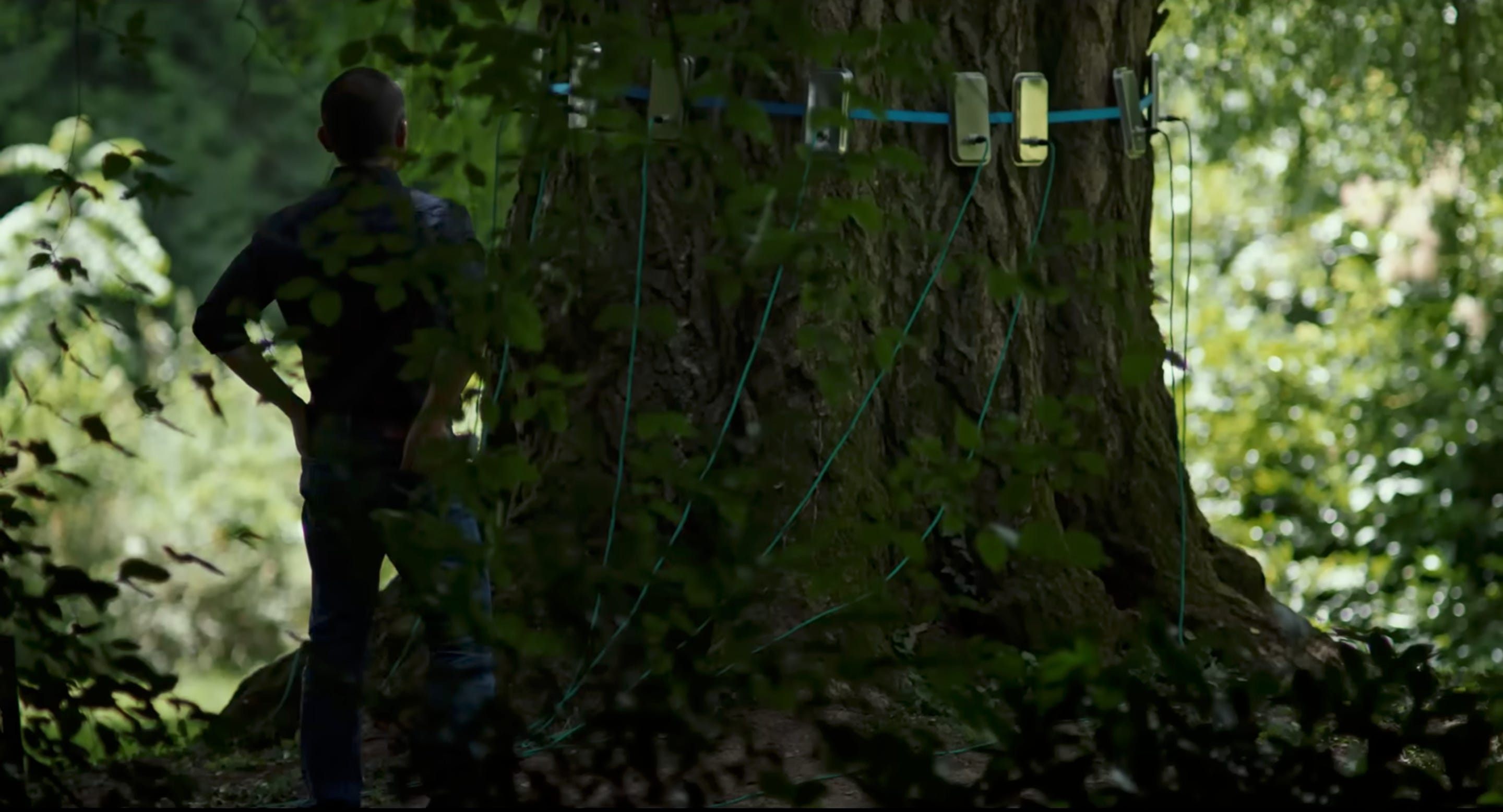
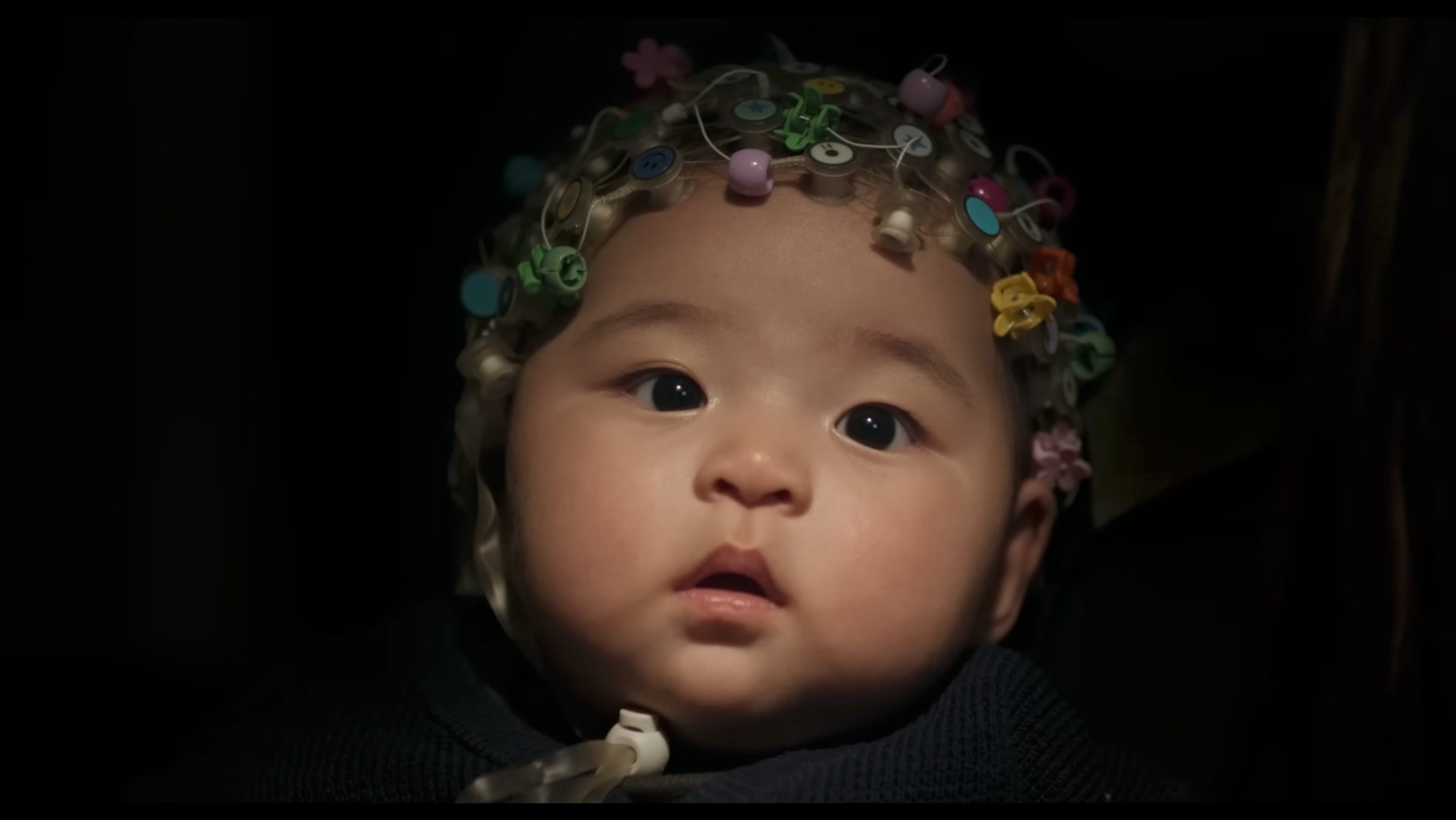
Silent Friend is the sort of movie that lays its thesis out in its opening five minutes but builds into a sprawl so amorphous that it might take you a day or two to realize it. Tony Leung Chiu-wau kicks things off with a guest lecture to the neuroscience students of the University of Marburg about the differences between how adults and babies process the world in front of them. According to Professor Tony, adults process with a spotlight brain, one bright light shining on one thing at the expense of everything else. Babies, on the other hand, process like randomly bouncing glowing balls, taking in many things at once with no capacity to differentiate one from another. Babies, Tony says, are basically high on psychedelics all the time, and it’s only the gradual creep of adulthood that brings them into sobriety. If we got back to processing like a baby, what crazy things might we realize about the world around us? We need that spotlight to be the people we are, but what we give up is a universe of unlimited connection.
A movie that takes on that thesis naturally bounces around with no particularly cohesive thread. Silent Friend presents sort of an “Eleanor Rigby,” four lonely residents of the University of Marburg who would probably love to talk to each other but are crippled by circumstance and communication problems, including but not limited to one of them being a tree. Grete, a turn-of-the-century botanist, studies plants but can’t relate to them any more than she can relate to the men she’s thrown herself in with as the university’s first woman biologist. Hannes, a 1970s literature major, knows the geranium he’s plant-sitting can sense his presence but has no idea how to empathize with it. Tony, a Hong Kong neurologist stranded in Germany during the pandemic, is willing to wear a brain scanner into the shower to better understand plant cognition but can’t get it into his head that he and his subjects share the same existential loneliness. All three of them are towered over by a two-hundred-year-old ginkgo tree who doesn’t have any ginkgo-tree friends and really wants to germinate.
The seemingly eternal ginkgo is the central image, and the surrounding film flits at random through a century of ephemeral humanity. Enyedi takes an overt approach to the passage of time and films each section with a different film stock: black-and-white 35mm for the turn of the century, fuzzy 16mm for the ‘70s, crisp digital for the pandemic. It’s useful signposting, and I enjoyed falling asleep in one era and gently waking up in another. At the same time, there’s something cheap about the reduction of a time period to its representative negative format. There’s nothing essentially true about using black-and-white 35mm to depict an era where cinema barely existed. There’s more of an argument for 16mm to represent the ‘70s, but I wonder if Enyedi is just as guilty of instant-nostalgia as her American boomer counterparts. And as I’ve argued before, there’s nothing inherently digital about our contemporary visual/optical processing of the modern world. We still see and hear things through eyes and ears. Analogue film, which creates images the same way that our brains do it, light passing through objects and landing on receptors, is a better recreation than digital, which processes that light through a binary system that has nothing to do with physical existence or neural processing.1
But this is Silent Friend is about accepting the possibility of a consciousness completely different from our own, so instead of pretending that I could have shot this film better than Enyedi, I can instead watch the movie and figure out what it’s trying to show me. Despite her focus on differentiated media, Enyedi presents three united stories about lonely people attempting to process their confusion about relationships through plants. As their scientific approaches shift from observation to empathy, each character comes to realize that study has very little to do with communion, that the available information technology doesn’t correspond to the information that needs to be communicated. Grete figures out that her photographs of plant reproductive organs are essentially abstract porn, but she can’t connect that any better to what plants desire than she can to figuring out what it has to do with wanting to smooch her advisor. Hannes figures out how to trick the geranium into opening a gate for him, but he can’t find the words to ask its owner out on a date. It’s only Tony who maybe figures it out after analyzing the ginkgo’s sensory pathways next to his own and realizing that both he and plant want more or less want the same thing. He gets there not because of superior neural technology but because of his willingness to open himself to new ways of being and seeing. In the end he gets the tree a boyfriend and maybe finds one for himself, two guys and a girl tree all sitting in silence, germinating together. It’s beautiful stuff, and any lack of satisfaction in a conclusion that doesn’t come together dissipates after spending a few days sitting with it.
Despite their best efforts, Enyedi’s differentiated film formats can’t separate the (non)narrative from itself. A tree is a tree in 35mm is a tree in 16mm is a tree in digital, and lonely humans look and act the same in all three formats. The ways of seeing fade away and what’s left are the souls we’re looking at - not with our spotlight minds but with our mescaline-approximated baby brains, pure sensory experience indifferent to all efforts toward differentiation and nothing more.
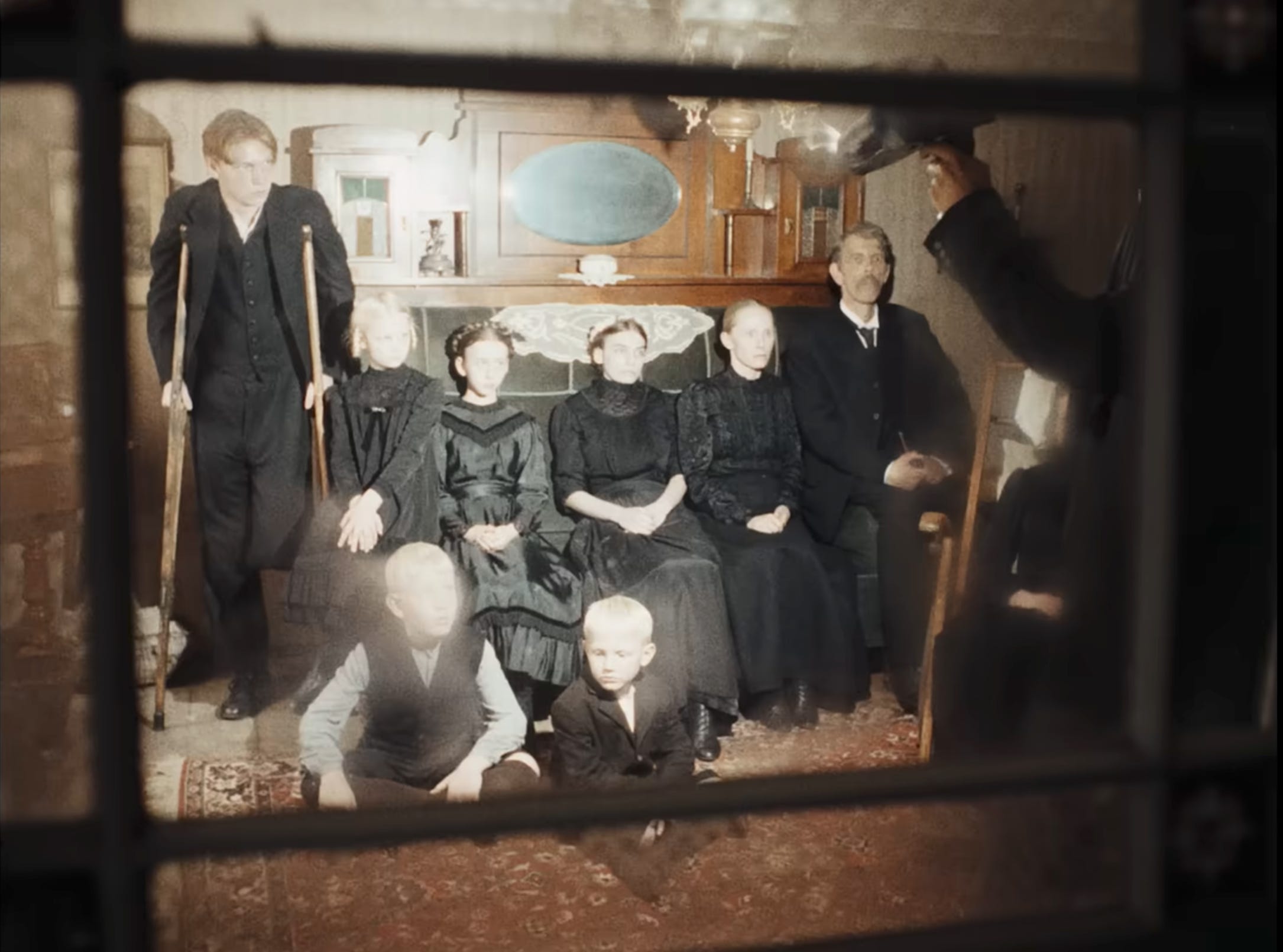
Instead of a German tree, Mascha Schilinski gives us a German farmhouse and asks us to watch four generations of girls be lonely inside of it. Her post-film-school debut Sound of Falling is every bit as unsatisfying as Silent Friend and then some. It begins with the incomprehensible action, never really developed, of a teenage girl sticking her finger in a sleeping amputee’s belly button and tasting his sweat. It ends with what ought to be a narratively significant shot of character who we’ve spent most of the movie ignoring. In between are Mouchette allusions, endless keyhole shots, post-mortem photo shoots, the gradual churn of 20th-century German history, and maybe a ghost. Nothing comes together, including a theme. All we get are a century of women, a house, and a 1.33:1 frame: digital, grainy, tea-stained, not dissimilar to the first years of Instagram, or the Polaroids and tintypes against which it resonates.
If Enyedi explores loneliness with an arch of hopefulness, Schilinski keeps us in the dark. Sound of Falling has been criticized with one hand for its oppressive emphasis on women’s misery and for being boring with the other. I’ll counter both, but I don’t really have any evidence. Schilinski dwells on some of the worst stuff that happens to people, nearly all of them women, and she doesn’t offer any sort of hope, drama, or even active interest to get us out of it. But she’s operating far enough outside narrative that her impressionism flips through the mirror from despair to possibility, listlessness to autonomy. Instead of telling her audience how to feel about what she’s showing us (i.e., bad), she lets us explore the thousands of possible connections between four related-ish girls as they grow up in the same farm house. It’s not up to them to figure out how they connect to one another, and it’s not up to Schilinski. There are things to notice and things to do, and neither the arch of history nor a pronouncement from the director-God are going to tell them where to focus.
Banal indifference is the key to Schilinski’s depiction of time. She opts for none of the typical markers of time period to ground her story line, and it often takes a moment to determine where we are in history. There are no shifts in color, no soundtrack cues or allusions to news events, barely even any establishing shots of period-appropriate technology or fashions. Post-WW2 has the same pigs as pre-WW1, GDR ‘80s has the same shorts and summer shirts as united FRG 2010s. At points the lens is so blurred and the situations are so indistinguishable that they blur together, a child in Edwardian mourning dress running through a hay tunnel before cutting to weed-smoking teenagers daring each other to take off their pants.
Schilinski’s lens suggests the perspective of the house, always looking out with the same passive eyes and the same filters. But instead of doing what Soderbergh did last year in Presence (all handheld first-person) or Robert Zemeckis did in Here (all one-perspective static shots), she flits between protagonist perspective shots to intrusive voyeurism to something else entirely. Reality and temporality are never certain. Things happen no matter who sees them, and all of them bleed together to form one continuous history of a place. If there’s a narrative, the viewer has to piece through it themselves, the sweat from one bellybutton into another, a glare across a century to its return, a blur in a Polaroid to its echo in a 19th-century tintype.
It’s reasonable to find this aimlessness nihilistic and boring. But it allows the opportunity for the viewer’s mind to make free range with the connections, which is surprisingly activating if you’re in the right mood. I couldn’t pull myself away even as I felt my mind wander, and after finishing I almost immediately wanting to watch it again despite it being an objectively feel-bad slog about nothing. It’s easy to wish that all these women could just come together and give each other a hug, but Schilinski does us one better and suggests that the resonances of history already do that for you. We live on top of ancestors, related by blood or otherwise, all of whom have dealt with more or less the same crap as we have. Or at the very least, dealt with the same place. Trees, houses, changing film stocks or consistent audio-visual processing nerves or constantly humming extra-visual senses - it’s hard to be lonely for too long when you let yourself be a part of everything that’s happened. I’m pretty into individuation and my own historical circumstance as a consciousness of great importance, but gosh cinema sure can mess with that.
Thanks for reading *life is disappointing.* If you found this newsletter slightly less disappointing than the rest of your life, consider liking, commenting, sending me money (thanks!) or subscribing. Subscribing will get you exactly what you get here but sent to your email inbox. I will be back next week with a kickoff-to-summer MOVIES ABOUT STEALING bonanza featuring I Love Boosters, Tuner, and more.
tbc I have never seen a brain and have no idea what it does - so neuroscience enthusiasts, feel free to call my bullshit. But I think I’m right.
Okay, you poked the science writer with a stick: analogue film *is* also digital -- it's x number of still images per second run through a camera, and then later run through a projector, right? In the early days of cinema, the rate per second was below the brain's flicker-fusion rate -- the rate at which flickering images appear to fuse into a continuous stream in the mind's eye, roughly 75 per second -- and that's why they used to be called "The Flicks." So-called digital video is doing essentially the same thing, except that it's turning the camera on and off at an arbitrarily high speed to capture individual images and then threading them together for playback above the flick-fusion rate.