
white boy autumn!
benny safdie tries to keep the good vibes alive with the smashing machine // flying v-formation into 2025 music with katseye and geese

My goal with this newsletter is to write about new films as they reach general release and to feature seasonally appropriate commentary on other cinematic events and interests. This week we have a review of Benny Safdie’s The Smashing Machine and a special music video segment about Katseye and Geese, the only two bands I’ve listened to in 2025. This newsletter comes out on Friday, which this week for the first time in awhile means Friday.
There is a certain kind of white boy who is feeling really great about culture right now, and it’s my great hope that we can share our enthusiasm with the rest of our fellow Americans. Between Paul Thomas Anderson making the best studio film in decades and Geese’s instantly seminal album Getting Killed, it’s suddenly feeling like white boys have something to contribute other than grievance politics, neo-fascism, and self-indulgent attempts at allyship.1 Nice job, team!
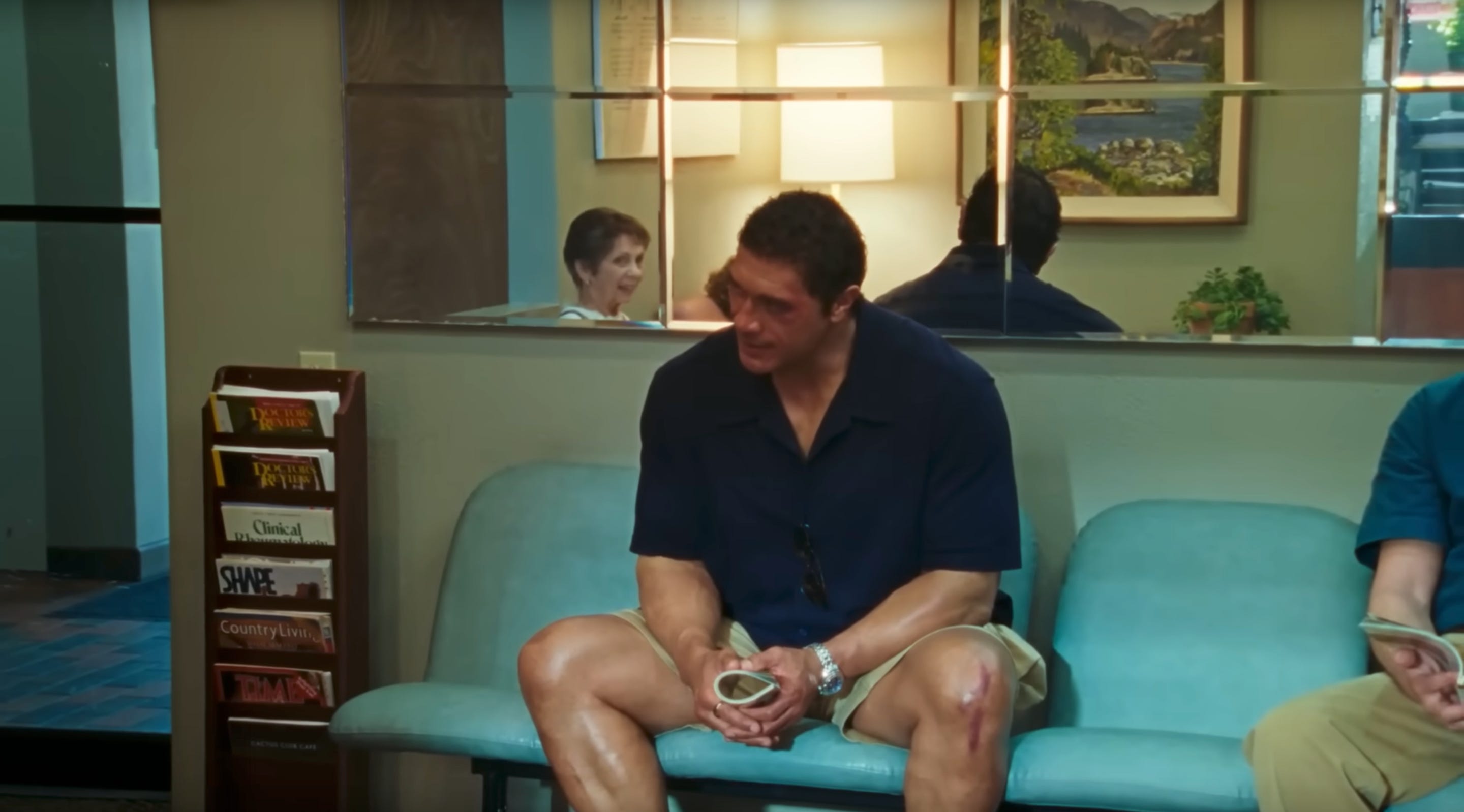
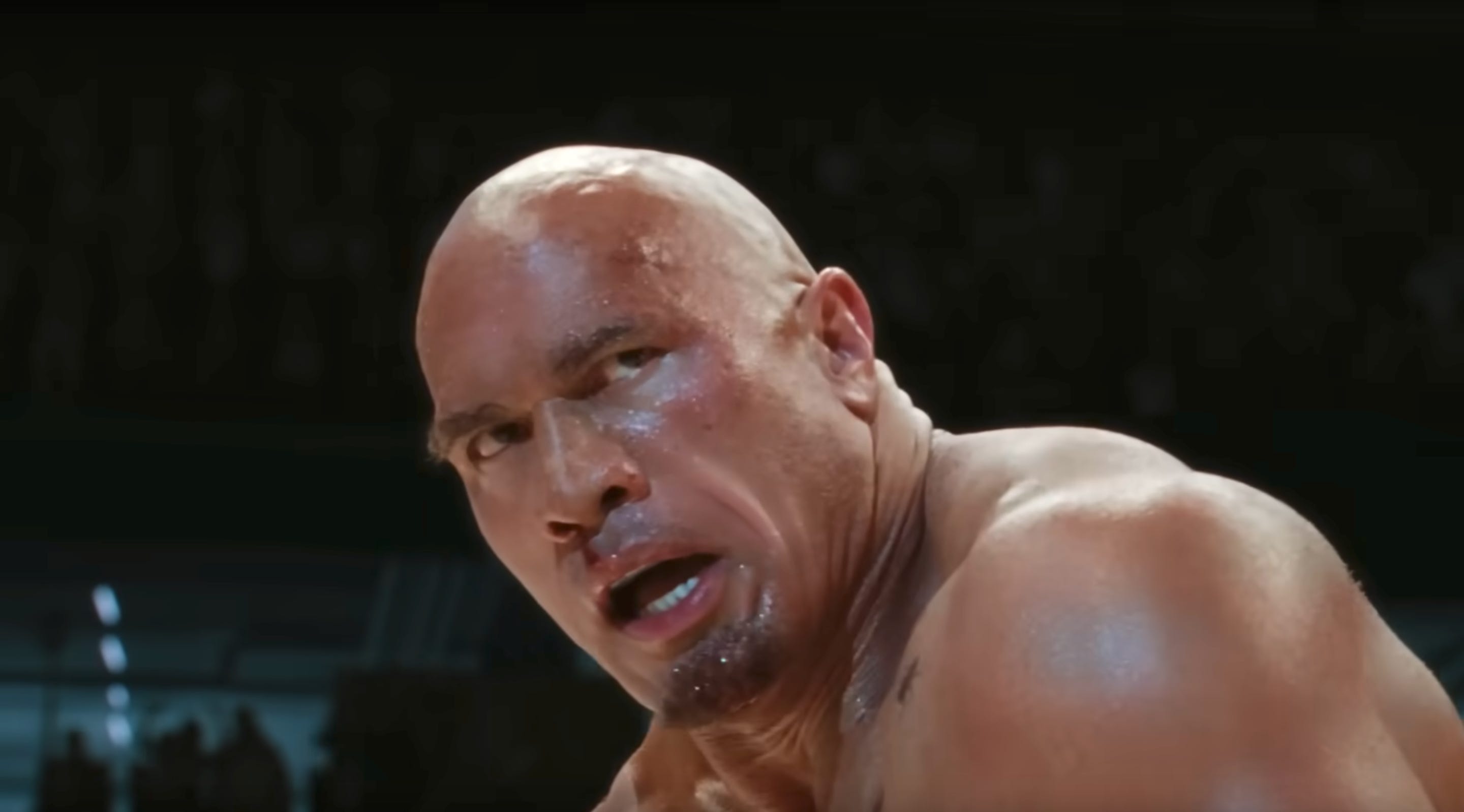
So it was with hopeful trepidation that I went into acclaimed white boy Benny Safdie’s solo debut The Smashing Machine. A classic “big guys who punch each other but have personal problems” movie, The Smashing Machine turns the lens to UFC in the late 1990s, “the bloody thing they’re trying to ban” that’s now one of the highest-earning sports leagues in the world. Safdie’s takeaway is that, despite the violence, these guys are actually really nice - but under that polite sub-façade is unprocessed rage, sadness, and a desire for numbness. These aren’t new ideas, but Safdie’s hope is that the presentation - jacked dudes alternating between blandly smiling and smashing each other’s faces in with their knees - is novel enough to give us two hours of mild entertainment.
I don’t really understand combat sports and am open to there being quite a bit more going on than I can see in combat sports films. Even so, I don’t think The Smashing Machine brings much to the conversation. The classic takeaway from boxing movies is that they’re about how men can’t talk about their feelings, and I’m not sure how many times we’re going to be able to pretend this is an interesting enough insight for an Oscar run. The Smashing Machine doesn’t fall back on tropes so much as it offers up scene after scene of things we’ve seen a dozen times before. Kerr speaks calmly to his girlfriend and then punches a door in half. He fiends for pain meds without ever naming his pain. His training partner becomes his rival but they pretend its alright without ever confronting one another. To overcome these barriers, Kerr engages in a training montage.
It’s inarguable that Benny Safdie is good at making movies, and, routine though this one may be, there are elements that show off his talents. Pretty much everyone in The Smashing Machine is a current or former combat athlete, and, unsurprisingly, the fight choreography looks great. Dwayne Johnson is convincingly unrecognizable despite being one of the ten most famous people on the planet. Emily Blunt gives a performance that in 2025 feels tired but in 2011 would have been nominated for Best Supporting Actress as the co-dependent WAG, and an extended domestic breakdown sequence set to the second half of “Jungleland” is a melodramatic highlight.
And the movie looks good too, shot almost entirely on 16mm handhelds to imitate ‘90s home video and low-budget TV. It’s a good strategy for capturing something extraordinary without overemphasizing its bizarreness. Sometimes that’s unhinged little lines from Johnson (“I’m worried about my tummy,”) and sometimes it’s outlandish snippets from international UFC culture, like a metal guitar performance of the Japanese national anthem juxtaposed against a harp rendition of the “Star Spangled Banner.” The balance leans realism over narrative, enough so that it often feels like we’re watching a low-budget documentary, shot around the turn of the millenium, about a fringe sport that nobody could have predicted was destined to take over the world.
It is now time to expose the open secret of The Smashing Machine. In 2002, there was a documentary about Mark Kerr. It was called The Smashing Machine. Here is the plot of The Smashing Machine (2002), according to Wikipedia: the exact same plot as The Smashing Machine (2025). Here is where you can watch The Smashing Machine (2002) on the internet: nowhere. The two films line up so closely that some of the inexplicable absences in Safdie’s plot - the ramp up of Kerr’s opioid addiction; what exactly is going on with Emily Blunt’s mental health; a satisfying overall narrative or conclusion - are missing simply because they weren’t featured in the documentary.
Did Benny Safdie watch The Smashing Machine (2002) and think that recreating it without substantially changing its content was sufficient narrative direction for a feature film? Or does The Smashing Machine (2025) exist as a collaboration between willing parties to create an Oscars bid for an A-list celebrity who has up to this point primarily served as a B-movie star? I’m almost pleased that Johnson’s box office lunch got eaten by Taylor Swift; awards bids and the resulting gamification that they create is terrible for discourse, but at least a Taylor vs. The Rock weekend can suck itself into an ego vortex without any false grasps at serious criticism.
The Smashing Machine’s kowtowing to the capital and ego of the awards race is so blatant that any artistry involved in its production is rendered, imo, moot. If this sort of exacting recreation excites you - if you love the English version of Funny Games and the Gus Van Sant version of Psycho, if you find some sort of value in music biopics, if you have a genuine belief in verisimilitude - a.) I’d love to talk to you to better understand your worldview, and b.) I still wouldn’t recommend The Smashing Machine because what it’s doing is so obvious. It’s a misuse of talent and a waste of celluloid.2 It’s not bad enough to kill my White Boy Autumn vibe, but it’s a healthy reminder to all of us that not having anything to say is an excellent opportunity to shut up.
I want to go back to my roots as a music video critic for a minute and talk about this Geese album. I’ll preface this by saying I am really out of the loop with music and do not have any idea what’s going on. I think all not-young people have a point at which they realize pop music is no longer for them: for my father it was Boston’s Boston, and for me it was Young Thug’s Jeffrey mixtape in 2016. So the only 2025 song I’d heard prior to Getting Killed was Katseye’s “Gnarly,” which confirmed my worst concerns about irrelevance but also made me feel prescient for listening to P.C. Music back in 2014. It’s weird to be both cool enough to have been there for the origins of the hot new thing but not cool enough for it to spare me from cultural oblivion.
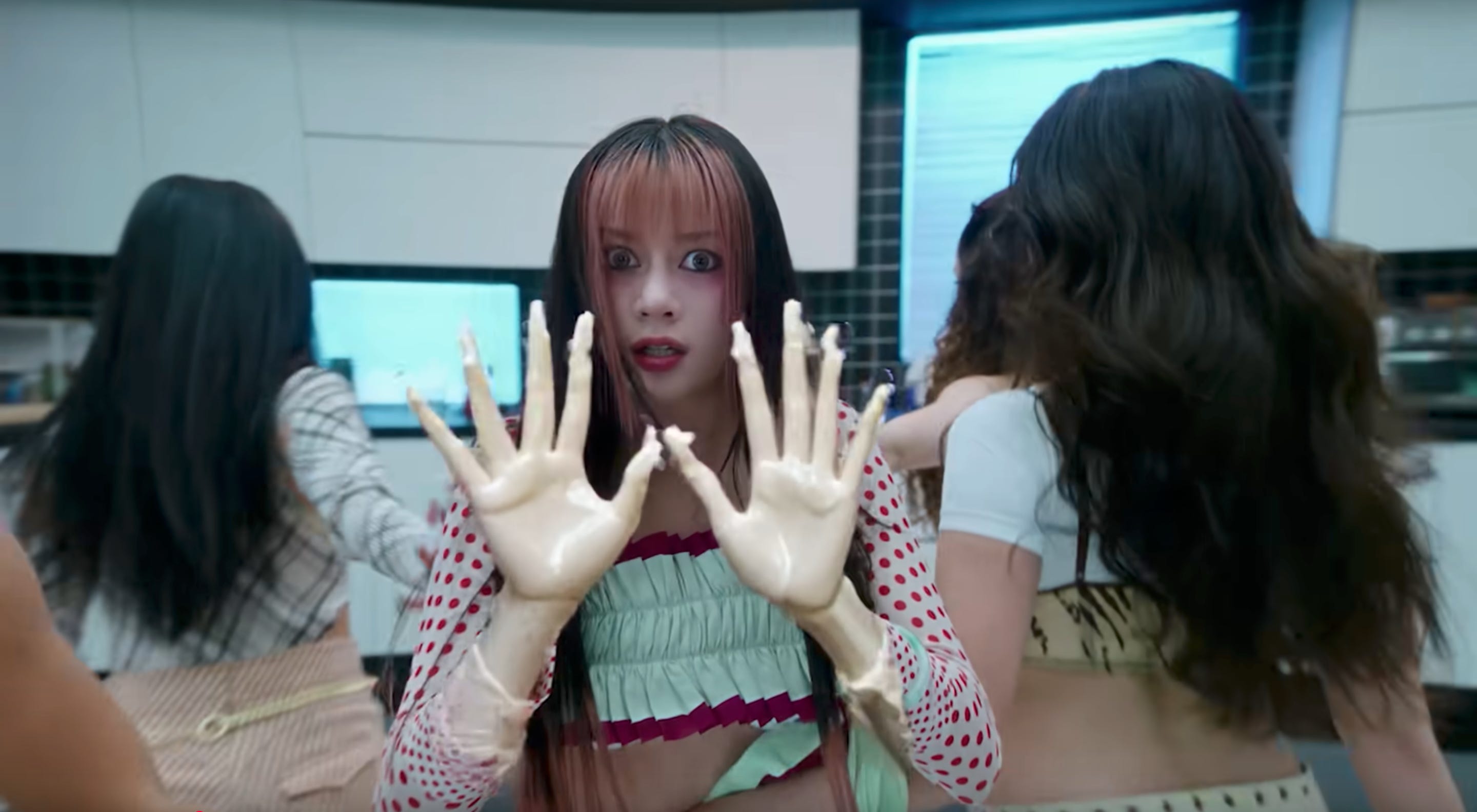
I sort of like “Gnarly”, but also find it disturbing that children like it. The P.C. Music project was (at least sort of) an anti-capitalist protest against the music industry, and it’s unsettling that the result of the K-Pop-ification of the world is an international girl group who sound like something that could have been on a 2014 Sophie mixtape. P.C. Music was designed to make you feel insane and sort of perverse for liking it; “Gnarly” is the acceptance of that insanity and a full embrace of hyperpop pleasure. Both the song and the video encapsulate the Slop Era - unreal bodies, grotesque facial stills, words flashing on screens, disgusting food. It’s designed to create two-second clips for TikTok and shocking screen grabs for Youtube feeds. “Everything is gnarly”: this is very much the vibe that would declare Eddington the defining film of 2025.
No one got it together to proclaim “Gnarly,” or anything else, the 2025 Song of the Summer, but if they’d all been paying closer attention, the honor could have gone to Geese’s "Taxes,” which slipped out in July, ramped up the indie hype of frontman Cameron Winter’s solo album Heavy Metal, and created the conditions for a hyperbolic Pitchfork review, a sold-out tour (St. Paul tickets are going for $470), and enough attention to get me to buy a new physical album for the first time since Ultraviolence.
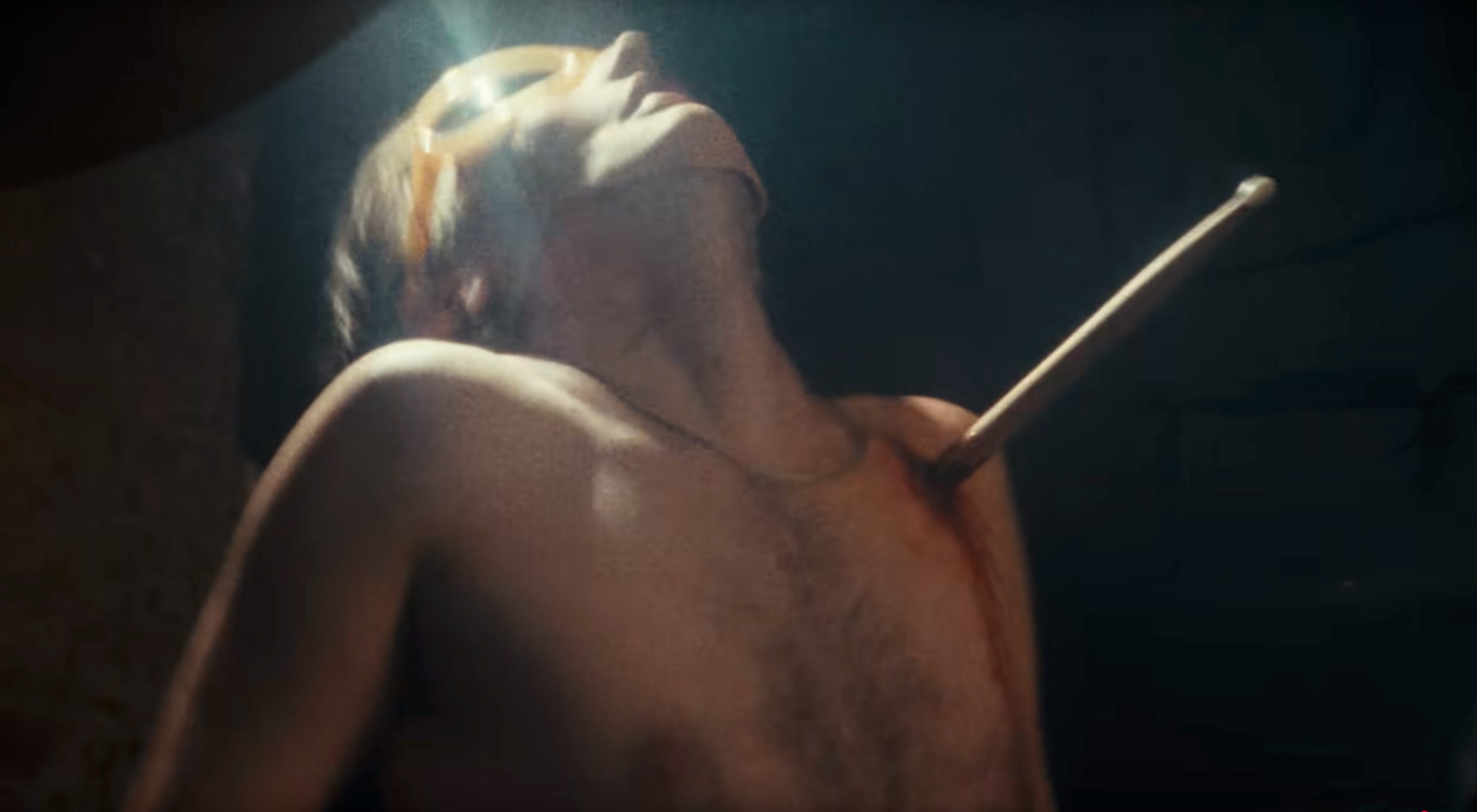
Noel Paul’s “Taxes” video is just as grotesque as the “Gnarly” video but on the opposite end of the spectrum, sort of the 28 Years Later to “Gnarly”’s The Substance. Paul starts with a lo-fi POV camcorder pushing up to the front of a claustrophobic indie show. He flips to 16mm (or a digital imitation) at the “you’re gonna have to nail me down” break, at which point the camera pulls out and the crowd morphs into something like the deleted scenes from Event Horizon. There are tears, there’s cannibalism, there are drumsticks stuck through drummers’ shoulders. It moves too fast to take in, and instead of nasty screen grabs you get a series of blurs that never amount to a coherent statement.
I’ve been trying to put a finger on why (beyond obvious visual aesthetics) these two rapid-fire videos feel so different. Both revel in chaos. Both are filled with barely perceivable unsettling images. Both are set to songs that, 25 years ago, would have been inconceivable as hits.3 But “Gnarly” sounds like a spiralling inward of every sound that’s happened in the 21st century, barfed back out as international hyperpop; “Taxes” sounds like where music might have gone if you scrapped everything that happened after 9/11.4 It reflects the vibe of Getting Killed as a whole, an all-over-the-place record that starts with JPEGMafia screaming “there’s a bomb in my car!” and ends with a Sister Ray-style Biblicalization of Phantom Planet’s “California.” But instead of tearing your brain apart in every direction possible, the chaos is cathartic. Part of that catharsis, I think, comes from being grounded in the musical capacity of four kids who have been friends since middle school and who seem to be very much into the idea of being a band. The “Taxes” video drives this home: chaos, but contained to one room, a whole bunch of crazy feelings and angers and loves, banging together toward one united experience of one band and one performance.
If I were to slap an unresearched thesis onto 21st-century pop music, I’d say it’s defined by a divergence between commentary on the incoherence of the internet (M.I.A., Death Grips, Charli XCX) and an almost reactionary rejection of it (Saddle Creek, Phoebe Bridgers, Chappell Roan). I’m positive Geese aren’t the only artists who have found a route out of that dichotomy, but I’m really enjoying how they’re going about it. Like One Battle After Another, it’s a path toward humanity via chaos, in many ways a rejection of tied-together Meaning in favor of an extra-narrative focus that comes from creative limitations. PTA achieves that focus with analog cameras; Getting Killed does it by restricting four kids to ten days of poorly planned recording in one studio.
Neither of these techniques are innovations, obviously, but tackling de-centralization via material limitation is an approach toward the contemporary condition that I can get behind. There’s something fortuitous about Getting Killed and One Battle After Another coming out on basically the same day and approaching The Moment by similarly chaotic and similarly 20th-century means. It’s not a rejection of the present so much as a Graeber-esque refusal of a technology that isn’t working, a tacit declaration that innovation doesn’t have to be synonymous with tech. OK! For the first time in awhile, it sort of feels like something is happening in popular art, that the infinite-choice dead end is drying up and analog is showing us a path back out.
Or maybe two things that I like came out on my 35th birthday and I feel romantic about it. Whatever. I love that we have some art that’s original, virtuosic, pissed off, and hilarious. We need a shot in the arm right now and I’m here for it. Come at me, Q4 2025. I am ready to get some mayors elected, to engage in respectful, non-violent discourse about the legality of ICE raids, and to never pay my taxes again.
Thanks for reading *life is disappointing.* If you found this newsletter slightly less disappointing than the rest of your life, consider liking, commenting, sending me money (thanks!) or subscribing. Subscribing will get you exactly what you get here but sent to your email inbox. I’m sort of taking next week off to celebrate MEA Weekend (Minnesota’s finest holiday) / my wedding anniversary. Hopefully the trees are pretty and fall continues to roll out after a much delayed start. BUT DON’T WORRY - I’m in the process of finishing up the 2025 MAN V. MACHINE movie bracket - stay tuned next Friday for information and a first look.
To be clear, Emily Green, the guitarist of Geese, is not a boy. If I’ve learned anything in life, it’s that boys benefit, creatively and spiritually, from hanging out with girls.
In filmstock dialectics news: The Smashing Machine inexplicably jumps from 16mm to IMAX for its epilogue. There’s a lot of value in a shift in filmstock to represent big temporal or perspective changes, but why IMAX is needed to depict Dwayne Johnson puttering around buying groceries is beyond me. EDIT: oh my gosh the guy in the last scene is the real Mark Kerr, not The Rock. IMAX still doesn’t make any sense.
Obviously “Taxes” is a long way away from being a hit in any financially measurable sense, and “Gnarly” never got higher than 90 on the Hot 100. But relevance in the discourse is the TRL of 2025.
Descriptions of Getting Killed I’ve heard in the past week: Sticky Fingers meets Amnesiac; Dave Mathews Band meets Ram; Van Morrison meets The Strokes; Edward Sharpe meets Titus Andronicus. I don’t know what the last person was thinking, but I think the rest of these work, which is crazy.