
1776 berghain
variations on a shaker hymn with mona fastvold

Sorry this took awhile. This essay is about The Testament of Ann Lee, a movie no one is going to see. I think you should read it even if you haven’t seen the movie because I worked hard on it and I think it’s pretty good. Also it’s barely about the movie anyway. This newsletter comes out every Friday and I am mildly optimistic that actually means Friday again.
I. I Am The Greatest Man Who Ever Lived.
There are a thousand versions of America. This has always been our thing: “a nation of immigrants,” by choice or compulsion, but there are native people here, so even that doesn’t really work. If anything, we accept individualism as our national identity and self-reliance as our unifying virtue. We are all John Wayne walking out the door, Lesley Gore crying at her party, Herzog’s penguin wandering into the continent.
It’s hard to deny the centrality of the self to a country that invented individual rights and founded itself on as subjective an idea as “the pursuit of happiness.” But if the widespread acceptance of critical histories has taught us anything, it’s the relative insignificance of 1776 to our spiritual DNA. The codification of a handful of documents and the ensconcing of a particular republican ideology by means of war is only one way to create a nation. There are a thousand different Americas, and there are a thousand different starting points.
My family’s America - or at least, one of my family’s Americas - started on Long Island in 1672. I don’t know much about the first Tuthill other than that he settled in Suffolk County under the Connecticut Colony charter. I assume he came over at least somewhat consumed by Calvinist fury. Or maybe he was in love with a true believer, or maybe America was an easy way out of a lousy East Anglian situation. However it happened, he ended up in a radical Puritan community with a strong superiority complex and an unavoidable sense of collectivism. Hate the Puritans all you want, but to focus on their injustices is to deny their obsessive pursuits of education, their efficient urbanity, their celebration of the public good. A bad read of Weber and an over-reliance on Hawthorne has led us to blame them for both capitalism and sexual repression, but the only reason we’re all able to read is because my 14x-great-grandfather insisted upon it.1
Suffolk County was only one phase of the pre-Revolutionary wave of immigration. All sorts of nuts, British and otherwise, came over for all sorts of reasons: dissident, fanatical, millenarian, proto-communist, crassly criminal, genuinely insane.2 You could argue that it was all about colonization with a thin veneer of ideology, and if you look at the ledgers of the charter owners you’d probably be right. But the ordinary people who came here believed in something that could only happen far away from their homeland. The futures that they imagined had nothing to do with imperialism, genocide, federal government, even democracy. They wanted to live their lives under new principles, they wanted to do that without getting harassed, and they wanted to do it in community.3
It took the Tuthill line 250 years to produce my wheeler-dealer grandfather who will always be my paragon of the American individualist. Up to the end of his life, his recurring topics were breaking even on the stock market, getting a condo in Hawaii, dictating his memoirs, and eventually becoming pope (he wasn’t Catholic). If there was ever a Puritan vein in my family it was long buried under the postwar America of frontiers and finance. But the originary spirit comes out in moments of crisis and transformation. In the last conversation I had with my grandfather before he died, he asked me if I thought I was ever going to make any money. I told him I didn’t. He paused for a minute and said, “Good.”

II. I Hunger and Thirst After True Righteousness.
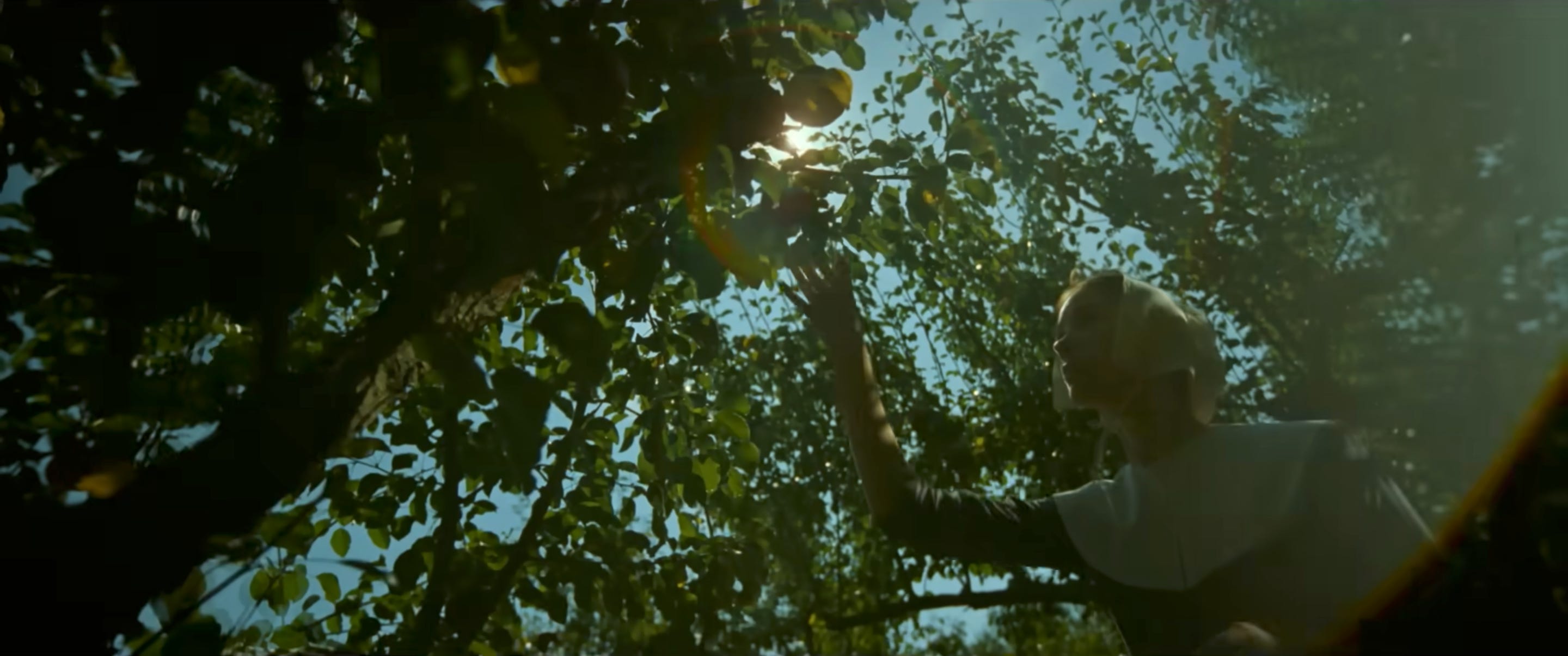
The starting point of another lost America is the subject of Mona Fastvold’s The Testament of Ann Lee. Persecuted for noisy religious expression in her native Manchester, Mother Ann and six other Shaking Quakers secure funding to establish a millenarian church in the New World. They arrive at New York Harbor in August 1774; Lexington and Concord would happen eight months later. Mother Ann is appalled by the commercialism and racism of the city. She sends her compatriots upstate to Niskayuna, where they build a compound and recruit an interracial church that sidesteps the clamor of the Revolution. The community gives tacit support to the Continental Army but refuses to contribute bodies or funds. The only America they believe in engages in kinetic worship, makes beautiful furniture, and refuses to have sex.
Nearly every moment of Ann Lee is loaded with extremity, and different sequences will stand out depending on your focus. If you are currently being abused by a militia that can’t distinguish itself from your average mob but nevertheless claims to be an arm of the American government, you might find Niskayuna’s interactions with the Continental Army to be the most salient moments of the film. The Shakers came to New York to escape brutalization by English authorities, but the primary force that robs them of peace and free expression in the New World is the nascent Revolutionary government. Ann responds to the call to conscription with nonviolent refusal. It leads first to her arrest and then to a physical assault worse than anything she experienced in England, executed by people who call themselves Patriots.
Already, long before the Continental Congress, the Shakers are working out the conflict between national liberty and principled community. “America” offers the possibility of individualized pursuit of happiness so long as you join up with the army and forsake the values of your faith; “Niskayuna” offers an everyday life of community-determined values in rejection of violent nationalism. The Shakers were one particular case, but the entire continent, immigrant or otherwise, would be forced to struggle through this conflict for the next quarter millennium. We’ve never figured out how to cut the tension. It’s the reason American English has come to its abusive relationships with words like “cult” and “commune,” terms that historically reflect faith and community but now connote a disturbed removal from the proper individualism that can only be achieved through submission to the state.
The Revolution ground up the communitarian Americas and blended them into a nation. I’m sure some of my ancestral Tuthills were among the 20% of Connecticut men who fought for the Continental Army, happy to drop their Puritan ideals for the good of the new Republic. But the Shakers held out. If your ideas are crazy enough, it takes more than soldiers and legal documents to drag you into submission. You can walk away from Ann Lee with something less than respect for its title character, but if you let yourself get caught up in the vision you almost believe she’s going to pull it off. As she contemplates Cornwallis’s surrender from her deathbed, Mother Ann dreams of a future when her particular form of salvation, already rooted in the soil of Niskayuna, will spread across the continent. “You must take great care of God’s earth,” she hums. “Yield her increase and develop her beauty. This must be done in a spirit of love. The earth yields most to those who love it.”
The irony, of course, is that it doesn’t. There’s no way a movement that forbids procreation can grow beyond a few hundred followers. Fastvold’s credits tell us that, by 2025, the Shaker population was down to two. But if the spirit of Ann Lee isn’t the triumph of one soteriology but the refusal of all faiths to give into individualism, then there’s a victory behind her madness. There were a thousand different Americas in 1776, and over the next 250 years there would be a thousand more. Some of them never took root. Some of them were choked out by the central tree of liberty, and some of them trellised around it. But most of them kept on growing despite it with no particular interest in the shade it offered or the sunlight it took away. They grew up as one of thousands of trees that would never be adequately documented, trees that would never be measured, trees that forgot themselves until the moment they looked down at their roots and realized that they were still very much alive.
III. I Love Mother, I Love Her Way.
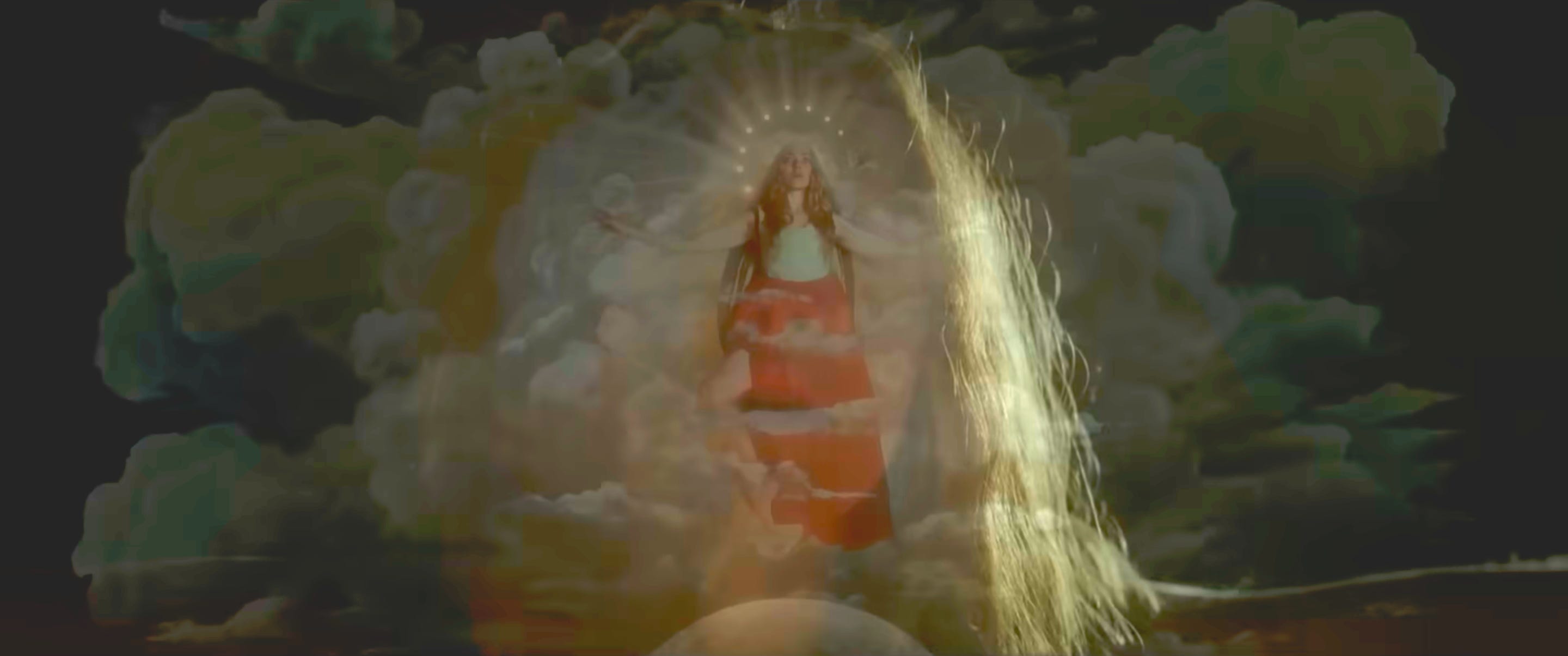
Fastvold differentiates Ann Lee from any number of American biopics by setting it firmly in the key of hagiography. She tells the story of Ann Lee like a religious text, unsentimentally focused on the facts but never questioning that some of them might not be true. Central to the Shakers’ actions is the confidence that Mother Ann is the feminine incarnation of Jesus Christ. Fastvold doesn’t bother with miracles or physical signs of saintliness to prove it, but she never suggests that they’re wrong.
This isn’t the ironized use of “hagiography” that gets thrown around to describe government-sanctioned celebrations of modern saints (or the RBG-candle version that gets sold on Etsy). We’re all familiar with the breathless accounts of great men who earn holidays and half-masts, from George Washington to MLK to Charlie Kirk. Great Man stories treat their protagonists as if they were born with an innate sense of right and wrong. Hagiography, in contrast, tells the story of someone whose achievements result from their openness to something outside themselves. Both stories whitewash the protagonist, but the hagiography covers not a person’s flaws but the components of their life that weren’t taken over by the Holy Spirit.
Fastvold shows her hagiographic hand in Ann Lee’s approach to movement. Most of her blocking is stiff, often verging on tableau. But she breaks from this formalism in scenes when the Spirit has clearly entered the script. This is most obvious in the contrast between sex scenes and worship scenes. The sex scenes, if you can call them that, are passionless and uncomfortably rigid, comparable to the Georgian-era woodcut porn that inspires them. In contrast, the worship scenes mimic the typical cinematic beats of sex: close-up gasping, rolling eyes, quick-cut undulations, cameras that move too fast for the viewer to tell which body part is touching which. They move to Daniel Blumberg’s hymn-inspired score that flows through these scenes the way gilt flows through Orthodox iconography. Music and movement brought on through total submission to God’s will, the film running in time with the spirit.
To toss out an under-researched hypothesis, I’m going to venture that the hagiography is the biography of inaction. Divine revelation enters sometime in the first act, and from there the story progresses to the conclusion without character development, turning points, or plot. In Ann Lee, little to nothing results from deliberate action. The only active character is God, and everyone else is just a component of his work, ready to run through the woods, plane furniture, or get beaten to death for his will. A traditional biopic builds up to a critical decision; Ann Lee climaxes with a pummeling. This sort of passivity is un-American and makes for uncomfortable cinema. It’s at least one of the reasons the woman sitting behind me shook her head as the credits rolled and muttered, “Rediculous.”
It’s worth considering what we lose when we reject this sort of narrative. We’re happy to canonize a martyr when they’re dead, but we’re loathe to celebrate someone’s ability to be a body in life. It’s great to celebrate self-determination and the ability of humans to make choices, but we don’t have many American stories of heroes whose choice was to give their lives over to something outside themselves. We’re missing the sainthood of motion, the hagiography of works, the acceptance of a selflessness that doesn’t only claim us in death. We’re missing an acknowledgement of the spirit that moves through the living, and a celebration of the living who open themselves up to the spirit.
IV. I’m Not Kidding This Time, God Is Actually Real.
By some weird twists of fate that don’t make much sense even to me, my family betrayed my Calvinist forebears and I ended up baptized Catholic. I’ve gone back and forth on how I feel about that throughout my life, and I wish I could say in times of community crisis that I feel closer to God and my church. But I can’t. It’s been hard to make it to Mass this past year and feel anything other than that maybe Martin Luther was right. I’m disgusted with my church that has yet to condemn her fascist appropriation in the upper echelons of our government. I’m embarassed that it’s the Mainline Protestant pastors, not our priests, who are out there shouting in the streets.
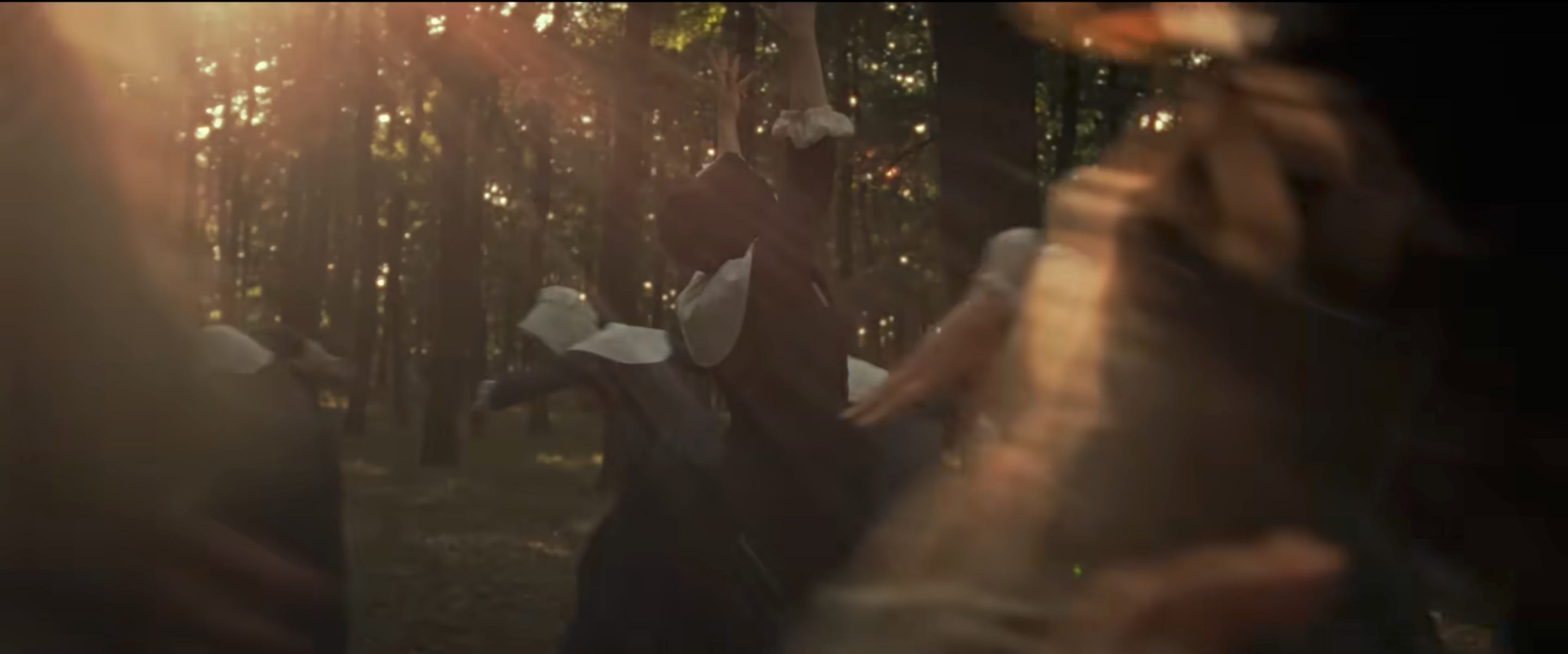
I can see how a cold-blooded Anglican in High Church Manchester would come around to the rapture of Shaker worship. I haven’t been crying in movies much lately, but the first worship sequence in Ann Lee is the only time this year so far that I’ve been moved me to tears. Fastvold lets her camera get lost in the communal release of kinetic dance and open syllables, and the ecstasy on Amanda Seyfried’s face is ten times the rapture summoned by all the other actors who got Oscar nominations over her.4 It made me feel something in the cinematic moment and an absence when it was done. What is the point of church if not to get people outside themselves and therefore closer to God? Why would there be a spirit whose primary motivation is anything other than letting scared people dance?
I don’t think Catholicism is closed to this sort of exuberance, but it’s hard in times of crisis to see past the tabernacle. The reminders of what’s inside only makes the gilt doors thicker. The only thing I’ve been listening to lately is Rosalía’s LUX, for my money the most important record of the past ten years. From the first time I listened to it until now, I’m forced to stop everything I’m doing at the climax of “Mio Christo Piange Diamante,” an aria inspired by the friendship between Sts. Francis and Clare of Assisi. “My dear friend, with you gravity is graceful, and grace is grave,” Rosalía sings in breaking Italian. “My Christ cries diamonds; I take you with me always.” This is a particularly Catholic form of spiritual madness: the gleam of the monstrance, the musk of the thurible, the crunch of the host and the sour of corked wine. If you can’t give us dancing, at least give us opera. Instead we get track lights and paltry calls for peace.
This is not a Catholic newsletter; this is not a place to wonder where we could find God again in a broken Church. But I’m looking for my Christ who cries diamonds - or if I can’t find him, then my Christ who plants trees, who exhales in communion and sings in circle dances, who doesn’t hide behind the stonewall of a sacrament whose Real Presence is buried so deep beneath a refusal to act that I can’t take it with the purity of heart demanded by 1 Corinthians. Let me be a Christian, Lord. Don’t bother with my unbelief, but give me something to do.
Divine silence is a symptom of getting older, I guess, and the inability to be moved by voices is one of sanity. And yet, here I am in the godless city of Minneapolis, and all around me I’m seeing people who are neither crazy nor Christian living out the most basic tenets of Christianity with a fervor that has to be equated with holy madness. Love the neighbor, feed the poor, protect the immigrant, defend the vulnerable, all at the risk of indignity and death. Christians can’t claim the virtues of basic human decency (no matter how hard they try), but for years Christian worship was the way a majority of Americans got their weekly reminder to be good to one other. No one got the reminder this time. It just happened, seemingly out of nowhere, as if everybody just suddenly knew what to do, as if they’d always known how to do it. The saintliness that our culture hates the most, this un-American capacity to become a selfless component of a particular community - I don’t know where it came from. Maybe it’s been here forever and we’re only just noticing it.
Scratch that “maybe.” Of course it’s been here. Christ has been crying diamonds all this time. It’s just people like me who were waiting so long for something to happen that we didn’t notice it was happening.
V. We Must Love Each Other And Support Each Other - or, The Only Way to Save Us Is Through Divine Intervention.
We’ve been in some form of national crisis for awhile now. This is obvious. Things are not coming together, and it’s clear that evocations of shared national identity are never going to solve it. Because that national identity is the problem. It will never be the solution. We are not an American people. We were only ever made an American people at the barrel of a gun.
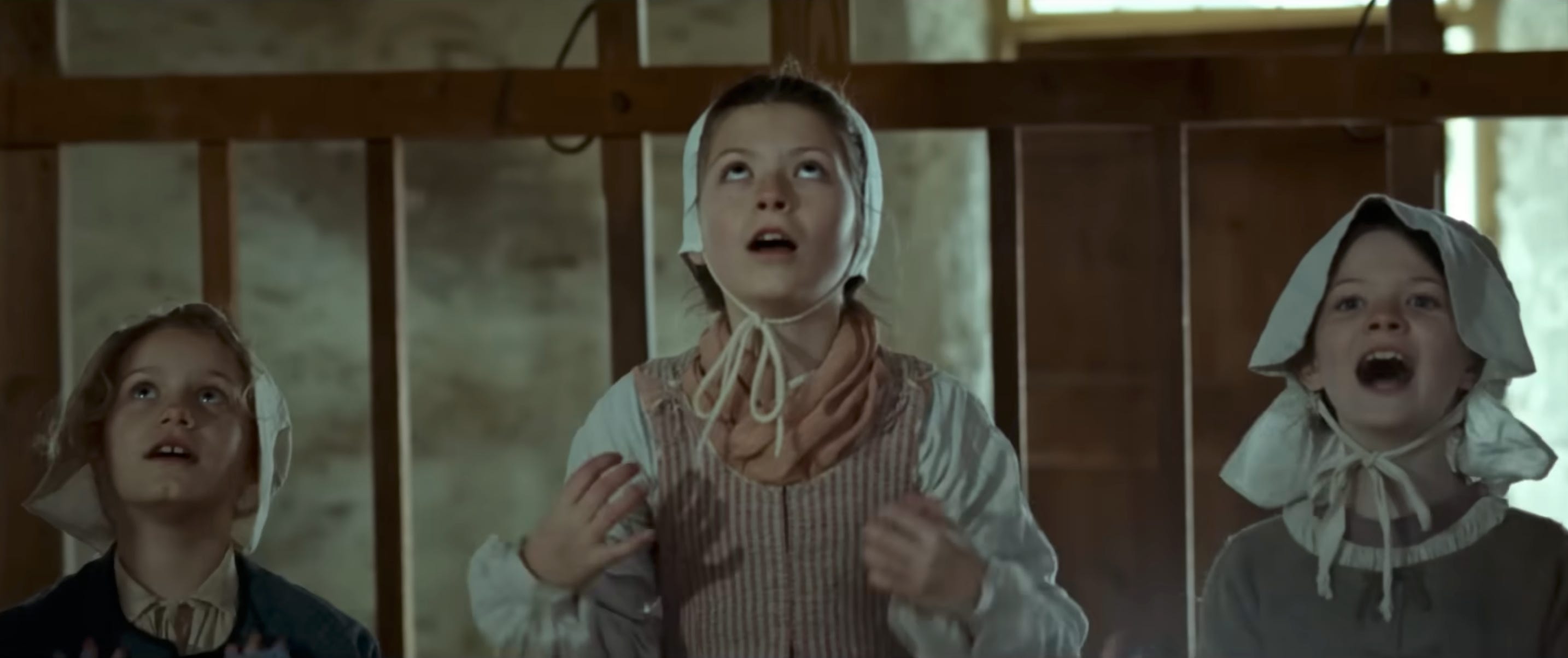
The high point of LUX is “Berghain,” a song named after a place of total inhibition and universalized experience. After two minutes of arpeggiating violins and anxious German, Björk, more or less the voice of God in popular music, appears out of nowhere and howls in English, “The only way to save us is through divine intervention.” It echoes the self-annihilation of the wildest parts of Ann Lee, the moments when Amanda Seyfried gives herself over to God so fully that all that’s left is a body, an aspiration, a scream. What else do we have if the church offers nothing, if the originary American dream is dead, if the Shakers are down to two and the only community we have left is a false national identity under a tattered American flag?
The question is its own answer. What we still have is the madness that brought us here in the first place. Our foundation is a disconnected series of dreams that makes collectivism and the tolerance of other collectivisms possible. We will never unite as an American people, and we have no business doing it, because we are not a legitimate nation. We are a country of states, and more importantly than that, a country of cities within states, neighborhoods within cities, communities within neighborhoods. We survive when we give ourselves over to our originary fervor, the spirit that denies the hope of becoming Great Men and transforms us into saints that will live and die for our neighbors. Where do we find the organization for a General Strike? Where do we find a decentralized network of mutual aid, community defenders, and first responders?5 It’s the same place that brings about collective religious mania - the experience that allows the self to be transcended in favor of becoming the component part it was born to be. It’s something that exists despite all our best work to deny it. We aren’t waiting on salvation. Divine intervention was always already here.
Believing in God doesn’t make very much sense, which is sort of the point, but I can’t knock anyone for saying they aren’t up for it. And I don’t want to be too romantic about the current moment, even though it’s obvious to everyone that something happened in Minneapolis this winter that hasn’t happened in a generation. So I won’t say that this is a Pentecost, that the Holy Spirit is sweeping through the upper Midwest. But I will say that we’re in the middle of something like the collective experience of the Niskayuna dance. We are discovering ways to use our bodies and voices that have felt dead for decades. If the individual rights promised to us are being stripped away by the very nationalism that granted them, the communitarianism that we thought we sacrificed is rising up to replace them both. The city is yielding to those who cultivate her beauty. God is a thousand shouts in the street, and no one is ready to hear their harmony. Where we go from there I have no idea, but a thousand dorment Americas are diamond buds on the verge of spring, and some sort of spirit is singing through all of them.
Thanks for reading *life is disappointing.* If you found this newsletter slightly less disappointing than the rest of your life, consider liking, commenting, sending me money (thanks!) or subscribing. Subscribing will get you exactly what you get here but sent to your email inbox. I’ll be back next week for real this time to chatter about Nirvanna the Band the Show the Movie, and maybe also Peter Hujar’s Day and Blue Moon.
I like Weber and Hawthorne, but the book about Puritans everyone should read is Perry Miller's The New England Mind: The Seventeenth Century. I’m sure contemporary historians have beef with Miller for some reason or another, but I don’t think there’s anyone out there who spent more time reading the actual records and writings of pre-Revolutionary New England.
For more on this, see Brendan Bailyn’s The Barbarous Years - The Peopling of British North America: The Conflict of Civilizations, 1600-1675. With significantly more reservations I also like David Hackett Fischer’s Albion’s Seed, which does a beautiful job of establishing the fragmented folk history of the East Coast but has unfortunately been co-opted by J.D. Vance-types because of Fischer’s comparatively stupid concluding chapters about the long-term politics effects of the Scotch-Irish personality, etc.
It is patently obvious that many people, Puritan and otherwise, came over with intent to kill, enslave, and exploit, primarily for the purpose of making money. What I’ll suggest then is the fairly uncool possibility that a person could be both loving and an asshole, passionately Christian and willing to kill, into public schools and also excited about devastating native ecosystems. Most people are kind of shitty on their own but posess a fundamental desire to love their neighbors. I can’t prove it but I hold that truth to be self-evident.
Her only competition in that arena is Chase Infiniti. Who also didn’t get a nomination. This is not the time to complain about Oscar nominations. I have complaints.
The myth of George Soros and the funded Antifa network: the Right’s admission that they never believed in God.
I truly couldn't stand this movie but I'm glad you got something out of it, and something beautiful and important at that. All I got was a self-serious 2.5 hour piece of community theater with a highly overrated lead performance.
I loved this. To see one's life's work reflected in the musings of the next generation is a remarkable and incredibly hopeful experience. I won't quote you correctly here, but your ending assertion about the many voices in the street with no one able (or should we say willing?) to hear their harmony reflects, at least in my heart, the importance of each individual life offering itself to the great jigsaw puzzle we are all trying to solve - the amazing chorus we are all trying to sing - the human connectedness underlying the individual expressions that we all are.