
second annual romcom report
among many other things, incl. more scorsese, the video store mpls updates, and ****HAÇIENDA 3*****

My goal with this newsletter is to write about new films as they reach general release, along with seasonally appropriate commentary on other cinematic events and interests. Did you know that this was maybe the most successful box office week in the history of cinema? To celebrate, we’ve got an essay for the Trylon about Martin Scorsese’s The Color of Money, the annual *life is disappointing* romcom report ft. Olivia Wilde’s The Invite, and some updates about stuff that I’m doing on the internet. *SPOILERS FOR THE INVITE.* This newsletter comes out every other Friday.
[Robert Rossen, The Hustler (1961, Fandango At Home). Martin Scorsese, The Color of Money (1986, Fandango At Home). Rebecca Miller, Mr. Scorsese (2025, Apple TV, on laptop). David Frankel, The Devil Wears Prada (2006, multiple viewings, various homeviewing formats). David Frankel, The Devil Wears Prada 2 (2026, The Main). Olivia Wilde, The Invite (2026, The Main). Michael Angelo Covino, Splitsville (2025, The Main). Edward Albee, Who’s Afraid of Virginia Woolf? (1962, read in high school). Kristoffer Borgli, The Drama (2026, somewhere in Lincoln, Nebraska). Celine Song, Materialists (2025, The Main). Harry Lighton, Pillion (2026, The Main).]
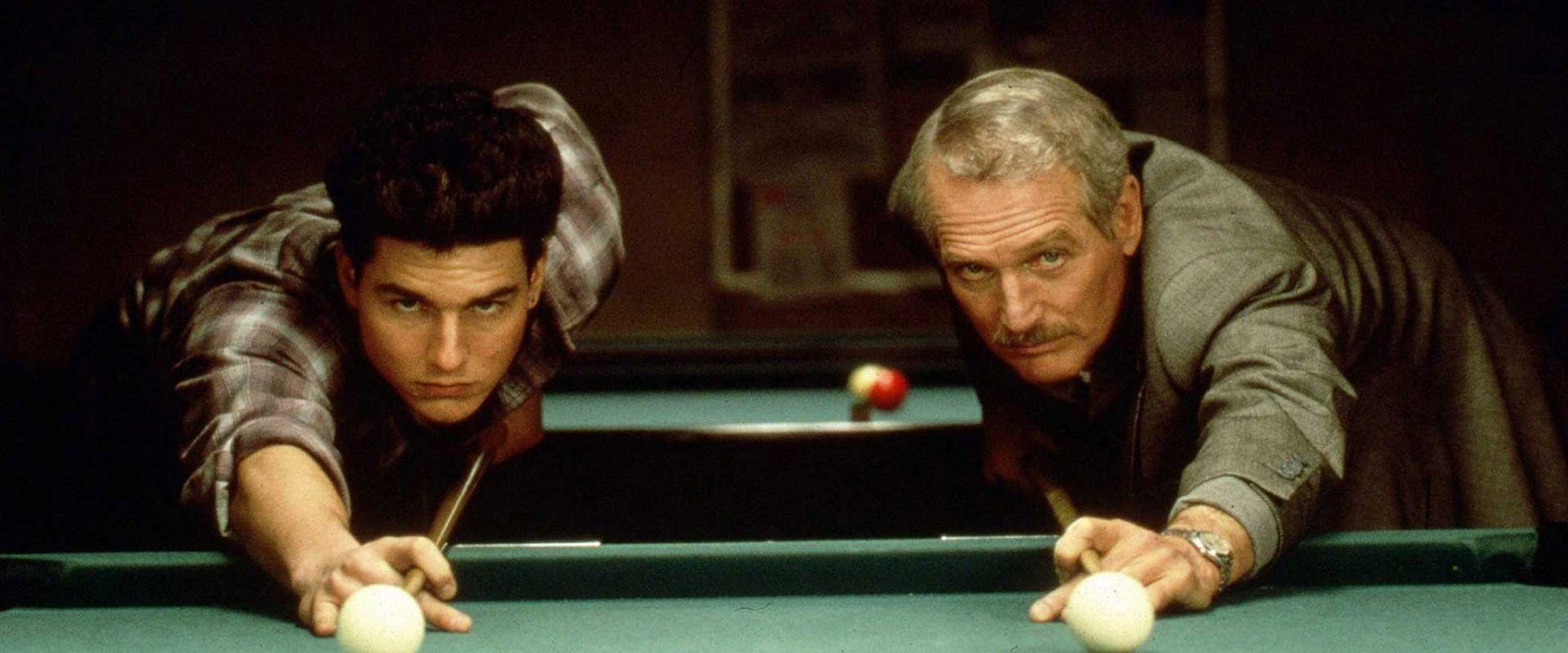
I wrote an essay for the Trylon’s Perisphere blog about Martin Scorsese’s 1986 film The Color of Money and you can read it NOW.1 A goal I have is to write an essay about every Scorsese film and eventually get it published by Routledge with the title Tuthill on Scorsese or something like that. These are the delusions of grandeur that keep me alive. I obviously love this guy and have a lot of interesting-to-me-at-least things to say about him. (Blank Check, if you are reading this please disregard what I said about podcasts two weeks ago and consider bringing me on, I will talk about anything, “The Big Shave,” Kundun, Martin Scorsese Presents: The Saints, you name it.)
The essay is called “originary sequels” and explores the inherent meta-cinema qualities of the sequel. In some ways I think every Scorsese film is a sequel (or at least a remake), but this is his only movie that explicitly acknowledges that. Here’s the start of it - check out the whole thing at Perisphere.
Maybe nothing has raised the moviegoing populace to space-brain meta-awareness more than the sequel. The sequel presents itself as a new window into an already established cinematic universe, but in reality it exposes the moviemaking infrastructure to which that film was only ever secondary. This meta-layer has existed since the invention of the camera, but it was the sequel that made it obvious to everyone that the real story of cinema is its production.
This runs contrary to the romantic perception of the sequel as a return to and a deepening of a narrative setting. The seque doubles the complexity of the world of the original film, but only at the cost of making explicit the means of the original film’s production. With no access to an actual, continuously existing universe, sequels rely on replicating the cinematic techniques used to create the first film: soundtrack leitmotifs, reconstructed plots, cameo appearances, self-aware callbacks, “key jangling.” With referentiality comes a self-awareness that disrupts the posibility of unmediated representation. If an original film can be coy about its produced nature, the sequel has no choice but to make it obvious.
The financial incentive behind all of this goes without saying, and the meta- qualities of the sequel invites the audience into the speculative mindset of a studio executive. The audience leaves the theater not only hyper-aware that we’ve just seen A Movie, but A Movie created by a studio system whose fundamental purpose is risk-averse profit. This is particularly true of the lega-sequel. The Devil Wears Prade 2, the twenty-year follow-up to 2006’s The Devil Wears Prada and currently the no. seven film of 2026, is a straightforward example. Celebrated to some degree for its loyalty to the original film, DWP2 works for two hours by repeating plot points, laugh lines, scene settings, and performances familiar to fans of the original. The audience, like the studio, never runs the risk of encountering something unfamiliar - in fact, we’re regularly reminded that we’re participating in the profit squeezing of a piece of still-valuable intellectual property. Your mind turns to market comparisons (did the sequel do better than the original?), which quickly leads to contemplation of product placements, the incentives behind the celebrity cameos - in other words, the reduction of the film to nothing more than a property on a speculative market.
Is it possible for a sequel to escape this condition? Forty years before The Devil Wears Prada 2 came The Color of Money, arguably Hollywood’s first lega-sequel, the 25-year follow-up to Robert Rossen’s The Hustler. The financial origins of The Color of Money are evident in its name: Touchstone wanted to explore new venues for capital, Martin Scorsese wanted to convince the studios that he was worth the risk to finance The Last Temptation of Christ, Paul Newman wanted the Oscar he should have won for the original. Artistically, nothing about The Hustler calls out for a follow-up. It ends as a closed universe: Fast Eddie is forced out of his pool career, his girlfriend is dead, his relationships are severed, his integrity is squandered, hustling is exposed as a morally vacant and best-lest-alone depravity . . .
Read the rest at Perisphere, and come see The Color of Money at the Trylon, Sunday 16 August - Tuesday 18 August.
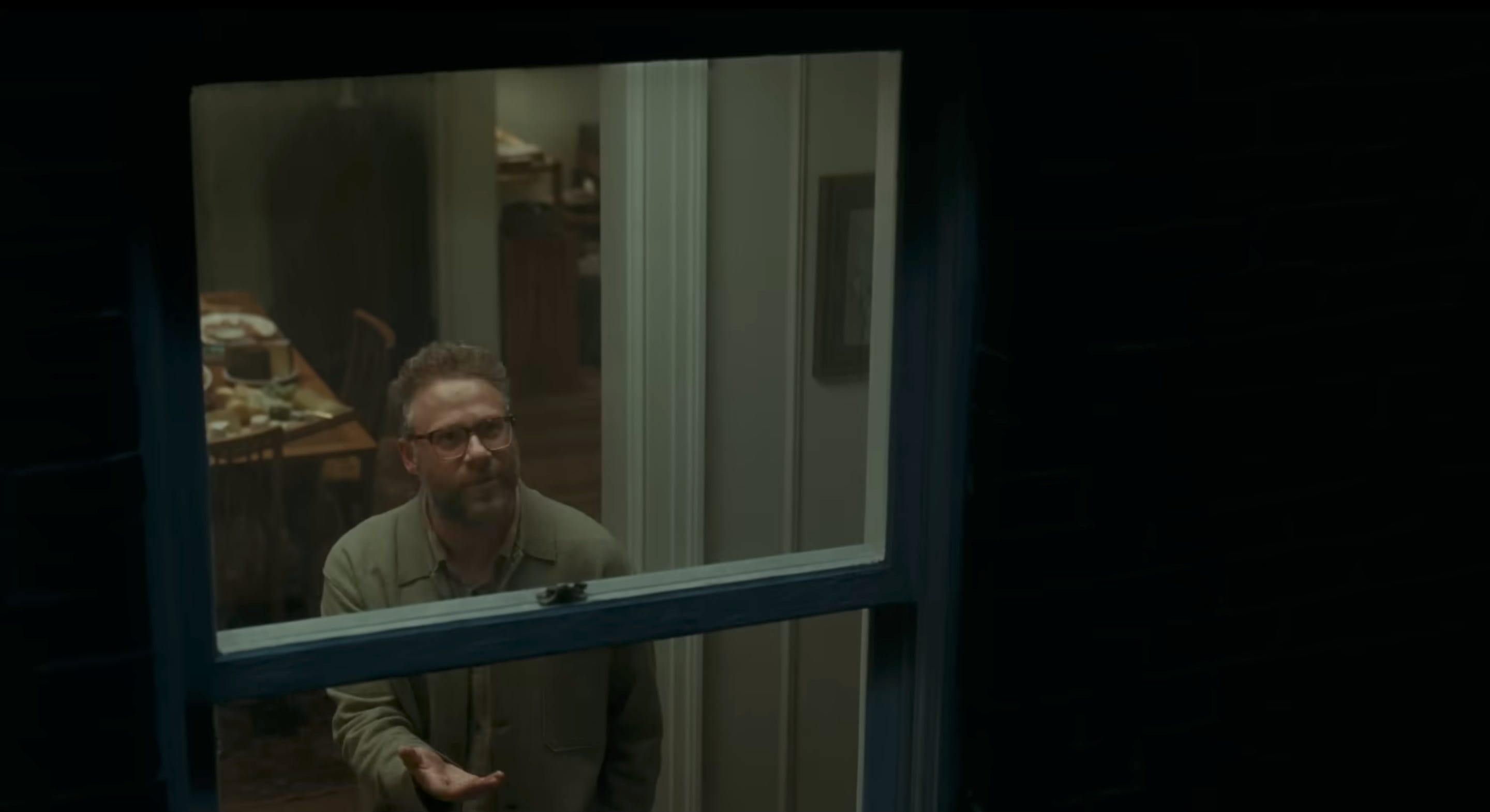
OK, time for the annual *life is disappointing* State of the Romantic Comedy check-in. The Invite is an almost perfect demonstration of an argument I made a year ago, that the basic structure of the commercial romantic comedy is inescapably conservative and that cynicism is only a sylistic trend, not an actual shift in how cinema wants us to look at love. Ostensibly a divorce comedy about polyamory, Olivia Wilde’s third film is, very much like its 2025 analogue Splitsville, a movie about the enduring power of heterosexual marriage with a subtext of “wouldn’t it be cool if two famously beautiful women wanted to kiss paunchy, middle-aged slobs?”
I found it to be funnier than Splitsville, mostly because Wilde lets Seth Rogan mutter some of the funniest things ever said under his breath and mixes the sound in such an extreme way that you’re able to hear him. Rogan gets the entire cast on his level, and they all nail the assignment. Olivia Wilde plays basically herself but a blocked artist obsessed with interior design (ok), Rogan plays basically himself but a guy who was cool in 2008 (yep), Penelope Cruz plays basically herself but a sex therapist (uh-huh), Edward Norton plays basically himself but a retired firefighter (hmm). I can’t say I’ve been closely following Wilde’s directorial career, but in this one she does a good job of staying out of the way and letting her actors (which I guess includes herself) do their stuff. Almost to a psychotic degree - the apartment actively reminds you that it’s a sound stage, sealed tight against the elements, no street sounds, no air conditioner hums, nothing but sterile silence covered up in talking. It makes the silences all the more painful, and the music cues when they come all the more manipulative.
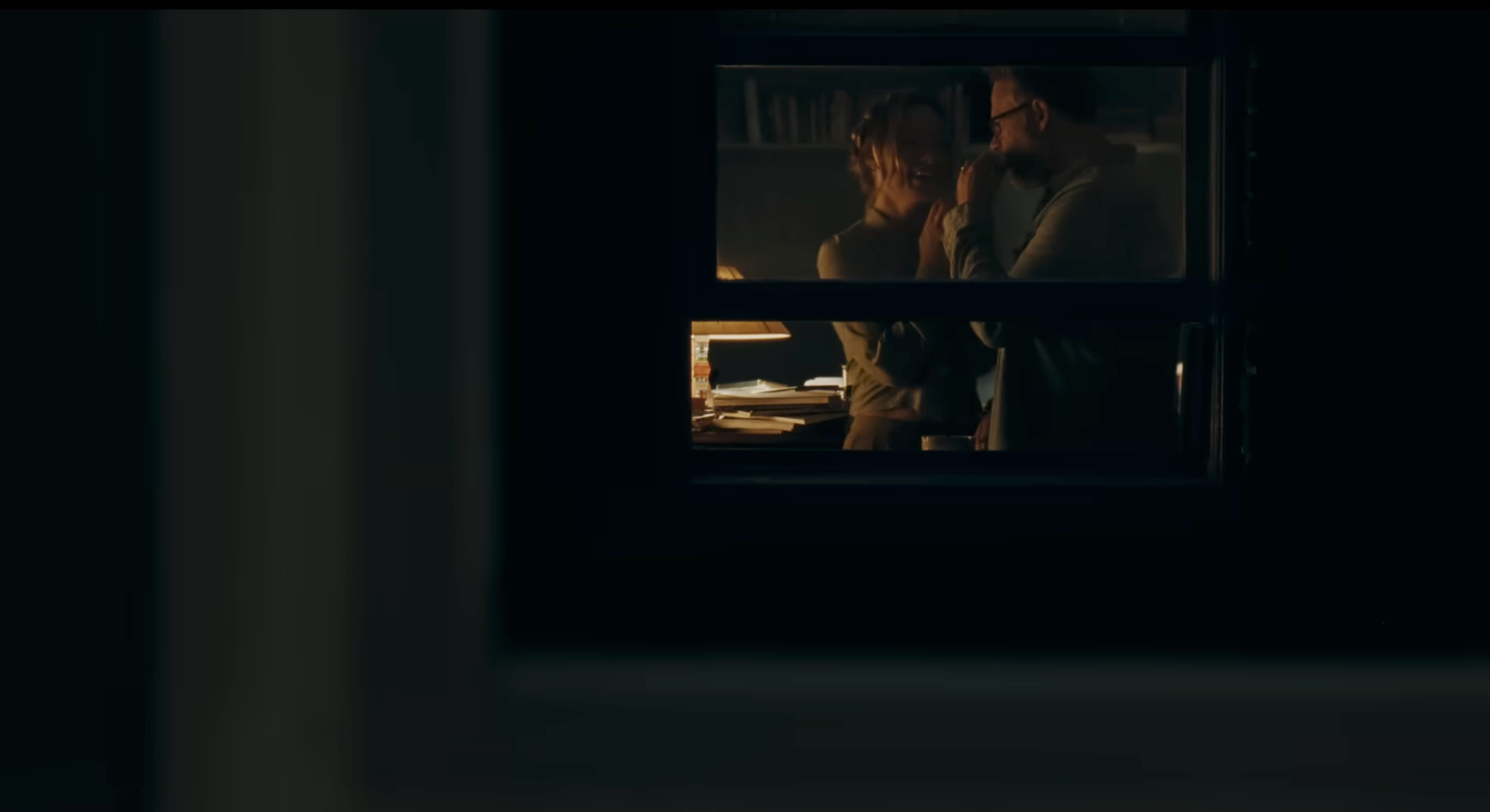
The vibes are strange enough that I was almost convinced this movie was going somewhere. But, like most of its peers, it ends up pleasant, normal, and kind of boring. Wilde follows the rhythm of Who’s Afraid of Virginia Woolf?, climaxes with a divorce agreement, and then in the quiet, final moments spirals back to the enduring power of marital love. The camera moves out of the house and films that last moments through the window, a fairly explicit commentary on outward appearances and their disruption when you actually step inside - but sweetness, not falseness, imbues that final shot, as if to say the external image finally reflects the interior.2
I liked it, I like monogamy, this ending made me happy even if I was bored. Most things that make people happy when they’re closer to 40 than 20 are boring. And making boring people in their 30s and 40s happy is the only way romantic comedies can succeed, because the point of these movies is to leave the audience feeling more or less not disturbed. I’m not God or the census, but I think if you asked around, a majority of people would tell you that, in their heart of hearts, they 1., yearn for monogamy, 2., are somewhat intrigued but ultimately disturbed by group sex, and 3., mostly just want the relatable couple in the movie to solve their problems in a nice, normal way that won’t send their child to therapy. You can’t make a comedy about romance that disrupts convention and expect it to achieve any degree of popular success. If it did, it would stop being a romantic comedy and become something else.
The same thing happened with The Drama, maybe this year’s analog to Materialists. I expected Kristoffer Borgli, who is kind of a sick fuck, to do something terrible with Pattinson and Zendaya, but the real twist of that movie is that they can actually hack it together, that in the end forgiveness is possible and two unwell but ultimately relatable people can successfully move on and love each other. I liked The Drama quite a bit but it’s an extremely normal movie. I might have loved it because it’s a normal movie, I am kind of a normal person. But even the vastly more queer Pillion finds itself pining for monogamous stability. Dudley the normie is the protagonist, not the legitimately freaky Alexander Skarsgaard. In the end Harry Lighton presents a yearning for a conventional relationship with kinks in the background, sex stuff confined to the bedroom while English suburban life goes on.
In the end, all the romantic comedy can do is put on the dressings of kink and cynicism, incorporating the comedic form of its era but ultimately landing in the evergreen space of marriage as the romantic mode par excellence. I am beating a dead Dudley here but whatever - I’m not trying to say this is good or bad, I’m just arguing that this is how genre convention works and there’s nothing we can do about that due to the nature of convention. The romcom is a status-quo genre at its heart, and unless we truly disrupt the norms of the nuclear family and the monogamous heads-of-household, our movies will fall back on that reality. Breaking up the family is not really my brand of revolutionary project, big Mary/Joseph/Jesus fan here, but my extremely vanilla feelings on this topic are moot. If you want to see where the world is at on this subject, keep looking at what it offers in its romances. Not the smutty kind that indulges in fantasy - the cozy kind that reveal what the audience actually wants, where they seek comfort, where they come back to roost after a psychosomatic back spasm gets them out of the invitation to get pegged to Sade by Penelope Cruz. Decades of bad readings of Freud and allusions to a Kinsey report that nobody has actually read have convinced us that the fantasy sequences are the true reality and that a good reading of a text treats narrative convention as a distraction. Radical readings can do lots of good, but it seems in bad faith to argue that a text that begins with a straight married couple, introduces a villainous, less-straight couple, and then ends with a reaffirmation of straight marriage, is anything but an exceptionally straight movie. I’m not celebrating The Invite’s straightness and I’m not criticizing it. But if you’re looking for what a movie is actually about, don’t forget to check out what it actually seems to be trying to say.3
I threatened that I was going to make some format shifts a couple weeks ago, and behold, I’ve made them. The first you might have already noticed - the background of this webpage is a slightly darker shade of gray. But that’s not just because I discovered some design buttons on Substack that I hadn’t noticed before - it’s because I’m conforming *life is disappointing*’s color settings to its new parent site, haçienda 3 at https://dumbledoredid911.net.
What is haçienda 3? I don’t know, I think it sounds cool. That’s not true, there’s sort of a reason for the name, but I’ll let you decide what it is. Mostly it’s an online space where I’m consolidating a few different projects that I’ve been working on over the past couple years. Have some fun playing around with the website. I’ve hidden quite a bit of stuff in there that even I don’t know how to access.
There will be more down the road. I’m working on some audiovisual/conceptual projects that I’ll upload when I’m done with them - no real deadline, summer is coming to a close and I’m starting a new job role in September that will probably take up more of my time than I’d like to think about. But I think this will all be a lot of fun and fairly aligned with ideas and interests of *life is disappointing*. In the near-ish future I’ll be offering up an additional component of this newsletter that you can incorporate into your subscription if you want updates. I haven’t figured out how to do that yet, so stay tuned.
“Some housekeeping”: If you are a bookmarks person, don’t worry, all old links will forward to the new URL. If you are a read-in-your-inbox person, your life has been completely uneffected by this and you might be wondering what I’m even talking about. If you are a search-up-on-Google-to-get-to-this-webpage person, you are making a mistake, this newsletter was built around some of the worst SEO of all time. THANKS FOR YOUR SUPPORT.
One last thing. The Video Store met their initial fundraising goal in five days. Sent with balloons. That means that this is very likely actually happening - great news for Minneapolis. There are many more tiers of goal to meet and you can still contribute if you are into it.

Thanks for reading *life is disappointing.* If you found this newsletter slightly less disappointing than the rest of your life, consider liking, commenting, sending me money (thanks!), subscribing, or checking out haçienda 3 at https://dumbledoredid911.net and telling all your friends to do the same. I’ll actually be back NEXT week with a link to another very on-brand essay for the Trylon about Keanu Reeve’s incredible 1991 - and then back for real the following week to talk about CAMP MIASMA.
hmm just kidding, it’s not posted yet. I’ll update this link when it’s up there.
Maybe you read it differently. Maybe the film is a Roschach and this is my ingrained Catholic conservatism/romanticism speaking,
Does anyone disagrees with me here? I don’t know, I’m arguing with a read of this movie written by someone who doesn’t exist. I didn’t read any reviews, barely anyone I know has even seen it. How much of our perception of “the discourse” is either an imaginary affirmation of what you believe or a strawman negation that allows you to establish yourself as an individual? I truly have no idea what everybody’s talking about and in fact I don’t think they’re talking about this movie at all, it barely made $20 million. What if criticism wasn’t an argument but a series of observations about what’s actually in front of you? This is an aspirational approach, I will work on it, I wonder if it will turn me into a happier person who likes things.