
train in vain // 2025 MOVIE BRACKET ROUND ONE
clint bentley presents a late-game contribution to the MAN v. MACHINE fight // MAN v. MACHINE round ONE voting beings NOW

My goal with this newsletter is to write about new films as they reach general release, along with some seasonally appropriate commentary on other cinematic events and interests. This week we’re kicking off MAN // MACHINE BRACKET VOTING with some help from Clint Bentley’s debut film Train Dreams, in theaters for a bit longer and heading to Netflix later this month.
If you’re here just to vote for M//M round one, scroll down about halfway for more information. Or if you think you know what you need to do, press this button and vote:
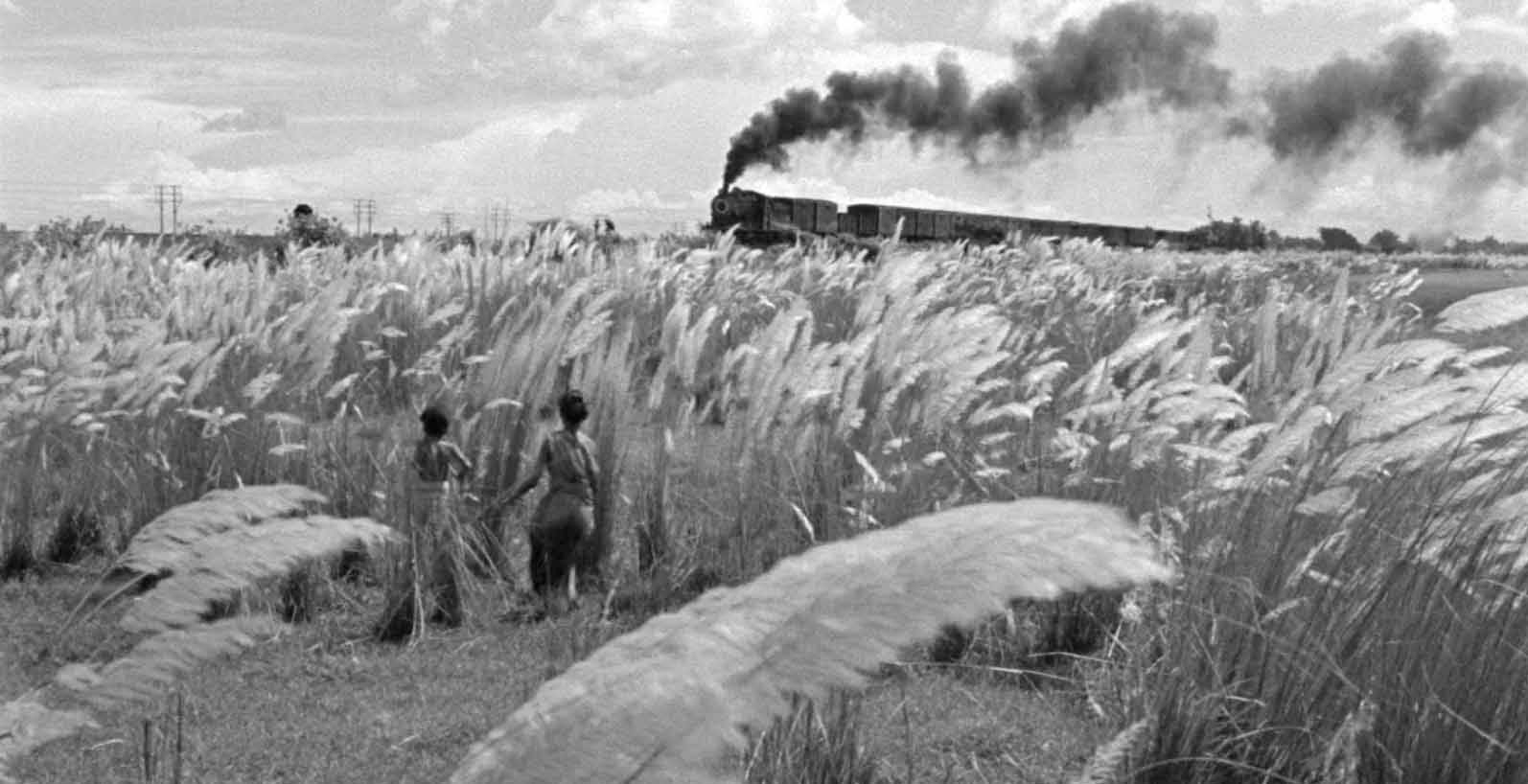
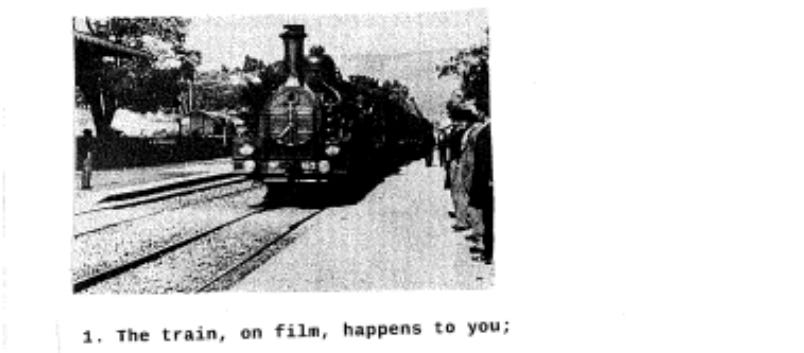
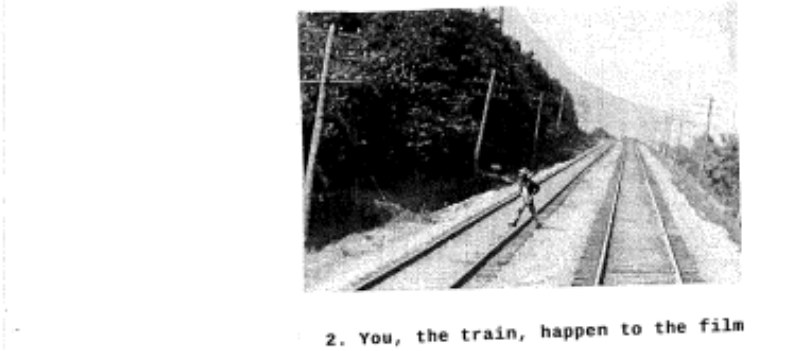
Cinema semiotics 101 says the train is a symbol of impending modernity. At least that’s what a book I read said about the train in Pather Panchali; I don’t know if it hold across the board. The history of cinema is littered with trains. The first one arrived at La Ciotat Station in 1897 - definitely an enactment of the approach of modernity, but more in medium than message. Trains caught on quickly as film subjects, serving as models of motion and examples of co-evolving technology. One of the first cinematic genres was the “phantom ride” movie, a one-take short shot from a camera strapped to the front of the engine. The train never enters the frame, but for the first time the audience experiences the camera in motion and gleans a point-of-view from the passing scenery. From there evolves the “getting run over by a train” genre and the “trapped on a train” genre, and out of that comes - maybe everything.
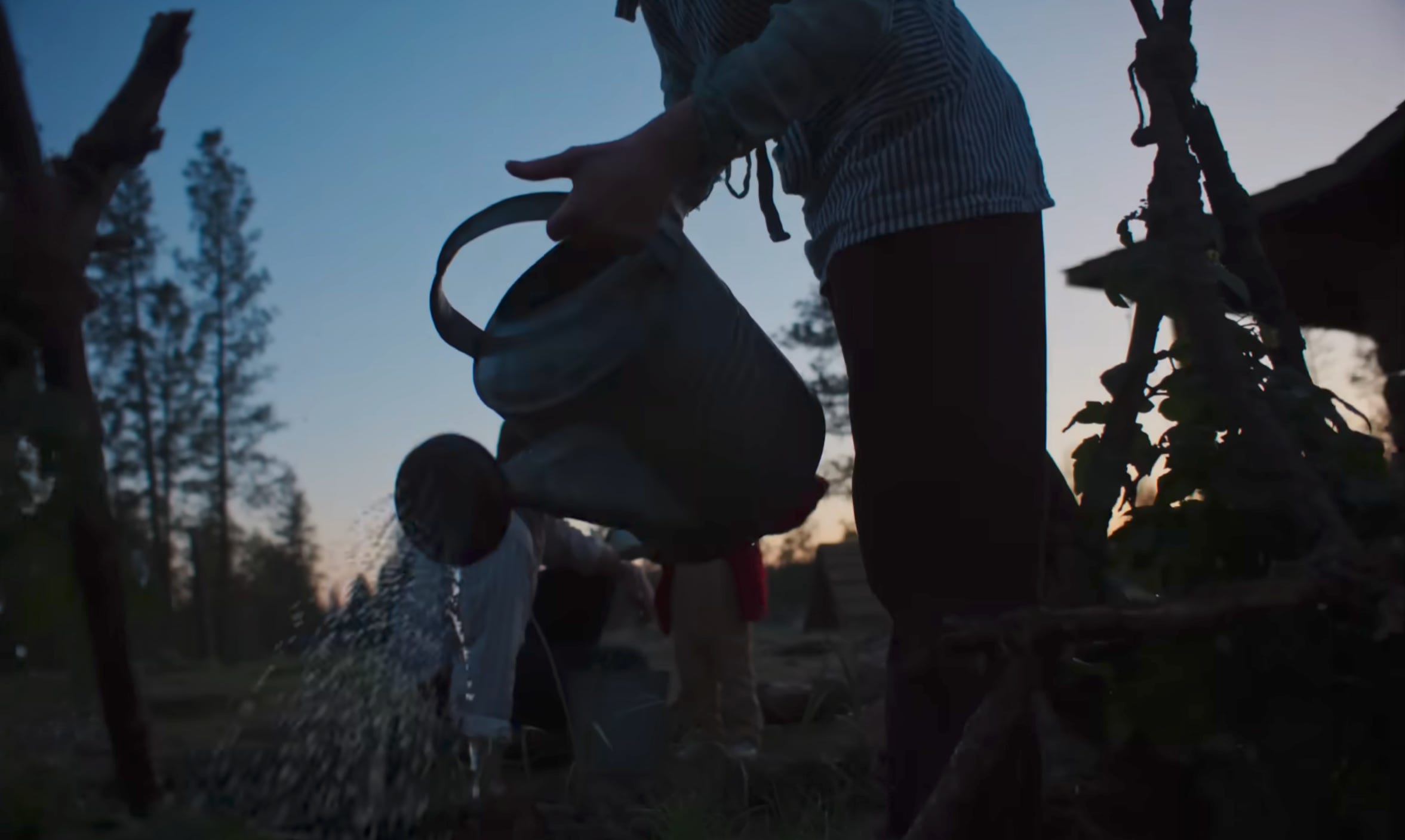
Train Dreams isn’t really a train movie, but if it were it would fall into the “getting run over” camp. Based on a Dennis Johnson novella and the directoral debut of cinematographer Clint Bentley, Train Dreams is the story of logger Robert Grainier (Joel Edgerton) who spends the better part of the twentieth century alone in a cabin in Idaho. Sort of a Forrest Gump narrative minus the flashy news events and the shrimp, it tells a history of America with no time markers beyond the changing seasons, evolving logging technology, and the color of Joel Edgerton’s beard. Robert falls in love, has a child, takes on jobs, and quits them - all the while haunted by the memory of a brief stint as a railworker, his solitude interupted by recurring dreams about an oncoming train.
Like all great dreams, it’s hard to say what Robert’s train represents. Mostly it serves to disrupt the pitch-dark peace of his sleep, first as a howl in the distance and then as a rush of lamplight past the window before the final roar of the crash. Train Dreams is a movie told through background sounds, and for Robert the train is an intrusion on the birds and bugs and wind that make up the nighttime soundscape of the pre-industrial forest. People like Robert aren’t ready for lights and machine noise to pass through their windows while they sleep. Some people might argue that no one was ready, and that we still haven’t processed the trauma.
I’m not a pre-industrial person and I don’t spent much time in the woods. I start to experience dread after three nights away from the white noise of city life. There’s nothing I particularly enjoy about sirens and train bells and inexplicable banging, but all of these are reminders that there are other people around me living out their lives, and this makes me feel sane. I like to look out the window while I’m doing dishes and see my neighbors across the path doing the same thing as me. I like to be reminded, by occasional sneezing and door-slamming, that someone lives in the apartment underneath me. The isolation of Robert’s little house in the woods, bird sounds and Felicity Jones and a very cute child notwithstanding, looks like a nightmare.
What does appeal to me about life in the woods is the absence of technology, both the information kind that everyone pretends to hate but also the convenient kind that dominates life in the city. I’m cautiously in on refrigeration and indoor plumbing, but I hate cars, electric lights, and climate control - all the things that keep us separate from one another and sever us from the natural rhythms that have governed our lives for millenia (weather, stars, birds, bugs). I could do without plague and rivers of shit, but I’d put up with a lot of inconvenience for a city that got cold in the winter and dark at night. I’d love to eat dinner by lamplight and slip around on the ice looking for fuel to heat my stove. Or maybe I’d hate all that, and it’s just romantic to pretend otherwise. It’s hard to separate what you fetishize from what you actually want to experience.
This is a lot of musing, but these are the feelings that bring about movies like Train Dreams, these elegiac video poems for a pre-Industrial world we’re sad-not-sad is long past. We love to lovingly recreate history, to find the corners of the country where you can convincingly film a sweeping forest shot without capturing roads and wires, to get Ozembiced actors to grow bushy beards and smear dirt on their faces. Do we do it out of nostalgia, or a longing for a return, or just casual historical interest? I don’t think there’s an answer, but it’s strange to think about all the very modern work required to accomplish a perfect shot of guys in rough leather chopping up logs in the forest.
It’s strange too to think about the cinematography required to convincingly capture a lived-in past. Train Dreams is gorgeous, but for all it’s beauty it looks sort of like an iPhone commercial. Super-saturated magic-hour forests, extreme-close-up handhelds of kids and pets, so much waxed canvas and raw denim - you love to look at it, but it’s hard to buy it as an authentic portrait of the pre-industrial American West.1 Where the best films about this era make you forget that modernity is around the corner, the 21st-century looms over Train Dreams. The sense of what’s to come is very much intentional, but the cinemtography springs us over the introduction of electricity and right into the smartphone era.
These are my own bugbears, though, and I think plenty of people won’t notice. A more charitable read of Bentley’s use of digital is that it grounds the viewer in the continuity of human experience. Digital is how we see the world - which isn’t to say we see the world through screens, but that the current cinematographic neutral is digital, not film.2 To watch the pre-electric world on film is to bury it in the past; to watch it on digital is to open ourselves to the possibility that our ancestor’s experience of the world was more or less the same as our own.3 19th-going-on-20th-century man cared about the same things that 21st-century man cares about: family, food, trees, the sky, dogs. If anything, Train Dreams takes the fairly radical stance that technology does not, cannot, define history. Most of Train Dreams could have taken place anywhere between 1800 and 1940; when The War is invoked about halfway through I had no idea if it was the Great or the Civil one. For most people, 20th-century innovations took a long time to make their debut. For a handful of people, they still haven’t made it.
Until the very end, Robert refuses to let technology encroach on his life, not as an act of defiance but more as a shrug of indifference. Late in the film, he sees footage of John Glenn on a storefront TV in Spokane and responds “huh,” probably the only appropriate thing to say to news about people doing things in space. Electricity barely makes an appearance - neither do cars, telephones, or gas-powered ovens. If the Forrest Gump approach to history is “life is like a box of chocolates,” Train Dreams comes back to say, “but most of them are probably caramel.”
Movies like this make me think about my grandparents, who were a generation behind Robert but lived through many of the same years. My grandfather spent his entire life exploring new ways to make money and attempting to master every gadget that came into being, from Nespressos to various types of televisions to a late-in-the-game adoption of Apple products. He never made any money, and he left behind a tangled mess of chargers and passwords. My grandma, on the other hand, has spent most of her 97 years painting flowers, cooking potato-focused dishes, doing crossword puzzles, and being kind to people. She had to quit painting a couple years ago, but she still plays Scrabble sometimes and is in charge of mashed potatoes this year for Thanksgiving. I ask her sometimes about what she remembers from various points in history and she just smiles and shrugs. She doesn’t have any of the stories that my grandpa told and retold up until the day he died. But I don’t think she’s much the worse for it. Some people define themselves by changing times, and some people just keep doing stuff.
I have mixed feelings about the end of Train Dreams, which concludes with a sequence that undercuts its Luddism-by-indifference approach to history. There’s a tidiness to it that seems to suggest, in the end, that only a 20th-century innovation could bring about Robert’s conclusive peace. Or, maybe it’s the opposite: maybe the true triumph of man over machine is to be so unconcerned about technology that you shrug and incorporate it into your life the same way you would a tree, a comet, or a haunted memory. There’s a whole lot of life to live, and machines are undeniably part of it. To refuse them their place at the center feels like an active negation, but that might be paying too much respect to a pile of junk that isn’t much more than a flash and a clang in the night.
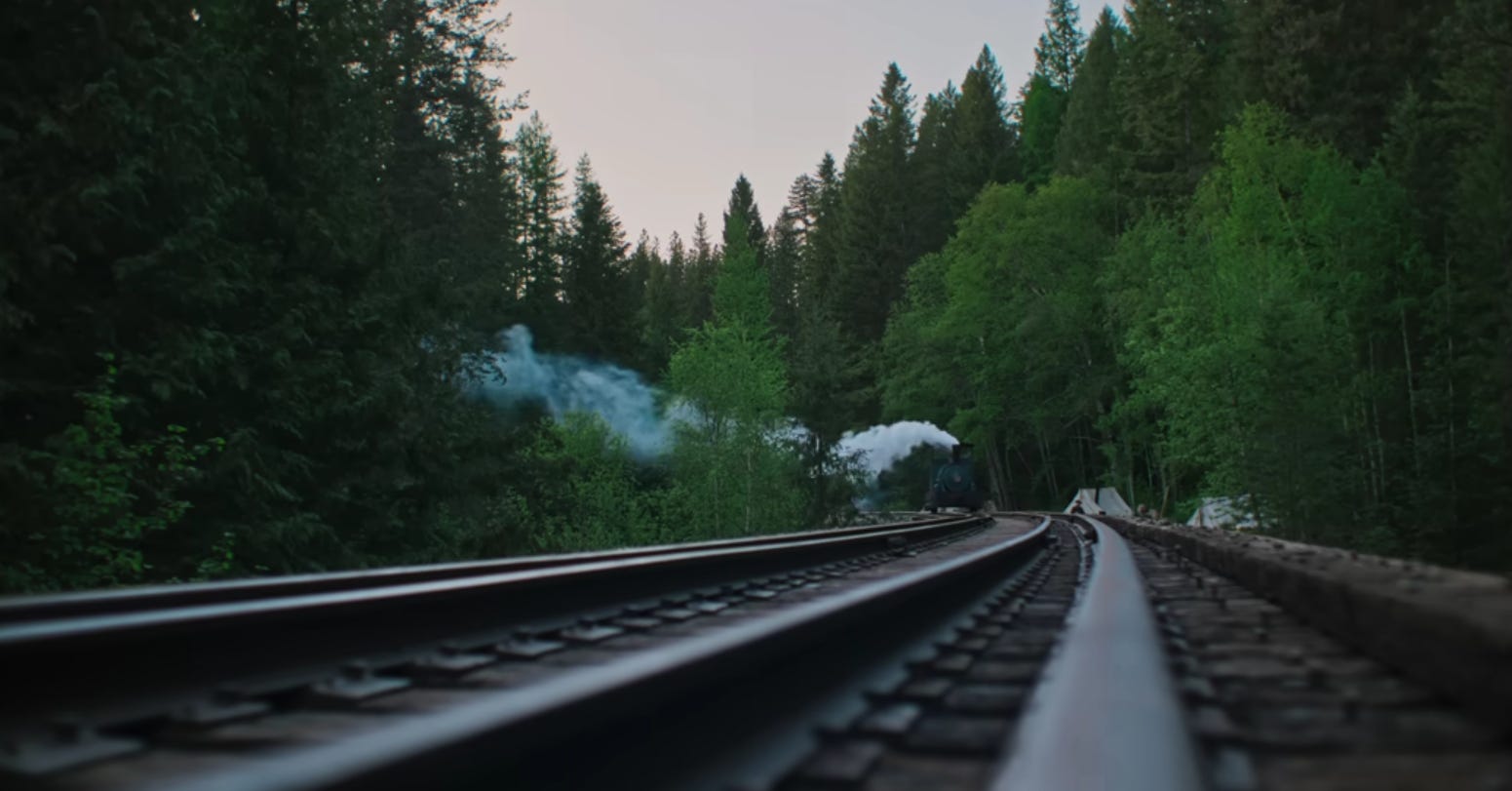
With that in mind, welcome to MAN // MACHINE voting, ROUND ONE. Here are 64 movies that, contra Train Dreams, place conflicts with technology at the center of the narrative. Some of them are “train coming at you” movies, some are “you, stuck on train” movies. The technologies vary, from turn-of-the-century steamboats and gas-powered trucks to humanoid robots and all-encompassing VR universes. But what they all have in common is that they’re encountered by humans - and all of those humans, even as their lives are transformed by use and abuse of/by machines, are committed in some way or another to doing things that machines can’t touch. If I’ve come to any conclusion about man v. machine movies, it’s that art is necessarily allergic to the notion that technology is the driving element of human history. I don’t think this is some sort of romantic naivety: art is nihilistic and edgy just as often as it is pollyannaish and hopeful. But tech narratives are dominated by a universalizing hyperfixation at best and advertising at worst, a striving to make machines the central focus of existence whether they make sense or not. Art, in contrast, exists for humans, and humans have time and time again said “no thank you.”
Is technology a train barreling towards us, or a train that we’re trapped inside of and can’t get off? Or are we standing on the sidelines, ready to watch the train plunge off a cliff so we can scurry back to pick apart the tracks? Each of these movies takes a different train to a different conclusion, but the subjects at the centers are always humans who choose what to do with themselves. Now you, a human, get to choose too.
WHAT TO DO: Click on this link and vote. There are 32 questions: four categories, eight match-ups in each. You don’t need to vote on every match-up, but you should. Here’s the button. Press it.
Voting starts RIGHT NOW (14 November, 8am central) and ENDS next Wednesday (19 November, 11:59pm central). The winners move on to the round of 32. We’ll do this process again next week, paring down by half every week until it’s Christmas and we’re down to one. I’ll announce the bracket leaderboard every week and highlight some important match-ups for anyone who wants to (re)watch along.
Can’t remember what’s what? Here’s the bracket and some quick notes on each match-up.
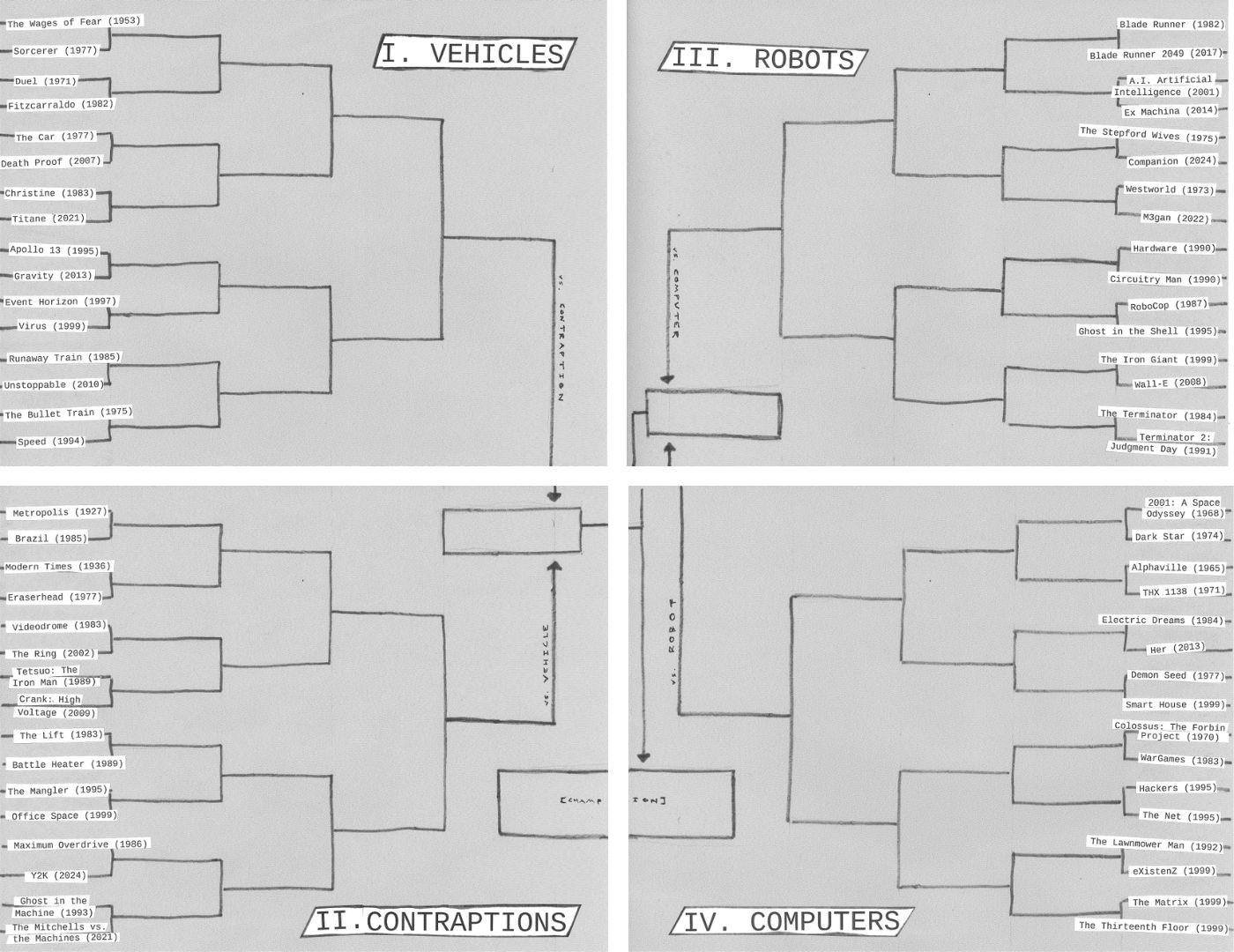
I. VEHICLES
A. HAULIN’
The Wages of Fear (1953) v. Sorcerer (1977): Clouzot’s original and Friedkin’s remake: two slow-motion thrillers about men driving highly explosive trucks.
Duel (1971) v. Fitzcarraldo (1982): Spielberg’s debut about man, a truck, and the desert; Herzog’s Apocalypse Now about a man, a steamship, and the jungle.
B. VROOM VROOM
The Car (1977) v. Death Proof (2007): ‘70s horror shlock about a car possessed by Satan; Tarantino’s homage to ‘70s horror shlock about a car possessed by Kurt Russell.
Christine (1983) v. Titane (2022): John Carpenter movie about a kid who wants to have sex with his car and murder people; Cannes-winner about a woman who actually has sex with her car and murders people.
C. TIN CANS
Apollo 13 (1995) v. Gravity (2012): Ron Howard’s retelling of something that actually happened in space; Alfonso Cuaron’s demonstration of why no one should ever go to space.
Event Horizon (1997) v. Virus (1999): malevolent-entity-haunted spaceship; malevolent-entity-haunted research boat.
D. NEWTONIAN PHYSICS
Runaway Train (1985) v. Unstoppable (2010): a train loses control in Alaska with two men stuck inside; a train loses control in Pennsylvania with two men racing alongside it.
The Bullet Train (1975) v. Speed (1994): bomb blows up if train goes slow (no Keanu Reeves); bomb blows up if bus goes slow (Keanu Reeves).
II. CONTRAPTIONS
A. IN A WORLD
Metropolis (1927) v. Brazil (1985): Fritz Lang’s vision of a future featuring a lot of Art Deco; Terry Gilliam’s vision of a future featuring a lot of tubes.
Modern Times (1936) v. Eraserhead (1977): Charlie Chaplin goes to war with a conveyer belt; Jack Nance goes to war with his radiator.
B. BAD VIBES
Videodrome (1983) v. The Ring (2002): two takes on evil videotapes and the terrible things that might emerge from your TV as a result.
Tetsuo: The Iron Man (1989) v. Crank: High Voltage (2009): two movies about men who are turned into machines featuring unpleasant drill scenes.
C. DEVICE (singular)
The Lift (1983) v. Battle Heater (1989): elevator or kotatsu, pick your poison.
The Mangler (1995) v. Office Space (1999): workplace machine kills men; men kill workplace machine.
D. DEVICES (plural)
Maximum Overdrive (1986) v. Y2K (2024): cocaine is a hell of a drug; quarter-century nostalgia is a hell of a drug.
Ghost in the Machine (1993) v. The Mitchells vs. the Machines (2021): two movies with “machine” in the title in which devices start attacking people for complicated reasons.
III. ROBOTS
A. IMPOSTERS
Blade Runner (1982) v. Blade Runner 2049 (2017): two about generational sex symbols who might be robots.
A.I. Artificial Intelligence (2001) v. Ex Machina (2014): two that people who write too much about AI have probably called “prescient.”
B. SCABS
The Stepford Wives (1975) v. Companion (2025): women can be robots too.
Westworld (1973) v. M3gan (2022): so can toys.
C. TRAITORS
Hardware (1990) v. Circuitry Man (1990): 1990 was a big year for post-apocalyptic cyborg movies.
RoboCop (1987) v. Ghost in the Shell (1995): two totemic cyborg movies that probably shouldn’t be going against each other in the first round . . . sorry.
D. COPS
The Iron Giant (1999) v. Wall-E (2008): kids’ movie about humans being an asshole to a robot; kids’ movie about a robot being an asshole to humans.
The Terminator (1984) v. Terminator 2: Judgment Day (1991): same characters, same cast, different rungs on the ladder towards Avatar.
IV. COMPUTERS
A. GOD
2001: A Space Odyssey (1968) v. Dark Star (1974): Kubrick’s totemic space movie; Carpenter’s attempt to destroy it.
Alphaville (1965) v. THX 1138 (1971): Godard being silly; Lucas being serious.
B. FREUD STUFF
Electric Dreams (1984) v. Her (2013): dating your computer in the 1980s; dating your computer in the 2010s.
Demon Seed (1977) v. Smart House (1999): rape-fantasy computer; Oedipus-complex computer.
C. THE MAINFRAME
Colossus: The Forbin Project (1970) v. WarGames (1983): two anxious movies about computers destroying the world - one features baby Matthew Broderick.
Hackers (1995) v. The Net (1995): two pieces of archival footage about what Hollywood thought computer was in 1995.
D. VIRTUAL
The Lawnmower Man (1992) v. eXistenZ (1999): hard-to-watch VR movie (b/c shifting politics); hard-to-watch VR movie (b/c not streaming anywhere, wtf guys).
The Matrix (1999) v. The Thirteenth Floor (1999): 1999, what a year.
For the first time in Movie Bracket history, I think all of these movies are at least a little bit good. Watch carefully, vote wisely. “There can only be one.” Good luck out there.
Thanks for reading *life is disappointing.* If you found this newsletter slightly less disappointing than the rest of your life, consider liking, commenting, sending me money (thanks!) or subscribing. Subscribing will get you exactly what you get here but sent to your email inbox. We’ll be back next week with ROUND 2 of MAN // MACHINE voting - and Jafar Panahi’s film about a man who is arguably part machine, It Was Just an Accident.
People love the cinematography of this movie, and I don’t want to take that away from anyone. But due to some past career interests, I have watched so, so many promotional videos about American heritage footwear - and when Bentley opens with a shot of moss-covered logging boots nailed to a tree I can’t shake the feeling that I’ve been here before.
This obviously wasn’t true 25 years ago, and I wonder how completely we’ve adapted to this shift. I only find digital jarring if I pay attention to it, but I wonder if someone who spent more time in the pre-digital era finds the clarity and the possibility for intense frame rates immediately disconcerting. There’s nothing inherently true-to-life about either digital or film; they’re both mediations of reality that come with their own distortions. But I think most people right now experience digital cinematography as “accurate” or “normal” because pretty much every time we see a video of something “happening” in “real life,” it’s digital - whereas film is almost exclusively used for art and reconstructive nostalgia.
Danny Boyle and Anthony Dodd Mantle do something similar - and in my opinion, much more interesting - with digital in 28 Years Later. It’s interesting that a film about the future is playing a similar trick to a film about the past. I’m not sure to what end . . . something to chew on.
enjoyed the train-related nostalgia discourse. also thinking abt that scene in Tess of the d'Urbervilles where she stands at the edge of the station and the tendril of steam from the train almost touches her and then recedes. modernity???????